
Thursday 20 March 2025
Scientists have made a significant breakthrough in understanding how insulin and glucose interact within our bodies, specifically for individuals with type-1 diabetes mellitus (T1DM). This new research provides valuable insights into the complex process of regulating blood sugar levels, which could lead to more effective treatments for this chronic condition.
To grasp the significance of this discovery, let’s take a step back. T1DM is an autoimmune disease in which the pancreas fails to produce insulin, a hormone that regulates glucose levels in the blood. Without sufficient insulin, glucose builds up in the bloodstream, leading to high blood sugar levels and potentially serious complications if left untreated.
The researchers focused on understanding how insulin interacts with glucose within the subcutaneous layer, the fatty tissue just beneath our skin. This is where insulin is injected to control blood sugar levels. By modeling this interaction as a multicellular molecular communication system, they were able to simulate the complex process of glucose regulation in T1DM patients.
The team developed a comprehensive model that divided the T1DM system into insulin and glucose subsystems. They then used advanced mathematical techniques to derive the optimal time window for injecting insulin to manage postprandial glucose levels – the rise in blood sugar levels after a meal.
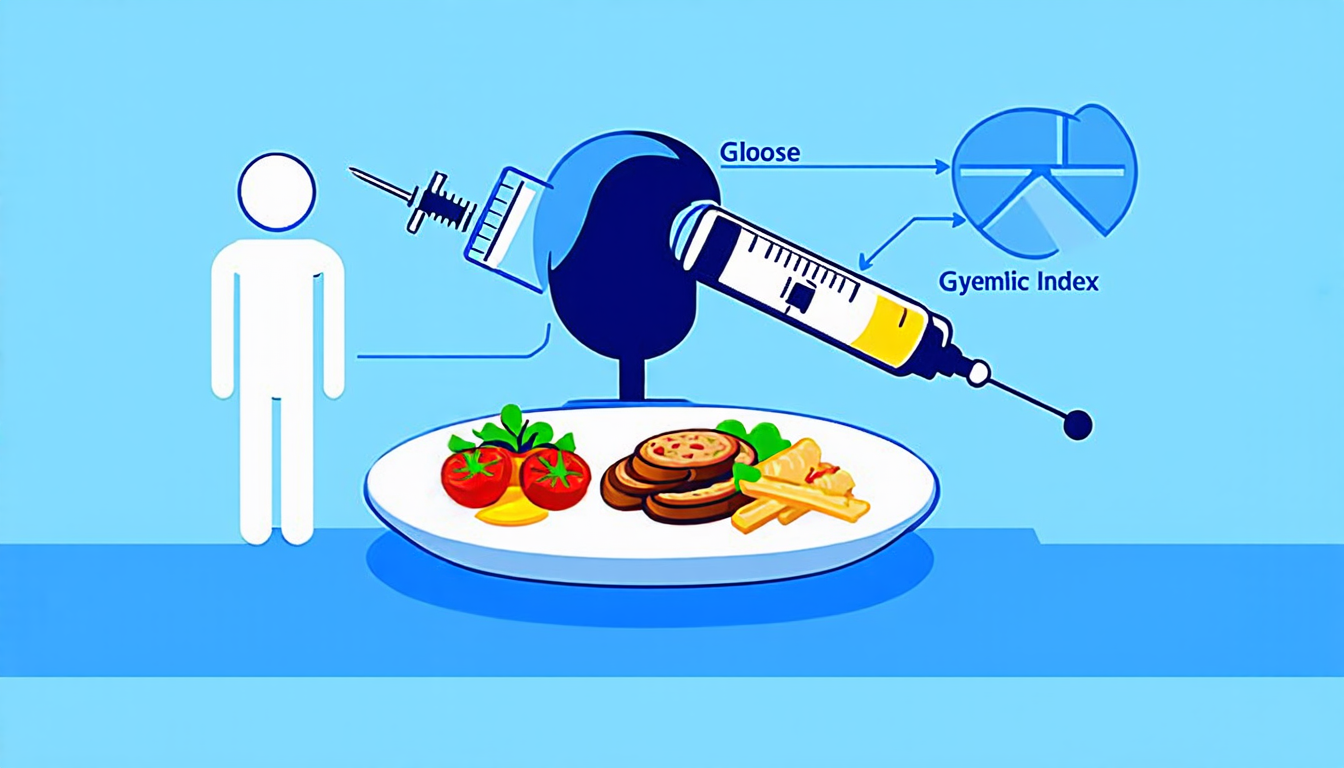
Their findings suggest that the ideal injection time varies depending on the type of food consumed. For example, eating low-glycemic index foods (which are digested and absorbed slowly) requires a shorter insulin injection window compared to high-glycemic index foods (which are digested and absorbed quickly).
This research has far-reaching implications for T1DM management. By optimizing insulin administration timing based on meal composition, patients can better regulate their blood sugar levels and reduce the risk of complications such as nerve damage, kidney failure, and cardiovascular disease.
The study also highlights the importance of considering individual variability in physiological parameters, such as insulin sensitivity and glucose absorption rates. This personalized approach could lead to more effective treatment strategies tailored to each patient’s unique needs.
In addition to its direct impact on T1DM management, this research showcases the potential for interdisciplinary collaboration between fields like biology, mathematics, and engineering. By combining these disciplines, scientists can develop novel solutions to complex biological problems, ultimately improving human health outcomes.
The discovery of optimal insulin administration timing is an important step towards more effective diabetes treatment.
Cite this article: “Unlocking Optimal Insulin Administration in Type-1 Diabetes”, The Science Archive, 2025.
Type 1 Diabetes Mellitus, Insulin, Glucose, Blood Sugar Levels, Autoimmune Disease, Pancreas, Subcutaneous Layer, Mathematical Modeling, Glycemic Index, Personalized Medicine