
Thursday 20 March 2025
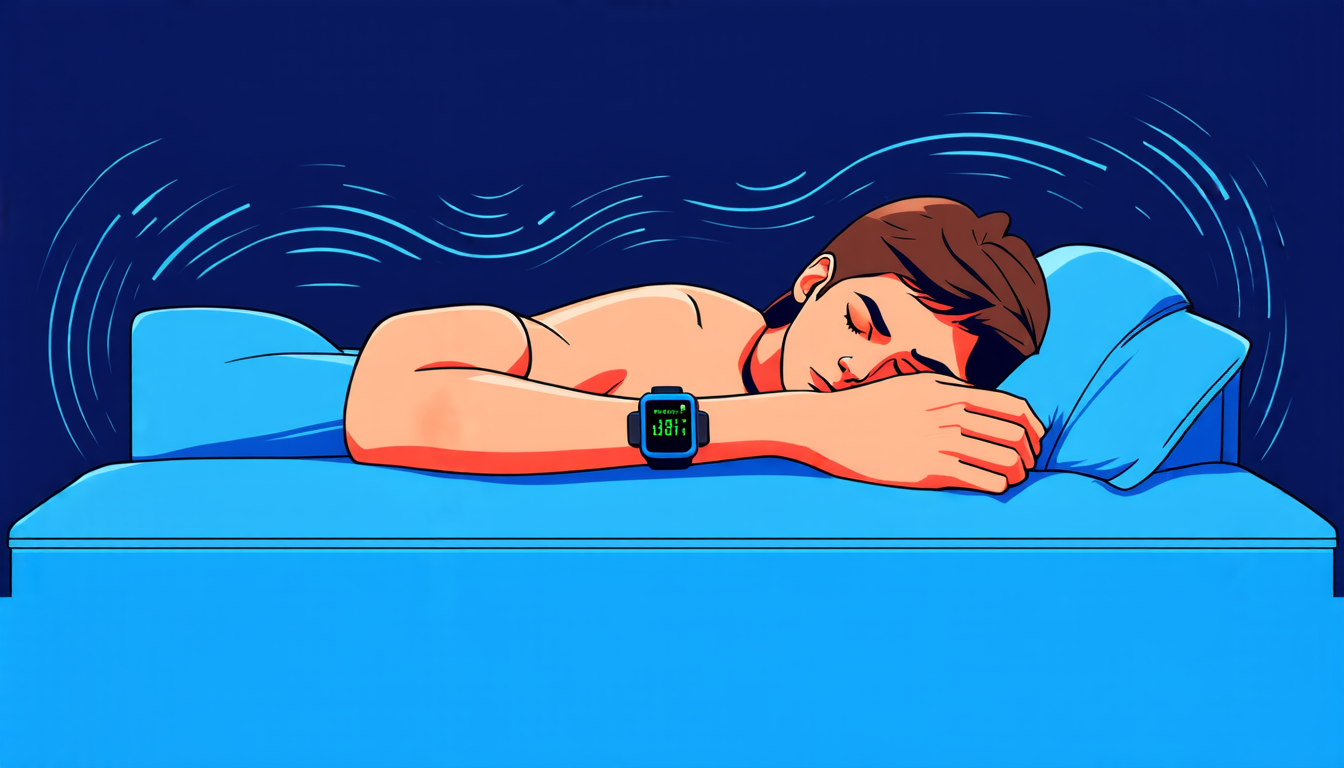
The latest advances in wearable technology have revolutionized our ability to monitor and analyze human activity, but the data they produce can be overwhelming. Actigraphy, a method of tracking movement patterns using accelerometers, has become increasingly popular for studying rest-activity rhythms in humans. However, this approach often relies on simplistic models that ignore the complexities of individual behavior.
A new study published in The Annals of Applied Statistics proposes a Bayesian covariate-dependent anti-logistic circadian model to analyze actigraphy data from wearable devices. This innovative approach integrates demographic and clinical variables into the modeling of rest-activity rhythms, allowing for a more nuanced understanding of how these patterns are influenced by various factors.
The researchers developed their model using a combination of statistical techniques, including Bayesian inference and non-parametric regression analysis. They applied this framework to real-world actigraphy data from individuals with epilepsy, demonstrating its effectiveness in uncovering complex relationships between demographic, psychological, and medical factors.
One of the key advantages of this approach is its ability to account for individual differences in rest-activity rhythms. By incorporating covariates such as age, sex, body mass index (BMI), and medication use into their model, the researchers were able to identify significant associations with circadian rhythm patterns. For example, they found that older individuals tended to have more regular sleep-wake cycles, while those taking certain medications exhibited disruptions in their rest-activity rhythms.
The study’s findings also highlight the importance of considering serial correlations in actigraphy data. By incorporating temporal dependencies into their model, the researchers were able to improve the accuracy of their predictions and better capture the natural fluctuations in individual behavior.
This research has significant implications for the field of chronobiology, which studies the interplay between biological rhythms and human health. By developing more sophisticated models that account for individual differences and covariates, scientists can gain a deeper understanding of how rest-activity rhythms are influenced by various factors and develop targeted interventions to improve overall well-being.
The authors’ approach also has potential applications in fields beyond chronobiology, such as epidemiology and public health. For instance, their model could be used to identify high-risk populations for sleep disorders or other conditions related to circadian rhythm disruptions.
While this study’s results are promising, further research is needed to fully explore the capabilities of this Bayesian covariate-dependent anti-logistic circadian model.
Cite this article: “Advancing Actigraphy Analysis with Bayesian Modeling: A Novel Approach to Understanding Rest-Activity Rhythms”, The Science Archive, 2025.
Actigraphy, Wearable Technology, Bayesian Inference, Non-Parametric Regression Analysis, Chronobiology, Circadian Rhythms, Rest-Activity Rhythms, Individual Differences, Serial Correlations, Epidemiology.