

Thursday 20 March 2025
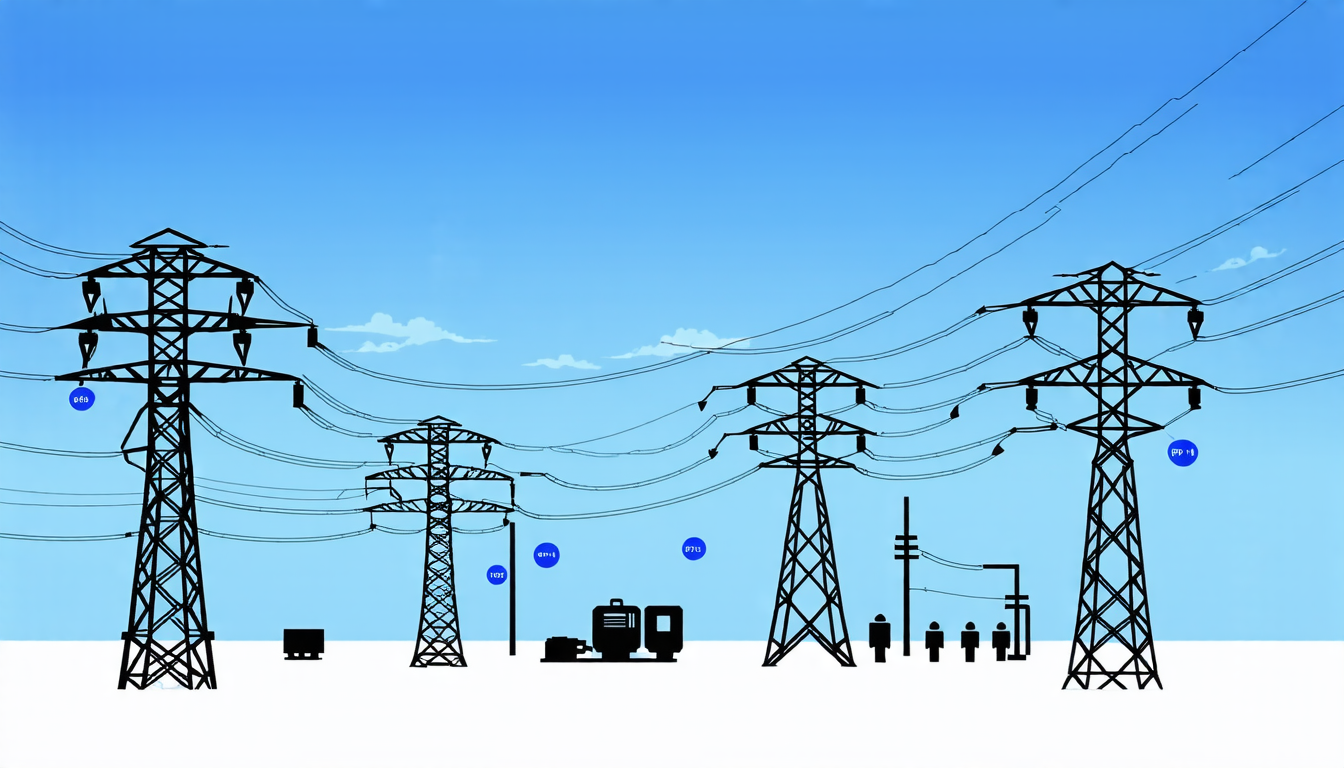
Power grids are complex systems, made up of intricate networks of power lines, substations, and generators. They’re prone to fluctuations in demand and supply, which can lead to blackouts and brownouts. To mitigate these issues, power companies have been investing heavily in advanced monitoring technologies, including phasor measurement units (PMUs). These devices provide detailed information about the state of the grid in real-time, allowing operators to respond quickly to changes in the system.
One major challenge with PMUs is determining where to place them. This decision is crucial, as it can significantly impact the accuracy and effectiveness of the monitoring system. Researchers have been working on developing algorithms that can identify the optimal locations for PMUs, but these methods often rely on simplifying assumptions about the grid’s behavior.
A new study published in a leading scientific journal has made significant strides in this area. The researchers developed a novel approach to PMU placement, which takes into account the complexities of real-world power grids. Their method involves solving a complex optimization problem, using advanced mathematical techniques to identify the best locations for PMUs.
The results are impressive. In simulations, the new algorithm outperformed existing methods by a significant margin, accurately identifying the optimal locations for PMUs in even the most challenging scenarios. The study also demonstrated that the algorithm can be applied to real-world power grid systems, making it a promising tool for operators and regulators.
So what does this mean for the future of power grids? In short, it means better monitoring and control. With PMUs placed strategically throughout the system, operators will have access to more accurate and detailed information about the state of the grid. This will enable them to respond quickly to changes in demand and supply, reducing the likelihood of blackouts and brownouts.
The implications are far-reaching. As the global energy landscape continues to evolve, with increasing reliance on intermittent renewable sources and greater demands for electricity, advanced monitoring technologies like PMUs will play a critical role in ensuring the reliability and resilience of power grids. The new algorithm offers a powerful tool for achieving this goal, and its potential applications extend beyond the realm of power systems.
In many ways, this research represents a significant step forward in our understanding of complex systems. By developing algorithms that can accurately model and predict the behavior of these systems, we’re better equipped to manage their complexities and harness their potential.
Cite this article: “Optimizing Power Grid Monitoring with Advanced Algorithm”, The Science Archive, 2025.
Power Grids, Phasor Measurement Units, Pmus, Optimization Problem, Mathematical Techniques, Power Grid Systems, Monitoring Technologies, Blackouts, Brownouts, Complex Systems, Renewable Sources





