

Thursday 20 March 2025
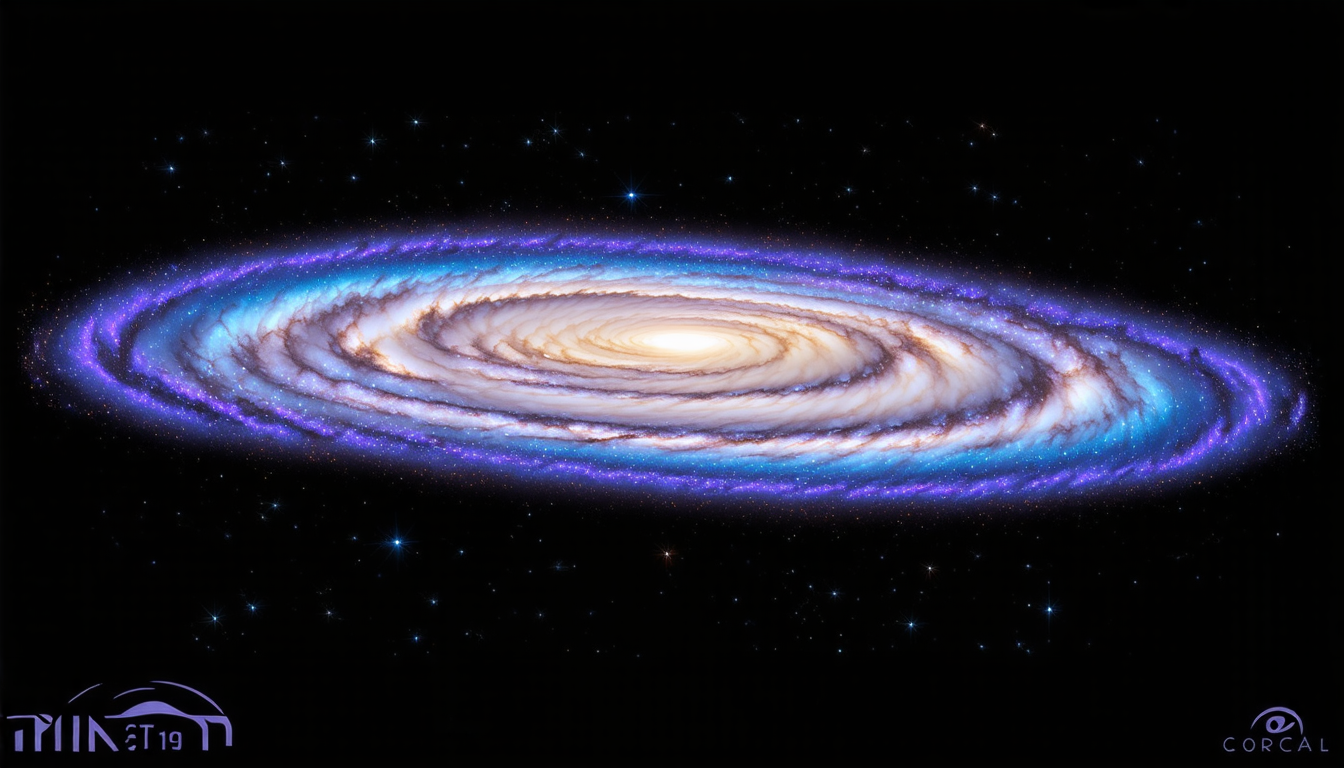
The intricate dance of galaxies has long fascinated scientists and astronomers alike. The way stars, gas, and dust swirl together in a cosmic ballet is a wonder to behold. But what drives this choreography? A recent study shed new light on the role of bars – those spiral arms that stretch across the center of many galaxies.
For decades, researchers have studied the dynamics of barred galaxies, trying to understand how these features form and evolve over time. One key question has been: how do bars affect the way stars and gas move within a galaxy? Do they speed up or slow down the action?
To answer this, scientists turned to a technique called response models. These simulations allow researchers to test different scenarios and see how galaxies would react. In this case, the team created three distinct axisymmetric models – think of them as templates for different types of galaxies.
The models varied in terms of their disk-to-halo ratio, which determines how much weight is given to the central region versus the outer reaches of the galaxy. The team then applied a Ferrers bar response model to each template, essentially simulating the formation and evolution of bars within these galaxies.
What emerged from this exercise was a fascinating picture of the relationship between bars and galactic motion. The study found that the strength of the bar plays a crucial role in determining how stars and gas behave. Fast-moving bars tend to create more chaotic environments, where stars are scattered across the galaxy. Slower-moving bars, on the other hand, can lead to more organized patterns, with stars moving in harmony.
This has significant implications for our understanding of galaxy evolution. The team’s findings suggest that the formation of bars may be a key driver of star formation and the growth of black holes at the centers of galaxies. It also highlights the importance of considering the bar’s strength when studying the dynamics of these cosmic systems.
One intriguing aspect of this research is its potential to shed light on the history of our own galaxy, the Milky Way. By analyzing the motion of stars within the galaxy, astronomers can infer how it evolved over time. This study provides new insights into the role that bars may have played in shaping the Milky Way’s structure and evolution.
Ultimately, this research underscores the complex interplay between various galactic components – bars, disks, halos, and more. By teasing out these relationships, scientists can gain a deeper understanding of the intricate dance that governs our universe.
Cite this article: “Unraveling the Secrets of Galactic Bars”, The Science Archive, 2025.
Galaxies, Bars, Stars, Gas, Dust, Cosmic Ballet, Dynamics, Response Models, Axisymmetric Models, Ferrers Bar Response Model





