

Thursday 20 March 2025
Deep learning models have revolutionized many areas of science and technology, but they often require large amounts of labeled data to train effectively. This is a major limitation, as collecting and labeling data can be time-consuming and expensive. A new approach, called Deep Clustering via Probabilistic Ratio-Cut Optimization (PRCut), has been developed to overcome this challenge.
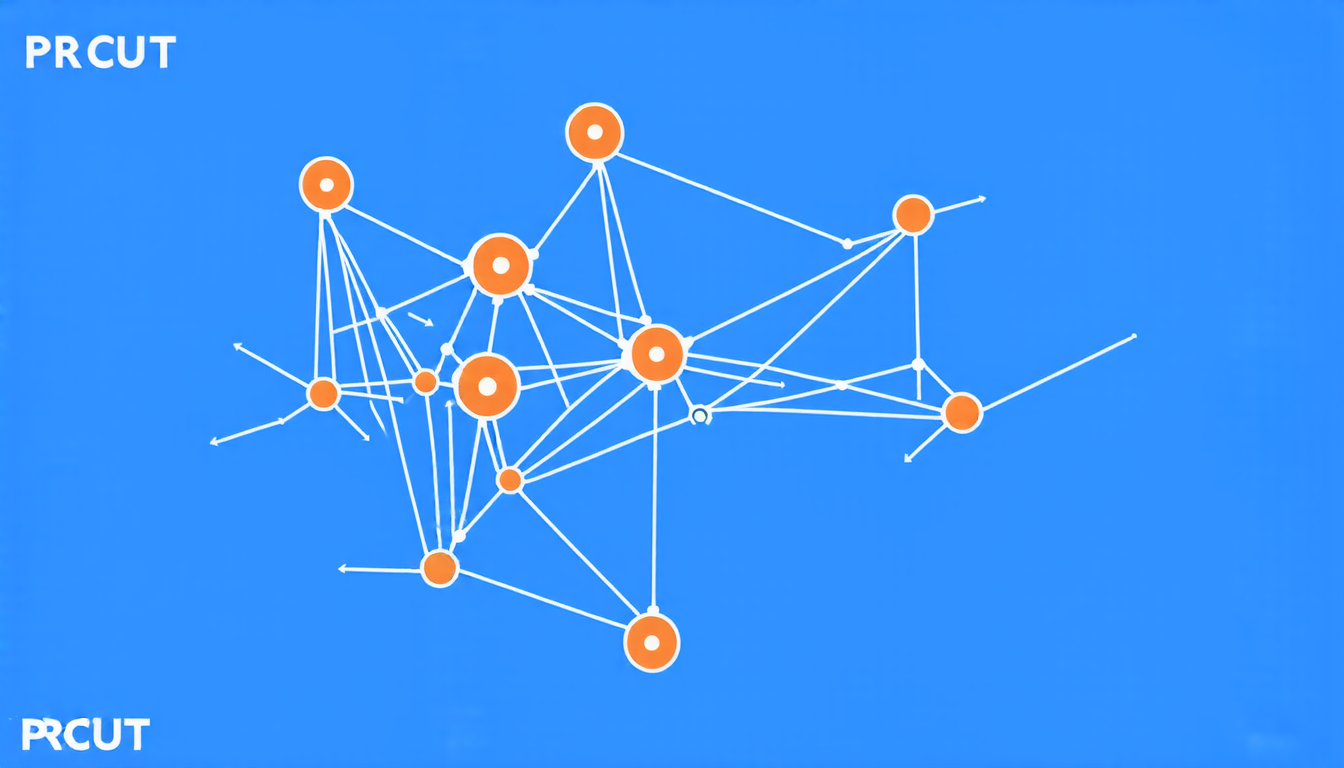
The PRCut algorithm uses a probabilistic ratio-cut optimization technique to transform the original representation space into a new space where clustering is more effective. This transformation is done by modeling the binary assignments as random variables and optimizing the graph ratio-cut using an upper bound on the expected ratio-cut.
One of the key innovations of PRCut is its ability to leverage self-supervised representations, which are learned without labeled data. These representations can be used to initialize the clustering algorithm or even replace traditional feature engineering techniques altogether. This approach has several advantages, including reduced computational cost and increased scalability.
To evaluate the effectiveness of PRCut, the researchers conducted a series of experiments on three popular datasets: MNIST, Fashion-MNIST, and CIFAR-10. They compared the performance of PRCut to other state-of-the-art clustering algorithms and found that it outperformed them in most cases.
The results suggest that PRCut is able to learn more accurate and robust representations of the data, even when the original representation space is noisy or incomplete. This has significant implications for many real-world applications, such as image classification, natural language processing, and recommender systems.
Another advantage of PRCut is its ability to handle large datasets efficiently. By leveraging self-supervised representations and optimizing the graph ratio-cut, the algorithm can scale to much larger datasets than traditional clustering algorithms.
The researchers also explored the use of PRCut in combination with other machine learning techniques, such as neural networks and generative models. They found that these combinations can lead to even better performance and more effective clustering results.
Overall, the PRCut algorithm has the potential to significantly impact many areas of science and technology by providing a powerful new tool for unsupervised learning. Its ability to leverage self-supervised representations and optimize the graph ratio-cut makes it an attractive alternative to traditional clustering algorithms.
Cite this article: “Deep Clustering via Probabilistic Ratio-Cut Optimization (PRCut)”, The Science Archive, 2025.
Deep Learning, Clustering, Probabilistic Ratio-Cut Optimization, Self-Supervised Representations, Unsupervised Learning, Graph Ratio-Cut, Neural Networks, Generative Models, Image Classification, Natural Language Processing
Reference: Ayoub Ghriss, Claire Monteleoni, “Deep Clustering via Probabilistic Ratio-Cut Optimization” (2025).





