

Thursday 20 March 2025
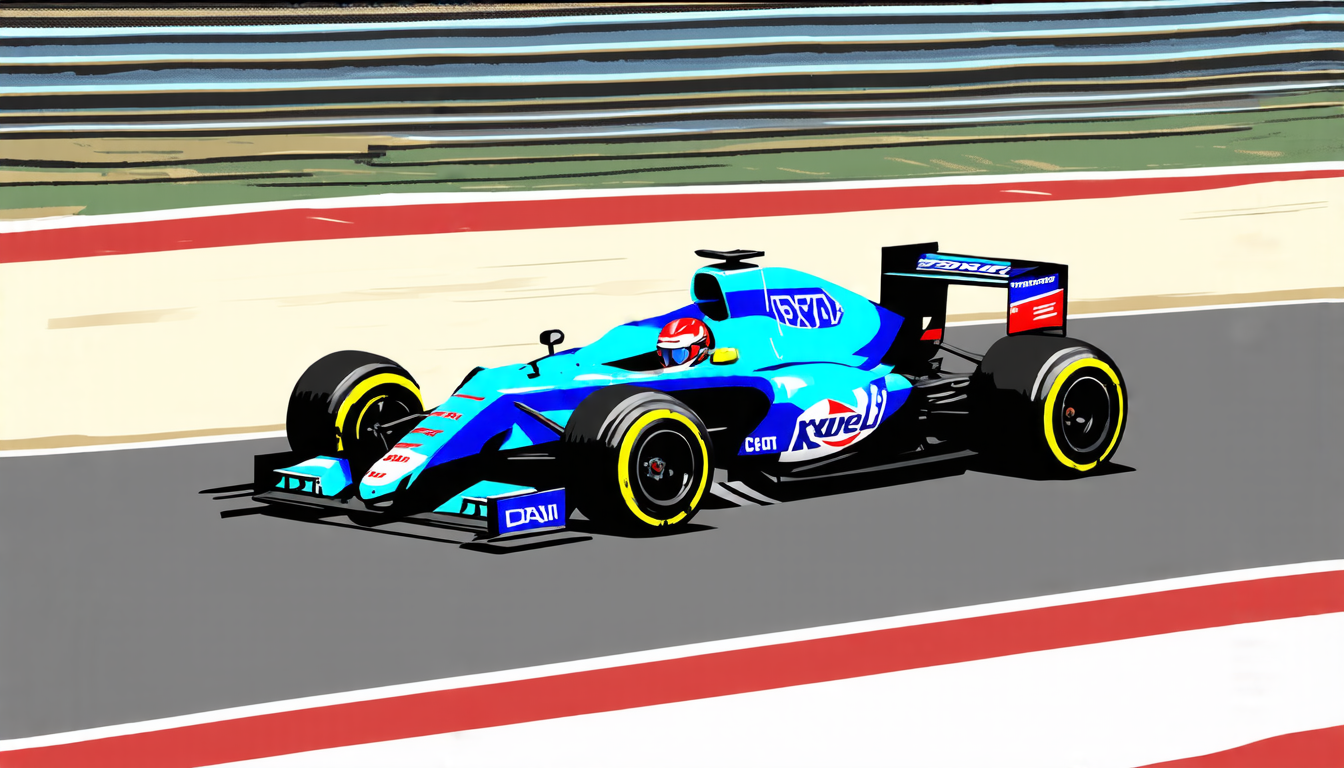
Artificial racing drivers have long been a staple of motorsport, with professional teams and enthusiasts alike relying on sophisticated algorithms and simulations to optimize their performance on the track. But what if you could create an artificial driver that’s capable of learning from its mistakes, adapting to new tracks, and even improving over time? Researchers at the University of Trento have made significant strides in this direction, developing a novel kineto-dynamical (KD) model for trajectory planning with economic nonlinear model predictive control (E- NMPC).
The team’s approach is centered around the concept of online learning, where the artificial driver uses real-time data from sensors and simulations to refine its performance. This allows it to adapt to new tracks and conditions in a way that traditional pre-programmed algorithms simply can’t match. The KD model itself is a complex system that incorporates factors such as vehicle dynamics, road geometry, and even the physical properties of the track.
To test their approach, the researchers used a high-fidelity vehicle simulator to evaluate the performance of their artificial driver on a challenging 3D circuit. The results were impressive, with the artificial driver achieving lap times just 0.724 seconds off the optimal mark set by human professionals. This may not seem like a huge margin, but it’s a testament to the sophistication and flexibility of the KD model.
One of the key benefits of the researchers’ approach is its ability to handle complex scenarios that would be difficult or impossible for traditional algorithms to master. For example, the artificial driver can quickly adjust to changes in track conditions, such as slippery surfaces or unexpected obstacles. This makes it an attractive solution for applications where reliability and adaptability are critical, such as autonomous racing or even self-driving cars.
The researchers also explored the impact of 3D track geometry on the artificial driver’s performance. They found that the KD model was able to quickly learn from its mistakes and adapt to the unique challenges posed by complex tracks with steep banking and varying surface textures. This ability to learn and improve over time is a major advantage of the KD model, as it allows the artificial driver to continually refine its performance even in the face of changing conditions.
In addition to its potential applications in motorsport, the researchers’ approach has broader implications for the field of autonomous systems. As self-driving cars become increasingly common on our roads, the ability to learn from experience and adapt to new situations will be crucial for ensuring their safety and reliability.
Cite this article: “Artificial Driver Advances Motorsport with Adaptive Learning Capabilities”, The Science Archive, 2025.
Artificial Driver, Autonomous Racing, Kineto-Dynamical Model, E-Nmpc, Online Learning, Vehicle Dynamics, Road Geometry, Track Conditions, Self-Driving Cars, 3D Track Geometry.





