
Thursday 20 March 2025
Scientists have made a significant breakthrough in developing a new method for clustering hyperspectral images, which is crucial for various applications such as environmental monitoring and agricultural management. The technique, known as Self-Supervised Low-Pass Contrastive Graph Clustering (SLCGC), uses a unique approach to group similar pixels together based on their spectral and spatial properties.
Hyperspectral imaging involves capturing data from the visible, infrared, and other parts of the electromagnetic spectrum. This technology allows researchers to analyze the reflectance or emission patterns of objects in great detail, which is essential for understanding complex phenomena such as soil moisture content, crop health, and atmospheric composition. However, processing large datasets from hyperspectral images is a challenging task due to their high dimensionality and complexity.
SLCGC addresses this challenge by introducing a self-supervised learning framework that does not require labeled training data. The method first generates homogeneous regions from the pixels in the image, which are then used to construct an adjacency matrix. This matrix represents the connections between pixels based on their spatial proximity and spectral similarity.
To further refine the clustering process, SLCGC incorporates a low-pass filter to denoise the graph topology. This step helps to remove high-frequency noise that can interfere with the clustering algorithm’s ability to identify meaningful patterns. The filtered adjacency matrix is then used to train a contrastive learning model, which learns to distinguish between similar and dissimilar pixels.
The novelty of SLCGC lies in its ability to jointly optimize multiple objectives, including spectral similarity, spatial proximity, and graph denoising. This multi-objective approach enables the method to adapt to diverse hyperspectral image datasets and produce high-quality clustering results.
Experimental results demonstrate that SLCGC outperforms state-of-the-art methods in terms of clustering accuracy, robustness, and computational efficiency. The technique has been evaluated on several publicly available datasets, including the well-known Salinas, PU, and Trento datasets, which are commonly used for benchmarking hyperspectral image processing algorithms.
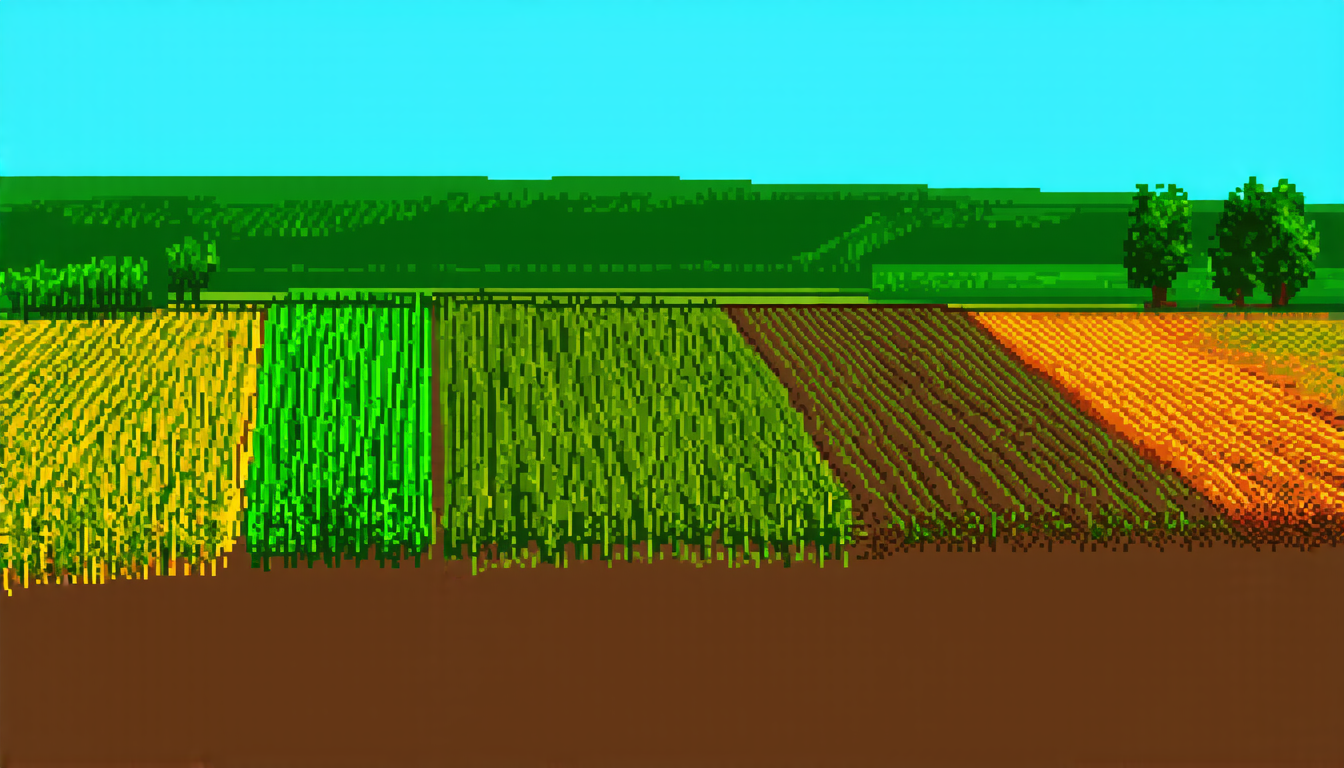
The potential applications of SLCGC are vast and varied. For instance, it can be used to monitor soil moisture levels in agricultural fields, detect changes in vegetation health, or track the spread of invasive species. The technique can also be applied to other areas such as environmental monitoring, disaster response, and national security.
Overall, SLCGC represents a significant advancement in hyperspectral image processing and clustering algorithms.
Cite this article: “Self-Supervised Low-Pass Contrastive Graph Clustering for Hyperspectral Image Analysis”, The Science Archive, 2025.
Hyperspectral Imaging, Self-Supervised Learning, Graph Clustering, Contrastive Learning, Spectral Similarity, Spatial Proximity, Denoising, Multi-Objective Optimization, Clustering Algorithms, Image Processing.