

Thursday 20 March 2025
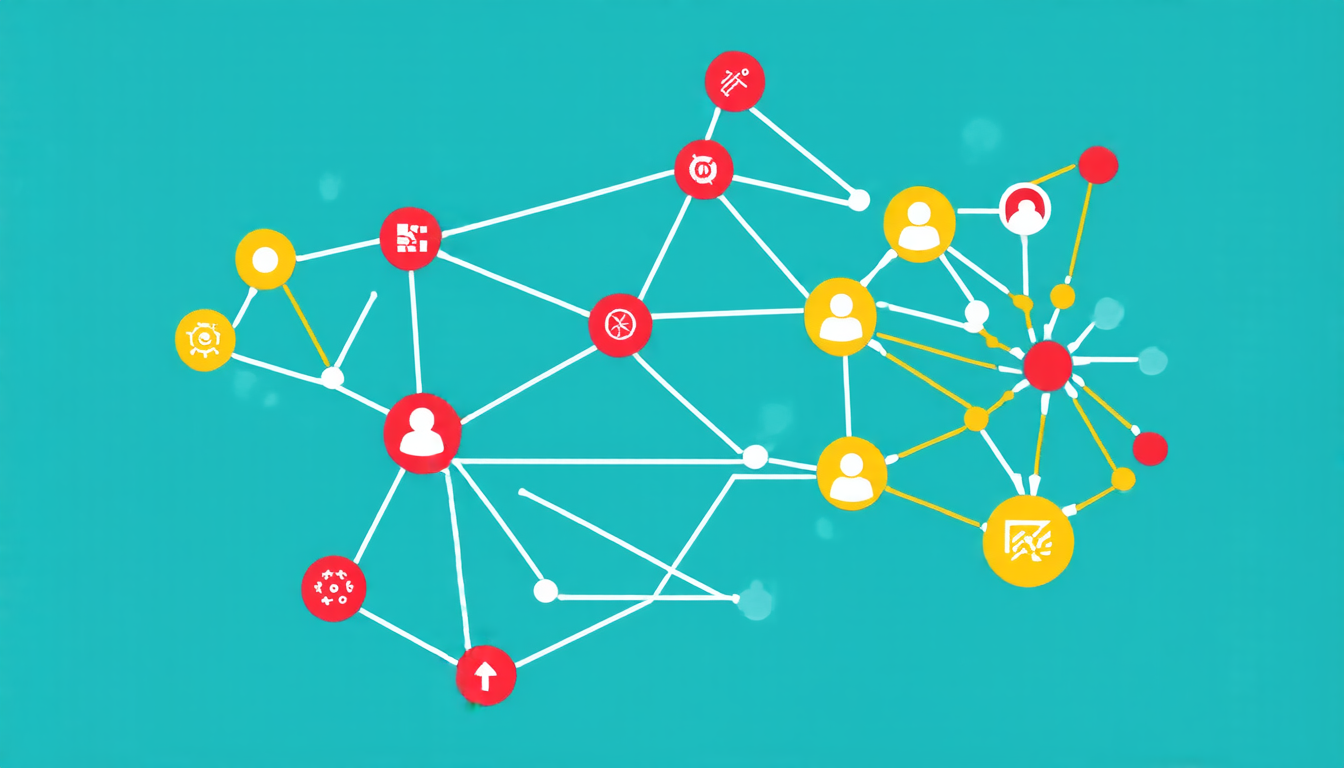
A team of researchers has made a significant breakthrough in understanding how complex networks, such as social media platforms and transportation systems, are structured. By studying the properties of these networks, scientists can gain valuable insights into how information spreads and how people interact.
The researchers focused on a particular type of network called a fixed-growth graph, which is characterized by a constant rate of growth in the number of nodes (or connections) over time. This type of network is common in many real-world systems, including social media platforms, transportation networks, and communication networks.
To study these networks, the researchers developed a new algorithm that allows them to analyze the properties of fixed-growth graphs more efficiently than previous methods. They used this algorithm to analyze a large dataset of U.S. road networks, which is a classic example of a fixed-growth graph.
The results of the analysis were striking. The researchers found that the dimensionality of the network, which is a measure of its complexity, was closely related to the optimal clustering coefficient of the network. In other words, the more complex the network, the more clusters it tends to form.
This finding has important implications for our understanding of how information spreads through complex networks. Clusters are areas of high connectivity and activity within a network, and they play a key role in the spread of information. By identifying the optimal clustering coefficient of a network, scientists can better understand how information will flow through it.
The researchers also found that the estimated dimensionality of the network was a much better indicator of the optimal clustering coefficient than the size of the network itself. This suggests that the structure of a network is more important than its size in determining how information spreads.
These findings have significant implications for many fields, including social media analysis, epidemiology, and transportation planning. By understanding how complex networks are structured and how information spreads through them, scientists can develop more effective strategies for spreading information and mitigating the spread of disease.
The research also highlights the importance of considering the structure of a network when analyzing its behavior. Many previous studies have focused solely on the size and connectivity of a network without considering its underlying structure. This study shows that the structure of a network is critical in determining how it behaves, and that ignoring this structure can lead to inaccurate conclusions.
Overall, this research provides valuable insights into the properties of complex networks and has important implications for many fields.
Cite this article: “Unraveling the Structure of Complex Networks: Insights into Information Flow and Clustering Coefficients”, The Science Archive, 2025.
Complex Networks, Social Media, Transportation Systems, Fixed-Growth Graph, Algorithm, Dimensionality, Clustering Coefficient, Information Spread, Network Structure, Epidemiology





