

Thursday 20 March 2025
In a breakthrough that could revolutionize our understanding of complex systems, researchers have developed a new approach to building reduced-order models for large-scale nonlinear problems.
Reduced-order models are simplified versions of complex systems that can be used to make predictions and simulate behavior. They’re essential for scientists who need to study phenomena like weather patterns or financial markets, but they often require a vast amount of computational power and memory. That’s where the new approach comes in – by using machine learning techniques to infer the underlying dynamics of the system, researchers can build reduced-order models that are not only more efficient but also more accurate.
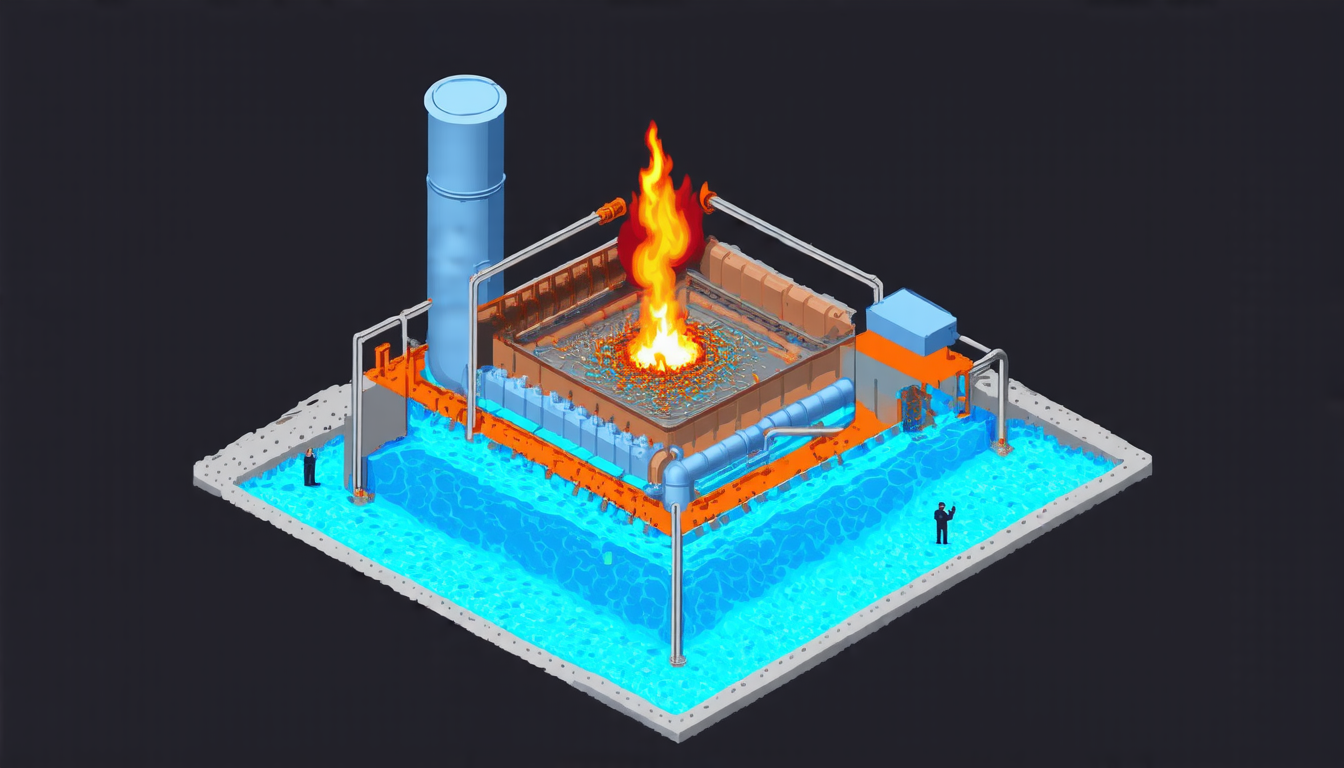
The team behind this innovation used a technique called operator inference to develop their model. Operator inference is a method that uses data from a complex system to learn the underlying rules and patterns that govern its behavior. By applying this technique to a dataset of char combustion in a fluidized bed reactor, researchers were able to build a reduced-order model that accurately predicted the behavior of the system.
Fluidized bed reactors are commonly used in industries like power generation and chemical processing, where they’re used to burn fuels and produce energy. Char combustion is a key process in these reactors, but it’s also notoriously difficult to model due to its complex nonlinear dynamics. The reduced-order model developed by the researchers could potentially be used to improve efficiency and reduce emissions in these reactors.
One of the key advantages of this new approach is that it can handle large amounts of data with ease. Traditional methods for building reduced-order models typically require a lot of manual labor and expertise, but the machine learning-based method used here can learn from vast datasets without getting bogged down. This makes it particularly well-suited to big data applications.
Another benefit of this approach is that it can handle complex systems with multiple variables and interactions. In many cases, reduced-order models are limited to simple systems with a small number of variables, but the operator inference technique used here can handle much more complex scenarios.
The implications of this research are far-reaching. By developing more accurate and efficient reduced-order models, scientists could gain new insights into complex phenomena like weather patterns, financial markets, or even the behavior of galaxies. The potential applications are endless – from optimizing industrial processes to improving our understanding of natural systems.
In short, this breakthrough has the potential to revolutionize our ability to model and simulate complex systems. By harnessing the power of machine learning, researchers have developed a new approach that could unlock new insights and possibilities in fields ranging from physics to finance.
Cite this article: “Machine Learning Breakthrough Revolutionizes Complex System Modeling”, The Science Archive, 2025.
Complex Systems, Machine Learning, Reduced-Order Models, Nonlinear Problems, Char Combustion, Fluidized Bed Reactors, Operator Inference, Big Data, Complex Phenomena, Simulation





