

Friday 21 March 2025
A new breed of medical image classifiers is poised to revolutionize the way doctors diagnose diseases, and it’s all thanks to a type of artificial intelligence called diffusion models.
Traditional medical image classification methods rely on complex neural networks that are trained to recognize patterns in images. These methods have been incredibly successful, but they also come with some significant limitations. For one, they can be difficult to train and require large amounts of data. They also tend to focus on specific features of an image rather than understanding the underlying disease itself.
Diffusion models, on the other hand, use a different approach altogether. Instead of relying on neural networks, these models start with a random noise signal and iteratively refine it until they arrive at a final image that matches the original input. This process is known as diffusion, hence the name.
The beauty of diffusion models lies in their ability to learn complex patterns and relationships between features without being explicitly programmed to do so. They can be trained on relatively small amounts of data and are highly flexible, allowing them to adapt to new situations and environments.
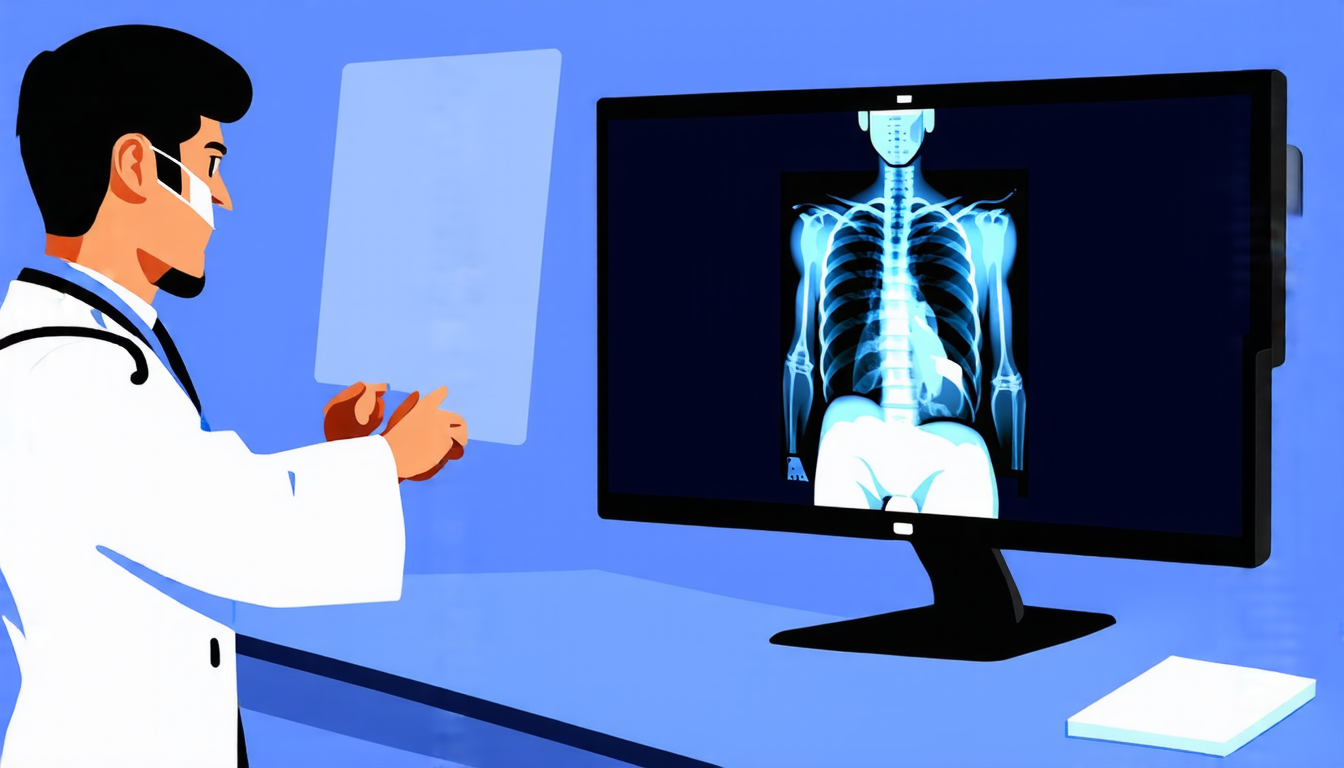
In the field of medical image classification, diffusion models have been shown to outperform traditional methods by a significant margin. In one recent study, researchers used a diffusion model to classify chest X-rays as either healthy or diseased with an accuracy rate of over 95%. This is comparable to human radiologists, who typically achieve accuracy rates of around 90%.
But what’s truly remarkable about diffusion models is their ability to provide not just accurate diagnoses, but also explanations for why they reached those diagnoses. In the case of medical image classification, this means that doctors can understand exactly which features of an image led the model to conclude that a patient has a certain disease.
This level of transparency and explainability is critical in the field of medicine, where accuracy is paramount but so is understanding how that accuracy was achieved. By providing explanations for their diagnoses, diffusion models can help build trust between doctors and patients, and can even aid in the development of new treatments by identifying the specific features that are most indicative of a particular disease.
One potential application of diffusion models in medical image classification is in the diagnosis of rare diseases. These diseases often have distinct visual characteristics that can be difficult for human radiologists to identify. By training a diffusion model on a large dataset of images, researchers may be able to develop a diagnostic tool that can accurately identify these diseases even when they are extremely rare.
Another potential application is in the development of personalized medicine.
Cite this article: “Revolutionizing Medical Imaging with Diffusion Models”, The Science Archive, 2025.
Medical Image Classification, Artificial Intelligence, Diffusion Models, Neural Networks, Medical Diagnosis, Disease Identification, Rare Diseases, Personalized Medicine, Pattern Recognition, Machine Learning





