

Friday 21 March 2025
Researchers have made a surprising discovery about the properties of ruthenium dioxide, a metal oxide that has long been considered non-magnetic. In a study published recently, scientists found that when ruthenium dioxide is exposed to oxygen at its surface, it exhibits spontaneous magnetization, despite being non-magnetic in its bulk form.
The phenomenon was observed through advanced scanning probe microscopy techniques, which revealed the emergence of spin-polarized surface states and magnetic moments on individual atoms. These findings challenge our understanding of this material’s properties and have significant implications for its potential applications in electronics and energy storage.
Ruthenium dioxide has been the subject of intense research due to its unique electronic structure, which is characterized by a partially filled d-shell. This unusual configuration leads to a range of interesting phenomena, including metal-insulator transitions and superconductivity. However, despite these fascinating properties, ruthenium dioxide has long been considered non-magnetic, with no net magnetic moment in the bulk.
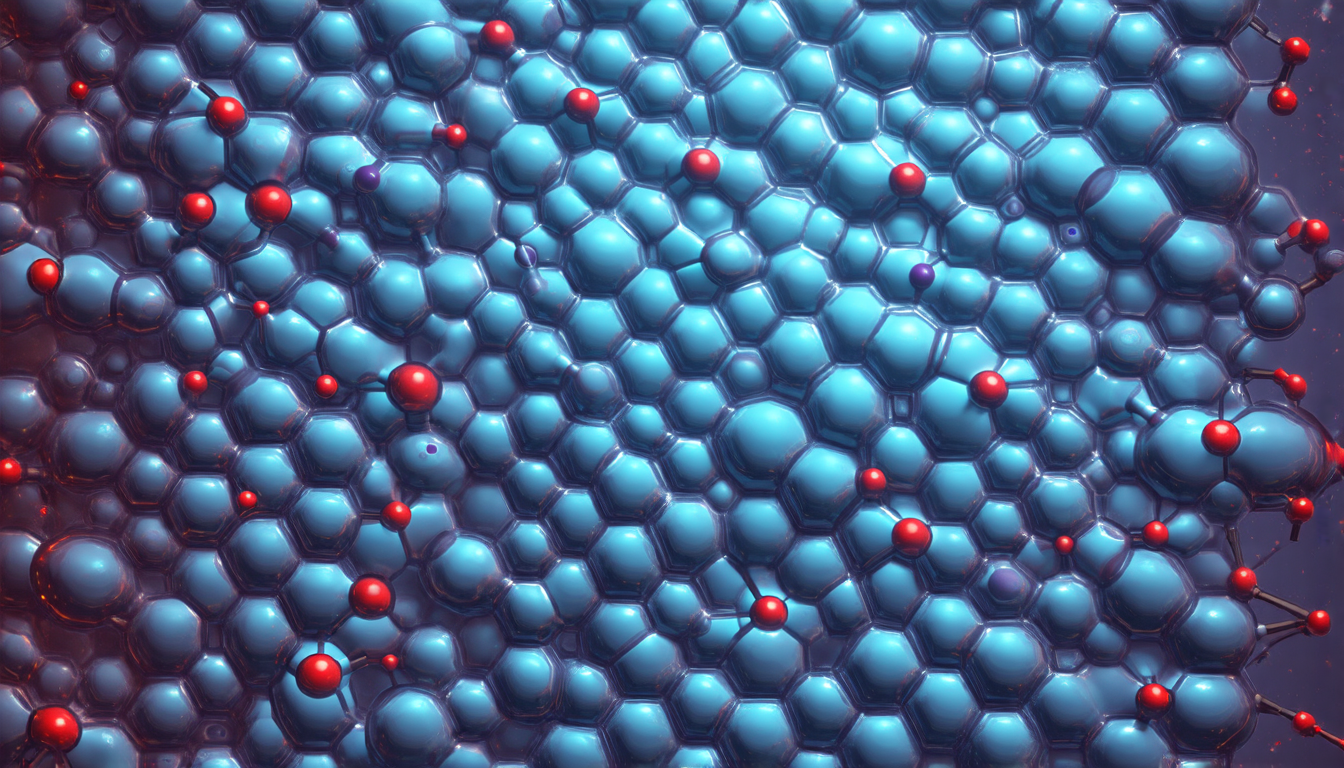
The recent discovery suggests that this assumption may be incorrect, at least when it comes to the surface of the material. The researchers found that when oxygen atoms are adsorbed onto the surface of ruthenium dioxide, they create a local symmetry breaking that leads to the emergence of magnetic moments on individual Ru and O atoms. These magnetic moments are aligned in a specific way, resulting in a net magnetization of the surface.
The significance of this discovery cannot be overstated. Ruthenium dioxide is a widely studied material due to its potential applications in electronics and energy storage. The ability to control its magnetism could open up new avenues for the development of spin-based electronic devices and magnetic data storage systems.
Furthermore, the discovery highlights the importance of considering surface effects when studying materials. In many cases, surfaces can exhibit properties that are fundamentally different from those of the bulk material, and neglecting these effects can lead to a incomplete understanding of the material’s behavior.
The researchers plan to further investigate this phenomenon through additional experiments and simulations. They hope to gain a deeper understanding of the underlying mechanisms driving the emergence of magnetism at the surface of ruthenium dioxide and explore its potential applications in various fields.
In summary, the discovery of spontaneous magnetization on the surface of ruthenium dioxide has significant implications for our understanding of this material’s properties and its potential applications. The findings highlight the importance of considering surface effects when studying materials and open up new avenues for research into spin-based electronic devices and magnetic data storage systems.
Cite this article: “Magnetic Surface States in Ruthenium Dioxide Challenge Our Understanding”, The Science Archive, 2025.
Ruthenium Dioxide, Magnetism, Surface Effects, Non-Magnetic, Spin-Polarized, Magnetic Moments, Scanning Probe Microscopy, Energy Storage, Electronics, Superconductivity.





