

Friday 21 March 2025
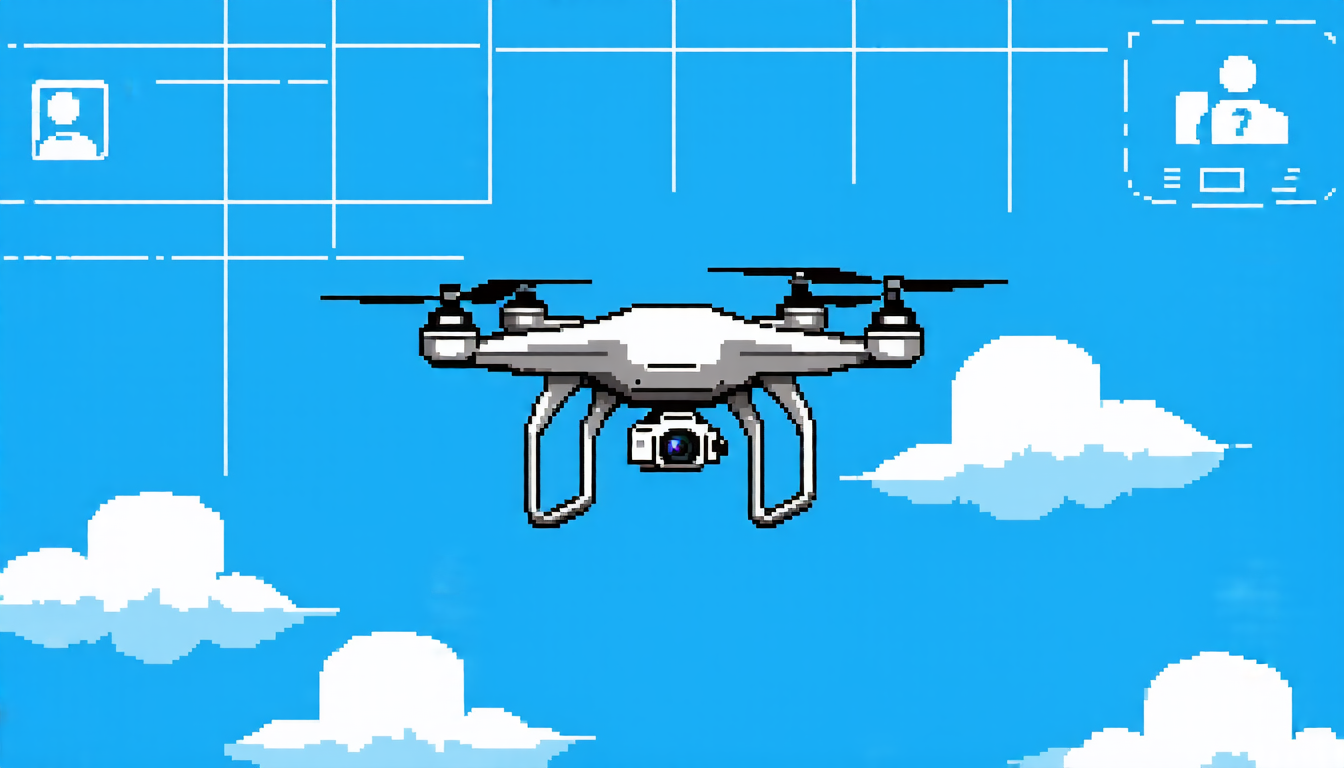
In recent years, drones have become increasingly popular for a wide range of applications, from surveillance and photography to package delivery and search and rescue operations. However, as the use of drones becomes more widespread, so too does the need for advanced technology to track and monitor their movements. Multi-object tracking (MOT) is a critical component of this technology, allowing operators to keep tabs on multiple drones in real-time.
But MOT is no easy feat. With thousands of frames per second flying by, it’s a challenge to accurately identify and track individual drones amidst the chaos. It’s like trying to spot a specific grain of sand on a beach – you need advanced algorithms and processing power to get the job done.
To tackle this problem, researchers have developed sophisticated computer vision techniques that can analyze video footage from multiple cameras and track the movements of individual drones. These systems use deep learning models to detect objects in real-time, allowing operators to quickly identify and respond to any potential threats or issues.
One such system uses a combination of object detection and tracking algorithms to achieve impressive results. By harnessing the power of big data technologies like Apache Kafka and Apache Spark, researchers have developed a framework that can process vast amounts of video data in real-time, making it possible to track multiple drones with ease.
The system’s performance is impressive – it achieves a high accuracy rate, with only a handful of errors per hour. This is crucial for applications where precision and reliability are paramount, such as search and rescue operations or package delivery.
But what makes this system truly remarkable is its ability to adapt to changing environments. By incorporating advanced machine learning techniques, the system can learn from its mistakes and improve its performance over time. This means that operators can rely on the system even in the most challenging conditions, where variables like lighting, weather, and terrain can significantly impact performance.
The potential applications of this technology are vast. In addition to search and rescue operations, it could be used for surveillance and monitoring, package delivery, or even environmental monitoring. As the use of drones becomes more widespread, MOT will play a critical role in ensuring their safe and efficient operation.
The development of advanced MOT systems like this one is a testament to the power of innovation and collaboration. By combining cutting-edge computer vision techniques with big data technologies and machine learning algorithms, researchers have created a system that is not only accurate but also adaptable and reliable.
Cite this article: “Advanced Multi-Object Tracking Systems for Drone Operations”, The Science Archive, 2025.
Drones, Multi-Object Tracking, Computer Vision, Machine Learning, Apache Kafka, Apache Spark, Object Detection, Tracking Algorithms, Big Data, Surveillance





