

Friday 21 March 2025
Scientists have long been fascinated by the process of electrodeposition, where ions are deposited onto a surface to form a solid material. It’s a crucial step in creating everything from batteries and fuel cells to semiconductors and solar panels. But until now, researchers have struggled to understand how the properties of the material being deposited affect the growth of crystals on its surface.
New research published today sheds light on this complex process, revealing that the stress generated by the deposition process can significantly alter the way crystals form. The findings could lead to more efficient and sustainable methods for creating advanced materials.
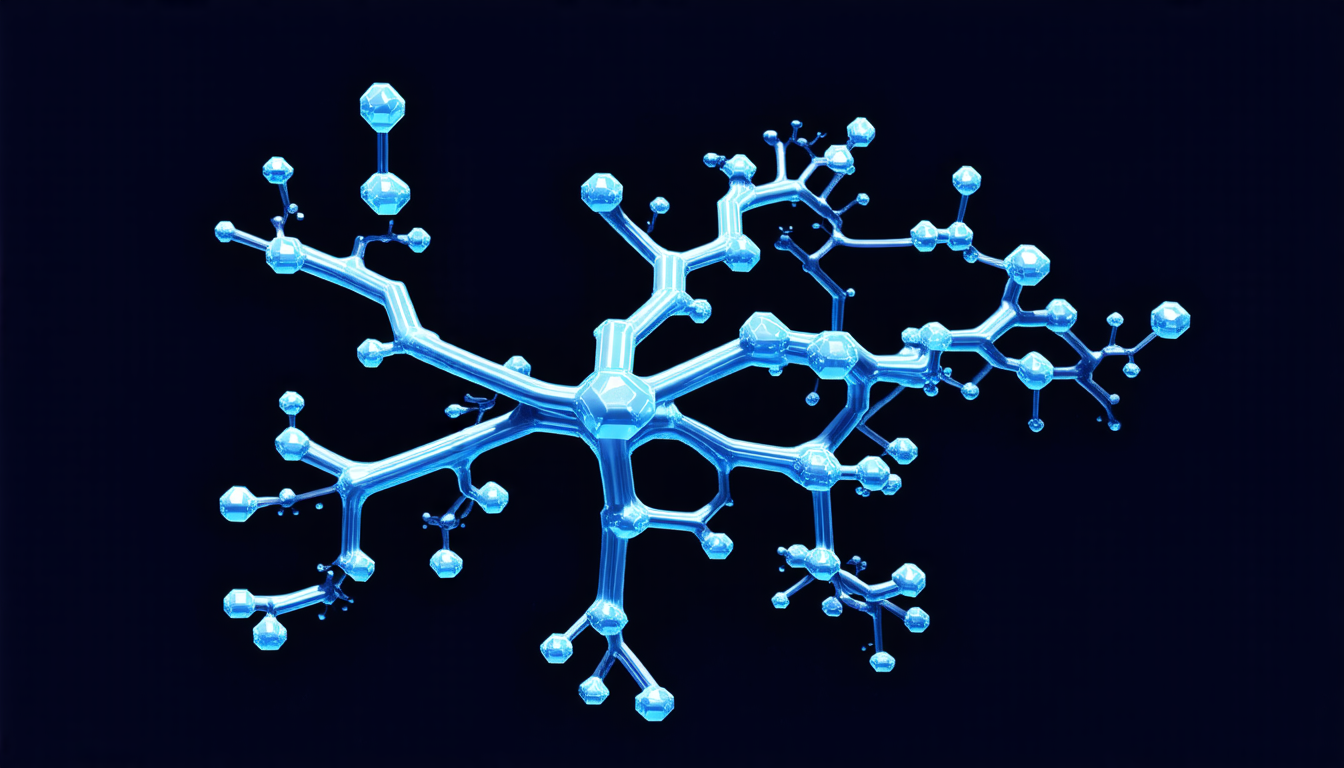
The study focuses on zinc, a popular choice for electrodeposition due to its relatively low cost and high reactivity. When zinc is deposited onto a surface, it forms dendrites – branching crystals that can grow rapidly and unpredictably. This makes it difficult to control the growth of the material and can lead to defects or even short circuits in devices.
To better understand this process, researchers created a complex model that combines elements from materials science, electrochemistry, and physics. They used a technique called phase-field modeling, which allows them to simulate the behavior of ions and electrons at the atomic level.
The simulations revealed that the stress generated by the deposition process can alter the chemical potential – a measure of the energy available for reaction – on the surface of the material. This, in turn, affects the way zinc atoms arrange themselves into crystals, influencing the growth of dendrites.
But here’s the key finding: when researchers applied a thin film of alumina or alucone to the surface, they were able to reduce the stress generated by deposition and alter the chemical potential in a controlled manner. This led to slower-growing dendrites and more uniform crystal structures.
The implications are significant. By controlling the growth of crystals through careful manipulation of the deposition process, researchers may be able to create materials with improved properties – such as increased conductivity or strength. This could lead to breakthroughs in fields like energy storage, where efficient and durable batteries are crucial for widespread adoption.
The study also highlights the importance of considering the stresses generated by material deposition in future research. By taking these stresses into account, scientists may be able to develop more sophisticated models that better predict the behavior of materials at the atomic level.
As researchers continue to push the boundaries of what’s possible with electrodeposition, this new understanding of stress and chemical potential could prove a crucial step forward.
Cite this article: “Stress-Induced Crystal Growth in Electrodeposition Revealed”, The Science Archive, 2025.
Electrodeposition, Zinc, Crystal Growth, Dendrites, Stress, Chemical Potential, Phase-Field Modeling, Materials Science, Electrochemistry, Physics.





