

Friday 21 March 2025
Researchers have made significant progress in developing a brain-computer interface (BCI) that can decode silent speech, potentially revolutionizing communication for people who are unable to speak or have difficulty speaking.
The new system uses electroencephalography (EEG) to record the electrical activity of the brain while a person thinks about speaking. The EEG signals are then analyzed using machine learning algorithms to identify patterns associated with different words and sounds.
One of the key challenges in developing a silent speech BCI is the variability between individuals’ brains. However, researchers have found that by using a combination of two specific features extracted from the EEG signals – the Hilbert envelope and temporal fine structure – they can improve the accuracy of the system.
The Hilbert envelope represents the amplitude of the brain activity over time, while the temporal fine structure captures the rapid oscillations within the signal. By combining these two features, researchers were able to achieve a classification accuracy of 86.44% for overt speech and 79.82% for silent speech.
This is a significant improvement over previous attempts at developing a silent speech BCI, which typically achieved accuracies below 50%. The new system also has the potential to be used in real-world scenarios, as it can be trained using data from just one session of EEG recordings.
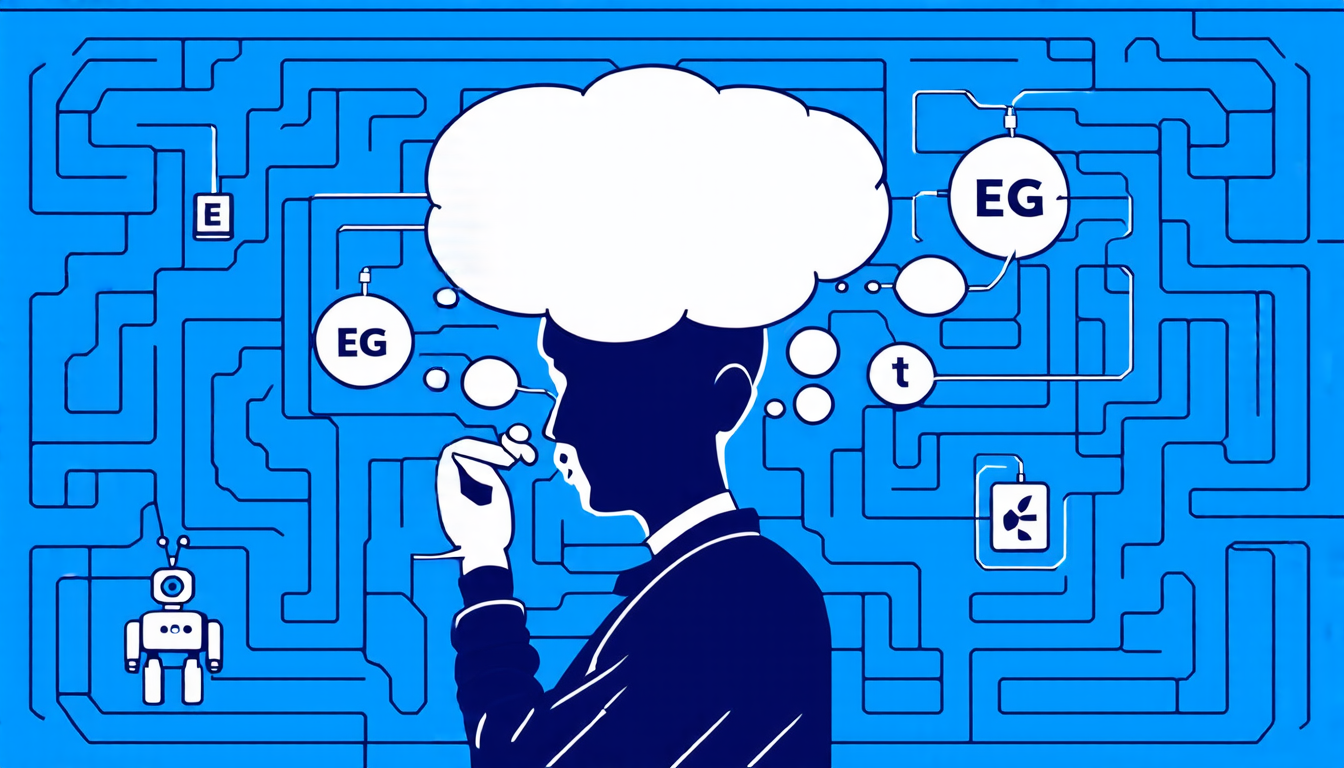
The researchers used a game-like setup to collect data for their study. Participants were asked to navigate a virtual robot through a maze using verbal commands, while simultaneously recording their brain activity with EEG sensors. The game was designed to make the task more engaging and enjoyable, which helped to reduce participant fatigue and improve data quality.
The study’s findings have significant implications for people who are unable to speak or have difficulty speaking, such as those with ALS, Parkinson’s disease, or locked-in syndrome. A silent speech BCI could potentially enable them to communicate more effectively with the outside world, improving their quality of life and independence.
In addition to its potential therapeutic applications, the new system also has implications for fields such as neuroscience and cognitive psychology. By better understanding how the brain processes language, researchers can gain insights into the neural mechanisms underlying speech production and perception.
The study’s authors believe that further research is needed to refine the system and make it more widely available. However, their results demonstrate significant progress towards developing a silent speech BCI that could have a major impact on communication and our understanding of the human brain.
Cite this article: “Brain-Computer Interface Decodes Silent Speech with High Accuracy”, The Science Archive, 2025.
Brain-Computer Interface, Silent Speech, Electroencephalography, Machine Learning Algorithms, Hilbert Envelope, Temporal Fine Structure, Classification Accuracy, Real-World Scenarios, Locked-In Syndrome, Neuroscience.





