

Friday 21 March 2025
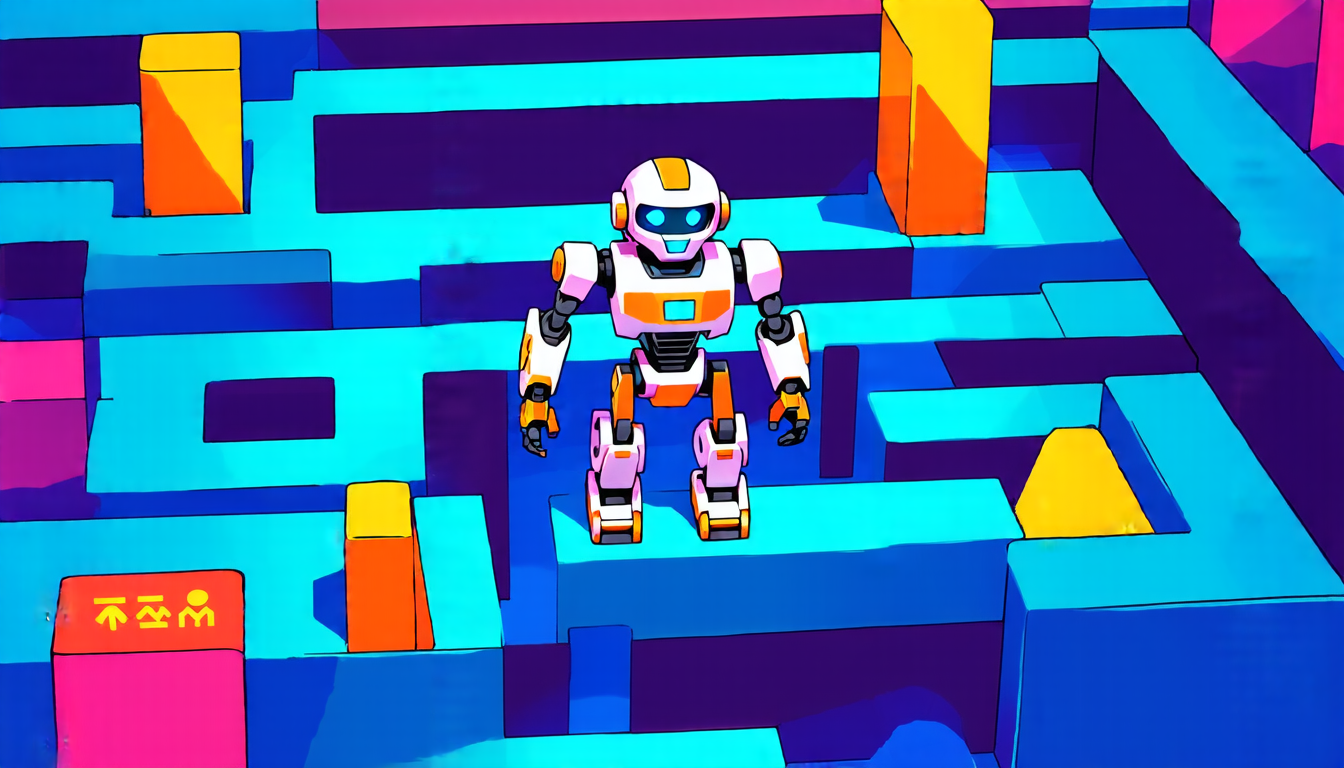
The quest for efficient robot motion planning has been an ongoing challenge in robotics research. One of the biggest hurdles is ensuring that robots can safely navigate complex environments without colliding with obstacles. A new paper presents a promising solution by harnessing the power of machine learning to speed up collision detection, a crucial step in motion planning.
Traditional methods for detecting collisions rely on computationally expensive geometric tests between the robot and obstacles. These tests are often repeated multiple times during the planning process, making them a significant bottleneck. The researchers tackled this problem by developing a machine-learning-based approach that uses support vector machines (SVMs) to evaluate whether robot configurations are collision-free.
The key innovation lies in mapping the complex configuration space of possible robot positions and orientations onto a lower-dimensional feature space, where SVMs can efficiently classify collisions. This mapping is achieved through a clever combination of radial basis functions and kernel tricks. The resulting algorithm, dubbed Learned Collision Detection (LCD), can significantly reduce the number of collision checks required during motion planning.
The paper presents theoretical results that establish the connection between clearance, defined in the configuration space, and margin, defined in the feature space. This relationship is critical for understanding how LCD’s performance scales with the complexity of the environment and the desired level of accuracy. The researchers also provide empirical evidence of LCD’s effectiveness through simulations and experiments on real-world robotic systems.
One of the most impressive aspects of LCD is its ability to adapt to changing environments. By learning from experience, the algorithm can improve its performance over time, reducing the number of collisions detected and allowing robots to move more efficiently. This adaptability makes LCD an attractive solution for applications where environments are dynamic or uncertain.
While LCD shows great promise, it’s not without its limitations. The authors acknowledge that the algorithm’s sample complexity grows exponentially with the dimensionality of the configuration space, which could become a bottleneck in high-dimensional spaces. However, they also suggest potential avenues for addressing this issue, such as using more efficient kernel methods or exploring alternative machine-learning architectures.
As robotics continues to evolve and permeate various aspects of our lives, efficient motion planning will remain a crucial challenge. The development of LCD represents an important step forward in tackling this problem and highlights the exciting possibilities that emerge from combining machine learning with traditional robotics techniques. With further refinement and application, LCD could enable robots to navigate complex environments with greater speed, safety, and precision – opening up new opportunities for automation and collaboration between humans and machines.
Cite this article: “Efficient Robot Motion Planning Through Machine Learning-Based Collision Detection”, The Science Archive, 2025.
Robotics, Motion Planning, Collision Detection, Machine Learning, Support Vector Machines, Feature Space, Kernel Tricks, Clearance, Margin, Dimensionality Reduction





