

Friday 21 March 2025
The quest to understand the intricacies of statistical models has led researchers down a complex path, navigating the intersection of algebra and geometry. A recent study delves into the world of maximum likelihood degree (MLD), a fundamental concept in statistics that determines the number of solutions to a score equation.
For those unfamiliar with the term, MLD is a measure of the complexity of a statistical model’s likelihood function. In essence, it counts the number of solutions to an equation that arises from the model’s parameters. But why does this matter? The answer lies in the realm of estimation and inference, where researchers rely on these models to extract insights from data.
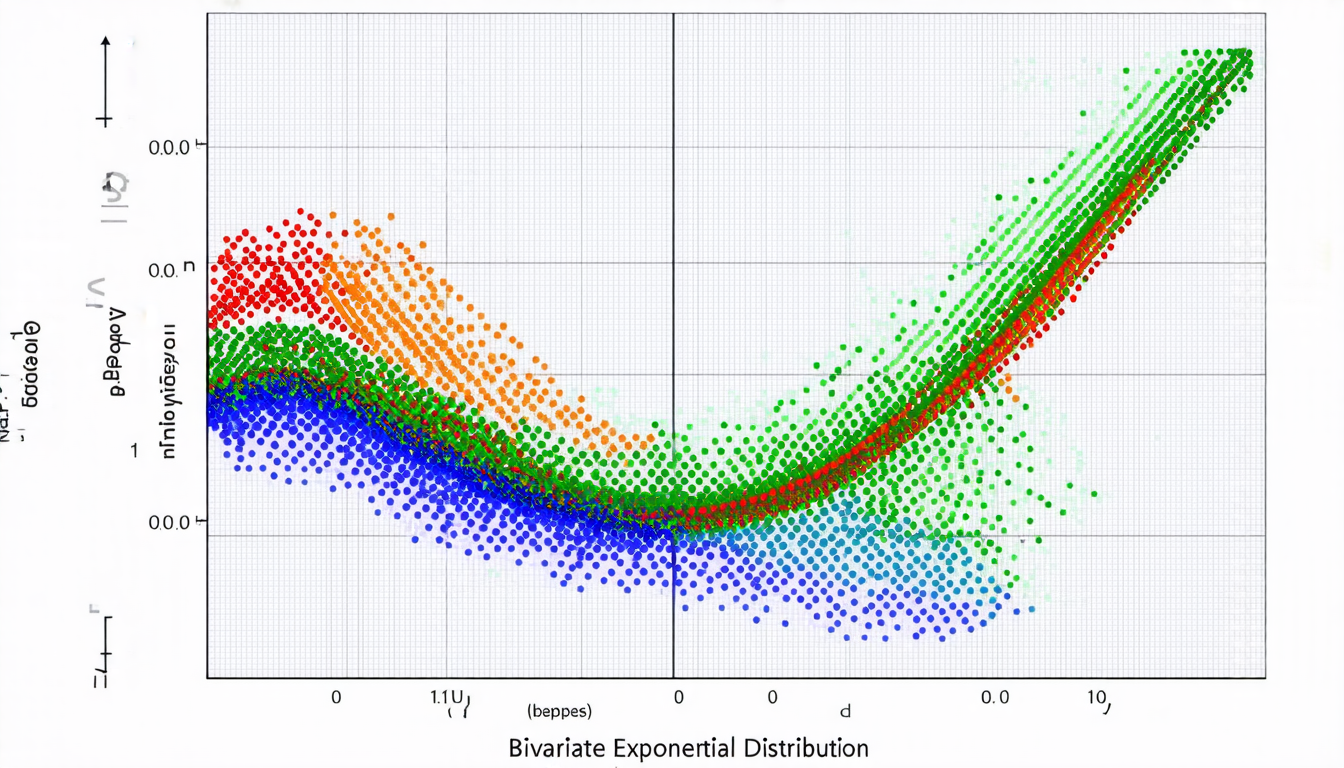
Gumbel’s Type-I bivariate exponential distribution is a particular statistical model that has garnered attention for its applications in reliability engineering, risk analysis, and environmental studies. By examining the MLD of this distribution, researchers can gain valuable insights into the behavior of the model’s parameters. In other words, they can better understand how these parameters interact with each other to produce predictions.
The study in question uses algebraic techniques to compute the MLD of Gumbel’s Type-I bivariate exponential distribution for various scenarios. These scenarios involve different combinations of common zeros between the model’s polynomials and repeated zeros of the denominator function. By analyzing these cases, researchers can identify patterns and relationships that shed light on the model’s behavior.
One key finding is that the MLD of Gumbel’s Type-I bivariate exponential distribution varies depending on the number of repeated zeros of the denominator function. When there are no repeated zeros, the MLD is relatively high, indicating a larger number of solutions to the score equation. However, when repeated zeros do occur, the MLD decreases, suggesting fewer solutions.
This finding has significant implications for statistical inference and estimation. By understanding how the MLD changes in response to different scenarios, researchers can refine their estimation techniques and improve the accuracy of their predictions. Moreover, this knowledge can inform decisions about data analysis and model selection, ultimately leading to more robust conclusions.
The study’s results also highlight the importance of algebraic geometry in statistical modeling. The use of geometric techniques allows researchers to visualize complex relationships between variables and identify patterns that might be obscured by traditional methods. This interdisciplinary approach has far-reaching potential, enabling statisticians to tackle increasingly complex problems and make more informed decisions.
Cite this article: “Unlocking Insights into Statistical Models: A Study on Maximum Likelihood Degree”, The Science Archive, 2025.
Statistical Models, Maximum Likelihood Degree, Algebraic Geometry, Statistical Inference, Estimation, Gumbel’S Type-I Bivariate Exponential Distribution, Reliability Engineering, Risk Analysis, Environmental Studies, Data Analysis





