

Friday 21 March 2025
Scientists have long been fascinated by the mysterious ways in which galaxy clusters, vast collections of galaxies bound together by gravity, evolve over billions of years. A new study has shed light on a particularly intriguing phenomenon: how these clusters can affect the behavior of radio-emitting black holes at their hearts.
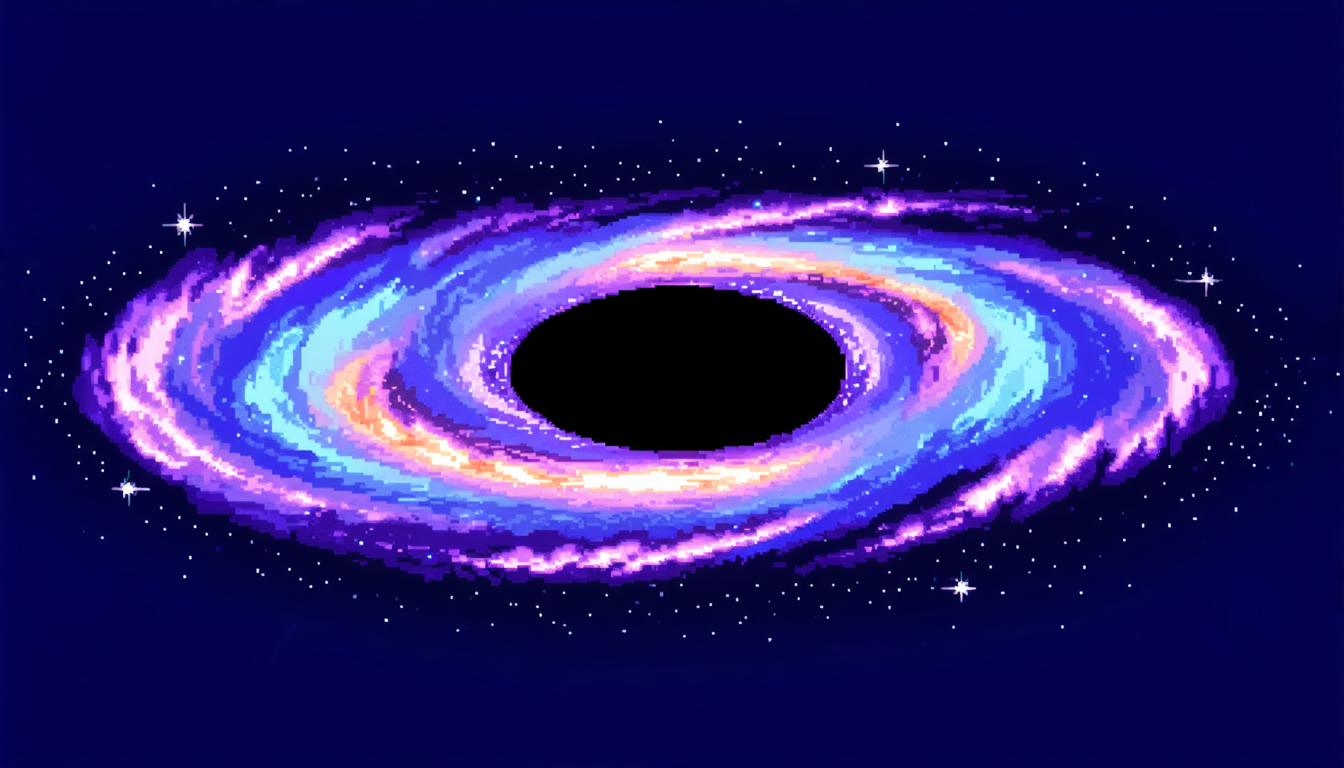
Radio-AGN, as scientists call them, are incredibly powerful objects that reside in the centers of many galaxy clusters. They’re essentially supermassive black holes that have grown so massive they’ve begun to feed on surrounding material, releasing enormous amounts of energy in the process. As these black holes grow, they can distort the light around them, creating a halo-like effect that scientists can detect from great distances.
The new study, published recently in The Astrophysical Journal, looked at 144 galaxy clusters and found something remarkable: those that are merging with other clusters have a higher proportion of radio-AGN than those that are not. This suggests that the merger process itself might be triggering the growth of these powerful black holes.
One possible explanation is that the collision between two galaxy clusters sends shockwaves through the surrounding gas, compressing it and creating conditions ripe for star formation. As new stars form, they can eventually collapse under their own gravity to create massive stars, which ultimately end their lives in supernovae explosions that enrich the surrounding material with heavy elements.
These enriched regions are thought to be particularly conducive to black hole growth, as they provide a rich source of fuel for these hungry monsters. The study’s findings suggest that galaxy cluster mergers might be an important trigger for this process, allowing radio-AGN to flourish in the aftermath of such events.
The implications of this research are far-reaching, offering new insights into the complex interplay between galaxy clusters and their central black holes. By studying these objects further, scientists hope to gain a better understanding of how they shape the evolution of galaxies and the universe as a whole.
In the meantime, astronomers will continue to study these enigmatic radio-AGN, using powerful telescopes to probe the very heart of distant galaxy clusters. Their findings may hold the key to unlocking some of the universe’s most enduring mysteries, and could ultimately reveal new secrets about the nature of black holes themselves.
Cite this article: “Mergers Spark Black Hole Growth in Galaxy Clusters”, The Science Archive, 2025.
Galaxy Clusters, Radio-Agn, Supermassive Black Holes, Galaxy Mergers, Star Formation, Shockwaves, Supernovae, Heavy Elements, Black Hole Growth, Cosmic Evolution





