

Friday 21 March 2025
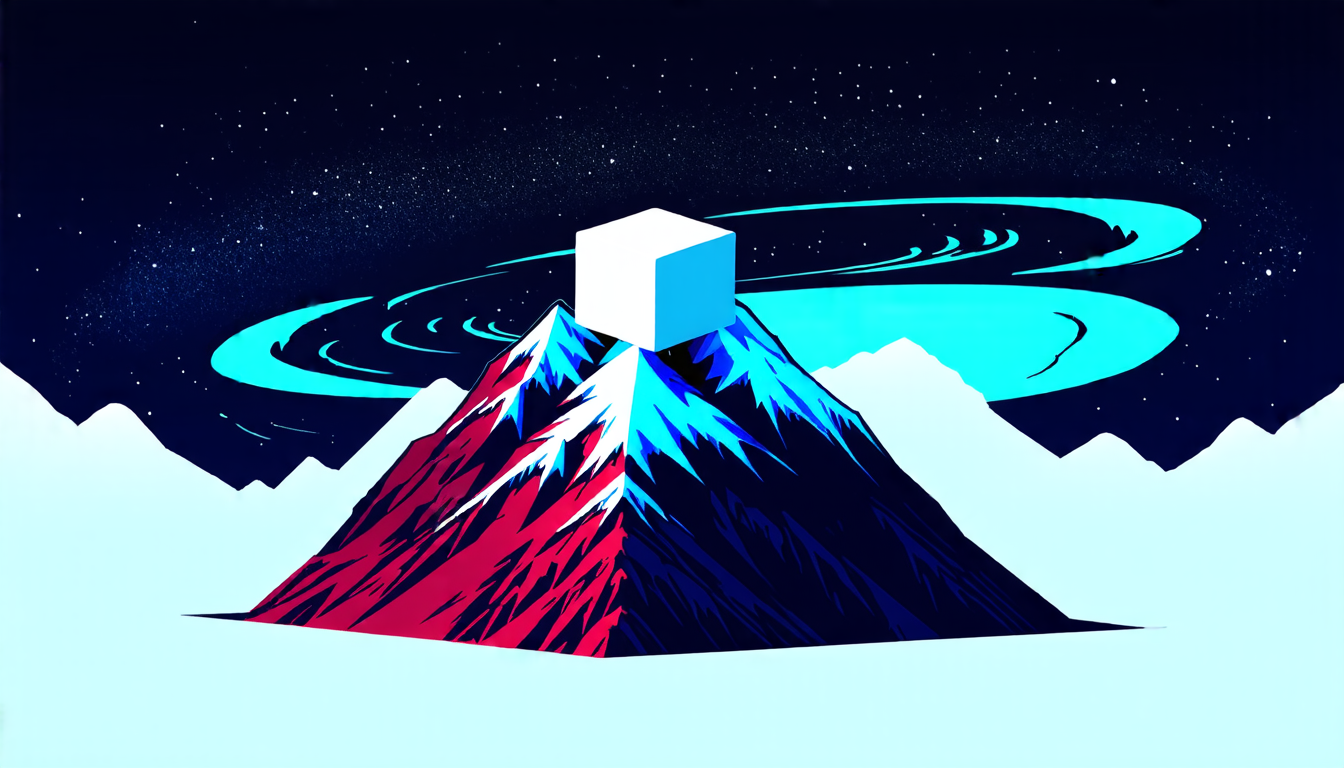
Scientists have been studying the properties of neutron stars for decades, and recently, a new paper has shed more light on these mysterious objects. Neutron stars are incredibly dense balls of matter that are formed when a star undergoes a supernova explosion. They are so dense that a sugar-cube-sized amount of their material would weigh about as much as Mount Everest.
The researchers used a technique called metamodelling to study the properties of neutron stars. This involves creating a large number of different models of the stars and then testing them against a range of observations and data. The team found that two different types of models, known as GDFM and TW, produced very different results when it came to the composition of the stars.
The GDFM model suggested that neutron stars could have a wide range of compositions, with some having more protons than others. This is because the model includes a term that allows for the density of the star to vary depending on its distance from the center. The TW model, on the other hand, produced much more uniform results, with all the stars having roughly the same composition.
One of the key observations that the team tested their models against was the mass and radius of neutron stars. These values are determined by observing the way that neutron stars emit light as they spin around. The GDFM model did a good job of predicting these values, but the TW model struggled to match them.
Another observation that the team looked at was the proton fraction in the stars. This is a measure of how many protons are present in the star compared to neutrons. The GDFM model suggested that this value could vary widely depending on the distance from the center of the star, while the TW model produced much more uniform results.
The researchers also looked at the symmetry energy of neutron stars. This is a measure of how the density of the star changes as it gets closer to the center. The GDFM model did a good job of predicting this value, but the TW model struggled again.
Overall, the study suggests that the composition of neutron stars can vary widely depending on their distance from the center and other factors. This is an important finding for scientists who are trying to understand these mysterious objects better.
Cite this article: “Variations in Neutron Star Composition Revealed by Metamodelling Study”, The Science Archive, 2025.
Neutron Stars, Supernovae, Metamodelling, Gdfm, Tw, Composition, Protons, Neutrons, Symmetry Energy, Density.





