

Friday 21 March 2025
Scientists have long been fascinated by the possibilities of creating artificial intelligence that can interact with the physical world in a way that’s indistinguishable from humans. Recently, researchers have made significant strides towards achieving this goal, developing new models and techniques that allow machines to learn from data and adapt to changing environments.
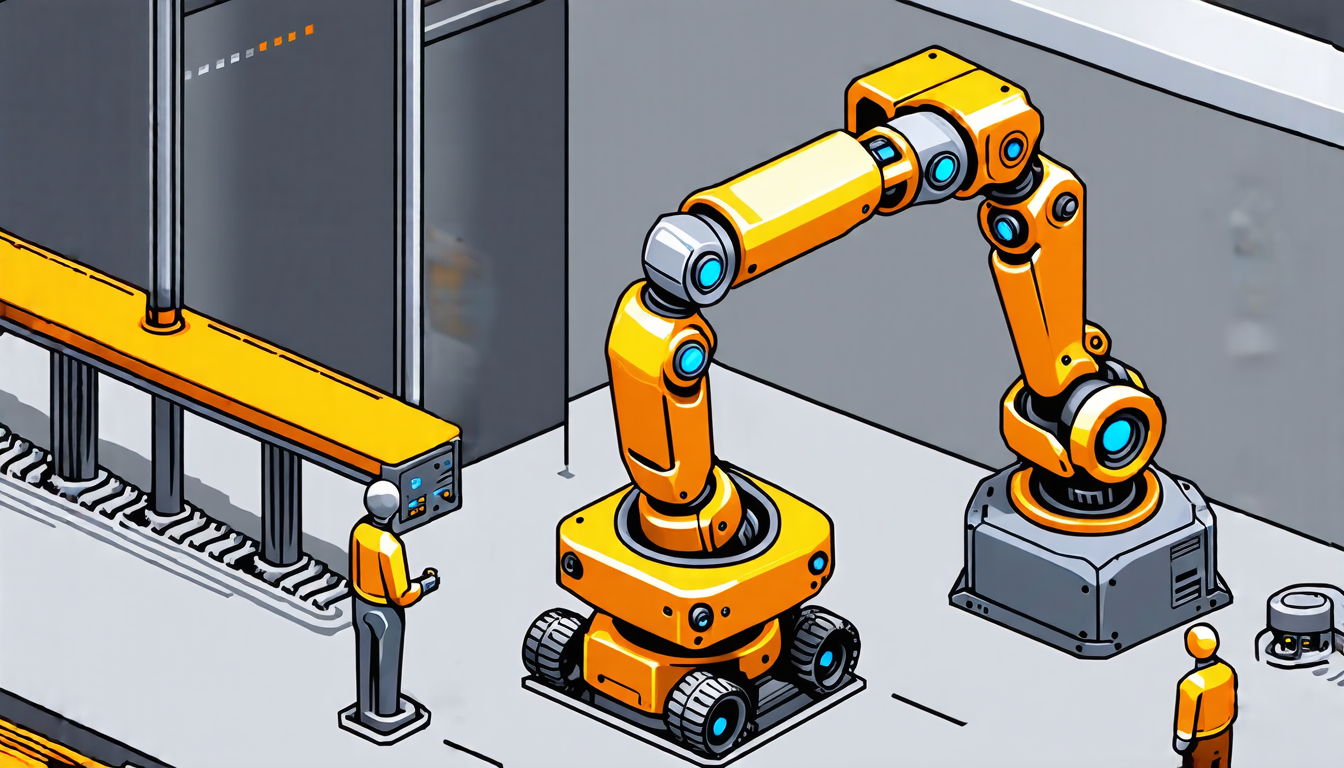
One such approach is called Heterogeneous Masked Autoregression (HMA), which uses a combination of machine learning algorithms and physical simulations to teach robots how to perform complex tasks. The system works by analyzing vast amounts of data on robotic behavior, including videos of humans interacting with objects and other robots, as well as simulated scenarios of various actions.
The HMA model is designed to learn from this diverse range of data sources, allowing it to adapt to new situations and environments without the need for extensive retraining. This flexibility is crucial in robotics, where unexpected events or changes in the environment can render previously learned behaviors useless.
One of the key innovations behind HMA is its ability to generate videos that are so realistic they’re almost indistinguishable from real-world footage. By creating these simulated scenarios, researchers can test and refine their models without having to physically build and test new robots every time a small change is made.
This approach has several benefits over traditional methods of robotics development. For one, it allows for faster iteration times, as changes can be tested and refined in minutes rather than days or weeks. Additionally, HMA enables researchers to explore complex scenarios that would be difficult or impossible to replicate in the physical world.
The potential applications of HMA are vast and varied. In the realm of robotics, the system could enable robots to learn more complex tasks, such as assembly line work or surgical procedures, by allowing them to adapt to new situations and environments without requiring extensive retraining.
Beyond robotics, HMA could have significant implications for fields like computer vision and artificial intelligence. By enabling machines to generate realistic simulations of real-world scenarios, the system could help researchers develop more accurate models of human behavior and decision-making processes.
In the future, scientists plan to continue refining the HMA model, exploring its potential applications in a wide range of fields and pushing the boundaries of what’s possible with artificial intelligence. As research continues to advance, it’s likely that we’ll see even more innovative and realistic simulations emerge from this cutting-edge technology.
Cite this article: “Advances in Artificial Intelligence: Heterogeneous Masked Autoregression Model”, The Science Archive, 2025.
Artificial Intelligence, Robotics, Machine Learning, Heterogeneous Masked Autoregression, Simulation, Computer Vision, Autoregression, Robot Learning, Realistic Simulations, Human Behavior





