

Friday 21 March 2025
Scientists have long been fascinated by the way tiny organisms, like bacteria and microswimmers, navigate through their environments. These microscopic creatures are able to propel themselves through fluids using specialized structures called flagella, which resemble tiny whips.
Researchers have been studying how these microorganisms move in response to different types of fluid flow, such as the gentle currents found near a riverbank or the strong flows generated by a pump. By understanding how they respond to these flows, scientists hope to gain insights into how these organisms interact with their environments and how they adapt to changing conditions.
A recent study published in a scientific journal has shed new light on the complex dynamics of microswimmers as they move through fluids. The researchers used computer simulations to model the behavior of these tiny creatures as they responded to different types of fluid flow, including the type found in a microchannel – a narrow channel with smooth walls.
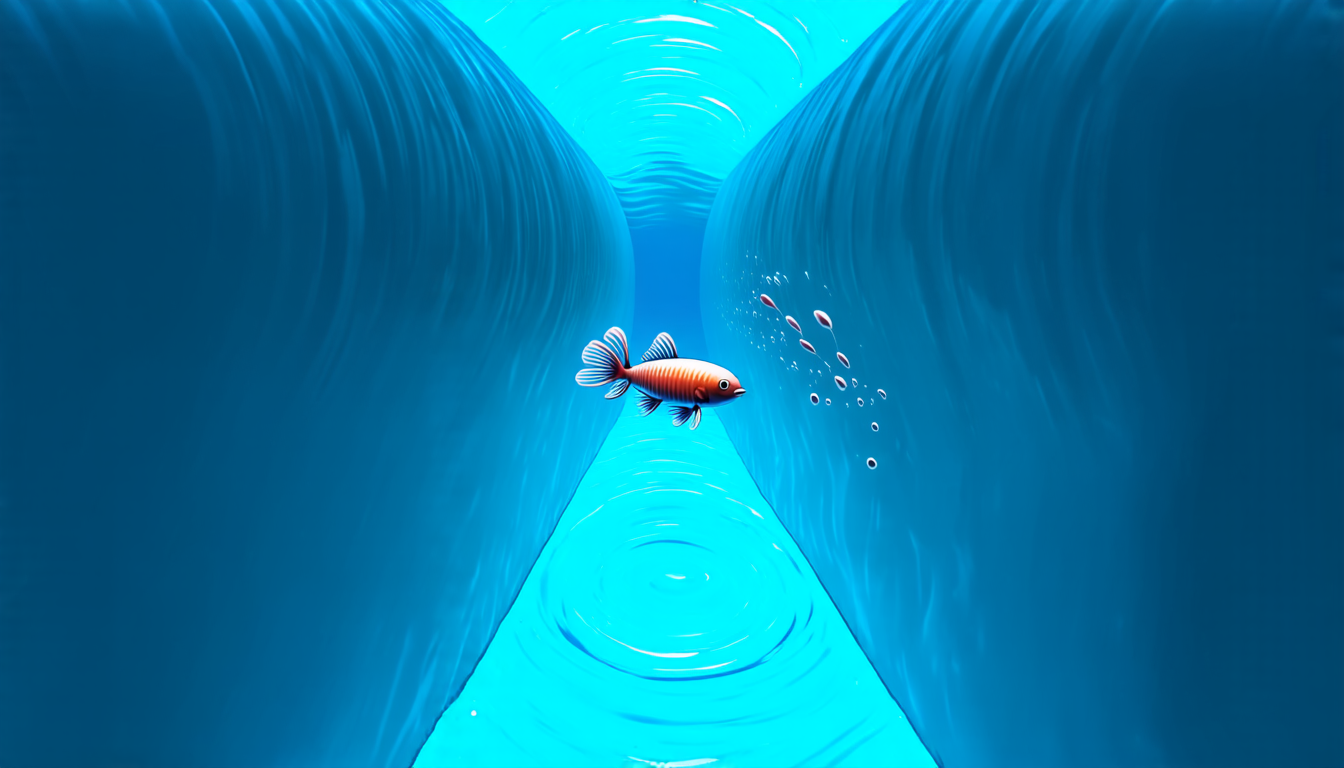
The scientists discovered that when microswimmers encounter a microchannel, their movement becomes highly asymmetrical. Instead of moving in a straight line, they begin to oscillate back and forth along the length of the channel. This unusual behavior is due to the way the flagella of these organisms interact with the fluid flow.
As the microswimmer moves through the channel, its flagella create eddies and vortices that affect the surrounding fluid. These eddies and vortices in turn influence the movement of the microswimmer itself, causing it to deviate from a straight path. The researchers found that this asymmetrical motion allows the microswimmers to migrate towards the walls of the channel, which can be important for their survival.
The study’s findings have significant implications for our understanding of how microorganisms interact with their environments. By studying the behavior of these tiny creatures in different types of fluid flow, scientists may gain insights into how they adapt to changing conditions and how they interact with other organisms.
This research also has potential applications in fields such as biomedicine and environmental science. For example, scientists could use this knowledge to design new microfluidic devices that mimic the natural environments of these microorganisms. This could help researchers study their behavior and interactions in a more controlled and precise way.
Overall, this study provides a fascinating glimpse into the complex world of microswimmers and their interactions with fluids. By continuing to explore the dynamics of these tiny creatures, scientists may uncover new insights into the intricate relationships between living organisms and their environments.
Cite this article: “Microswimmers Unusual Motion Reveals Secrets of Survival in Fluids”, The Science Archive, 2025.
Microswimmers, Flagella, Fluid Flow, Microorganisms, Biomedicine, Environmental Science, Microfluidic Devices, Eddies, Vortices, Dynamics





