

Friday 21 March 2025
Medical imaging is a crucial tool in diagnosing and treating diseases, but it’s only as good as the data used to train the algorithms that interpret those images. Recently, researchers have made significant progress in developing artificial intelligence (AI) systems that can learn from large datasets of medical images, known as embeddings. These embeddings are compact representations of the images that contain valuable information for doctors to make accurate diagnoses.
However, these AI systems have a dark side – they often encode demographic information, such as age and sex, into the embeddings. This means that the models may inadvertently perpetuate biases and unfair outcomes for certain patient groups. For example, if a model is trained on images of mostly white patients, it may be more likely to misdiagnose or incorrectly treat patients of other racial backgrounds.
To combat this issue, researchers have developed an innovative approach called adversarial debiasing. This technique uses a type of artificial neural network called a Variational Autoencoder (VAE) to remove demographic information from the embeddings while preserving their utility for medical diagnosis.
The VAE works by learning to compress the original embedding into a lower-dimensional representation, known as a latent space. The adversary is then trained to predict demographic information from this latent space, encouraging the VAE to remove any unwanted biases during the compression process.
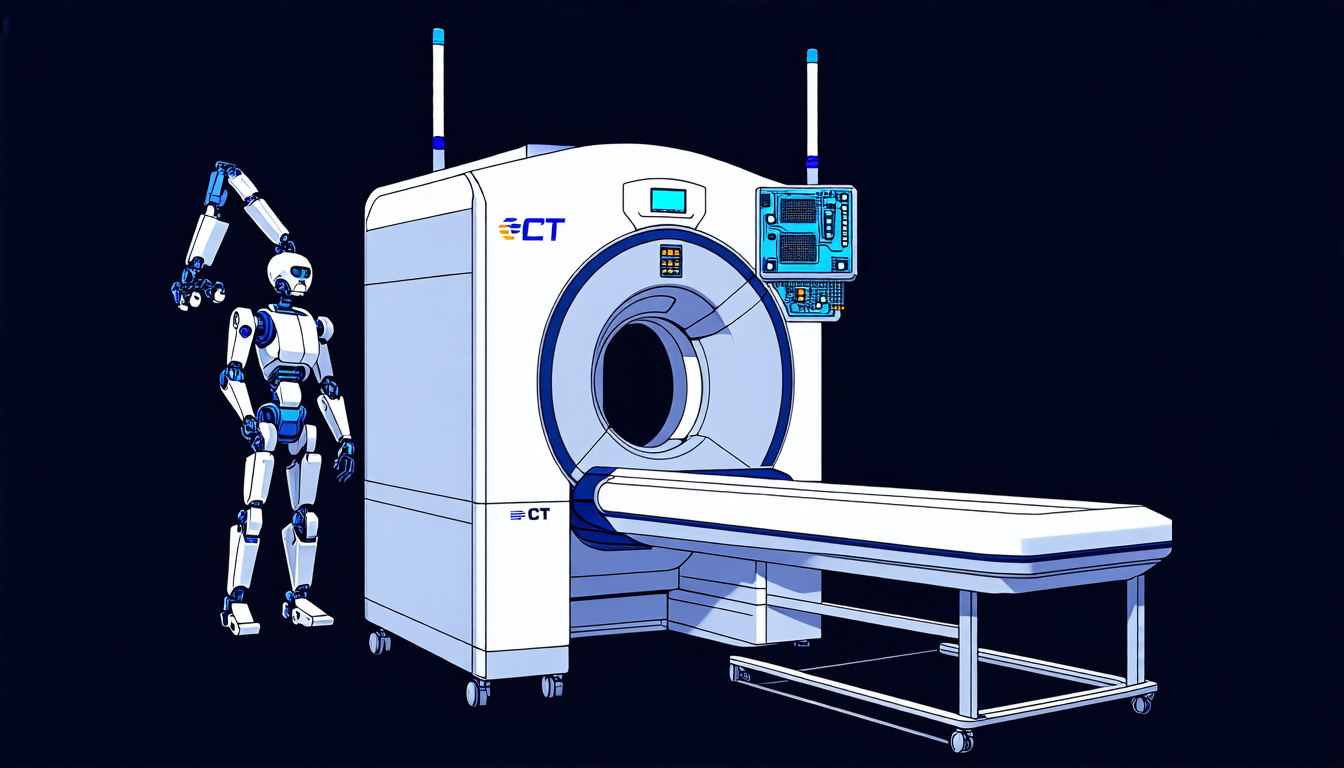
In a recent study, researchers applied this approach to a large dataset of computed tomography (CT) scans, specifically designed for lung cancer screening. They found that their debiased embeddings not only eliminated sex and age information but also maintained excellent predictive performance for diagnosing lung cancer risk.
The implications are significant – by removing demographic biases from medical AI systems, doctors can trust that the results are accurate and unbiased, regardless of a patient’s background. This is especially important in high-stakes applications like medical diagnosis, where accuracy and fairness are paramount.
The researchers also demonstrated that their approach was robust to data poisoning attacks, which involve intentionally corrupting the training data to compromise the model’s performance. This shows that the debiased embeddings are not only fair but also secure against malicious attempts to manipulate them.
While this breakthrough is a significant step forward in ensuring fairness and transparency in medical AI systems, there is still much work to be done. Future research will focus on extending these results to other types of medical images and clinical applications, as well as developing more robust methods for evaluating the fairness and bias of AI models.
Cite this article: “Debiasing Medical AI Systems: A Breakthrough in Ensuring Fairness and Transparency”, The Science Archive, 2025.
Medical Imaging, Artificial Intelligence, Biases, Fairness, Adversarial Debiasing, Variational Autoencoder, Latent Space, Lung Cancer, Computed Tomography Scans, Data Poisoning Attacks





