
Friday 21 March 2025
The intricate rhythms of animal vocalizations have long fascinated scientists, but a new study reveals that the mathematical underpinnings of these patterns are far more complex than previously thought.
Researchers have long observed that animals, from birds to primates, use repetitive patterns in their vocalizations to convey information and coordinate behavior. But the underlying rules governing these rhythms have remained elusive – until now.
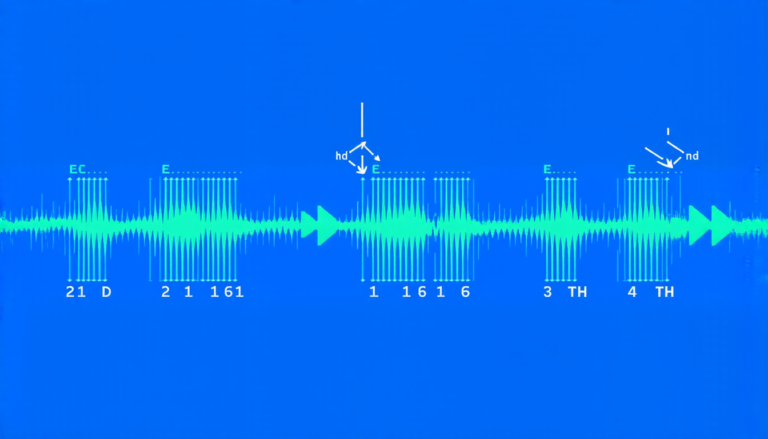
A team of scientists has discovered that the distribution of intervals between animal vocalizations follows a specific mathematical pattern, known as a uniform distribution. This finding challenges previous assumptions about the nature of rhythmic communication in animals.
The researchers analyzed data from a range of species, including songbirds, primates, and even dolphins. They found that the distribution of intervals between vocalizations was consistently uniform, meaning that each interval had an equal probability of occurring.
This discovery has significant implications for our understanding of animal behavior and cognition. It suggests that animals may be using rhythmic patterns to convey complex information about their social relationships, territory, or even emotions.
The study’s findings also highlight the importance of considering mathematical patterns in animal behavior. By recognizing the underlying rules governing these rhythms, scientists can gain a deeper understanding of how animals communicate and interact with each other.
One of the key insights from this research is that the same mathematical principles govern both human music and animal vocalizations. This suggests that there may be a universal language of rhythm, shared across species and cultures.
The study’s authors propose that this uniform distribution of intervals may be an evolutionary adaptation, allowing animals to convey information efficiently and accurately in their social environments. It also highlights the importance of considering the mathematical underpinnings of animal behavior, rather than simply observing surface-level patterns.
As scientists continue to uncover the intricate rhythms of animal vocalizations, they may uncover new insights into the nature of communication and cognition across species. This research has significant implications for our understanding of animal intelligence and social behavior, and offers a fascinating glimpse into the complex world of animal communication.
Cite this article: “Rhythms in Nature: Uncovering the Mathematical Underpinnings of Animal Vocalizations”, The Science Archive, 2025.
Animal Vocalizations, Mathematical Patterns, Uniform Distribution, Intervals, Rhythmic Communication, Animal Behavior, Cognition, Social Relationships, Territory, Emotions