

Friday 21 March 2025
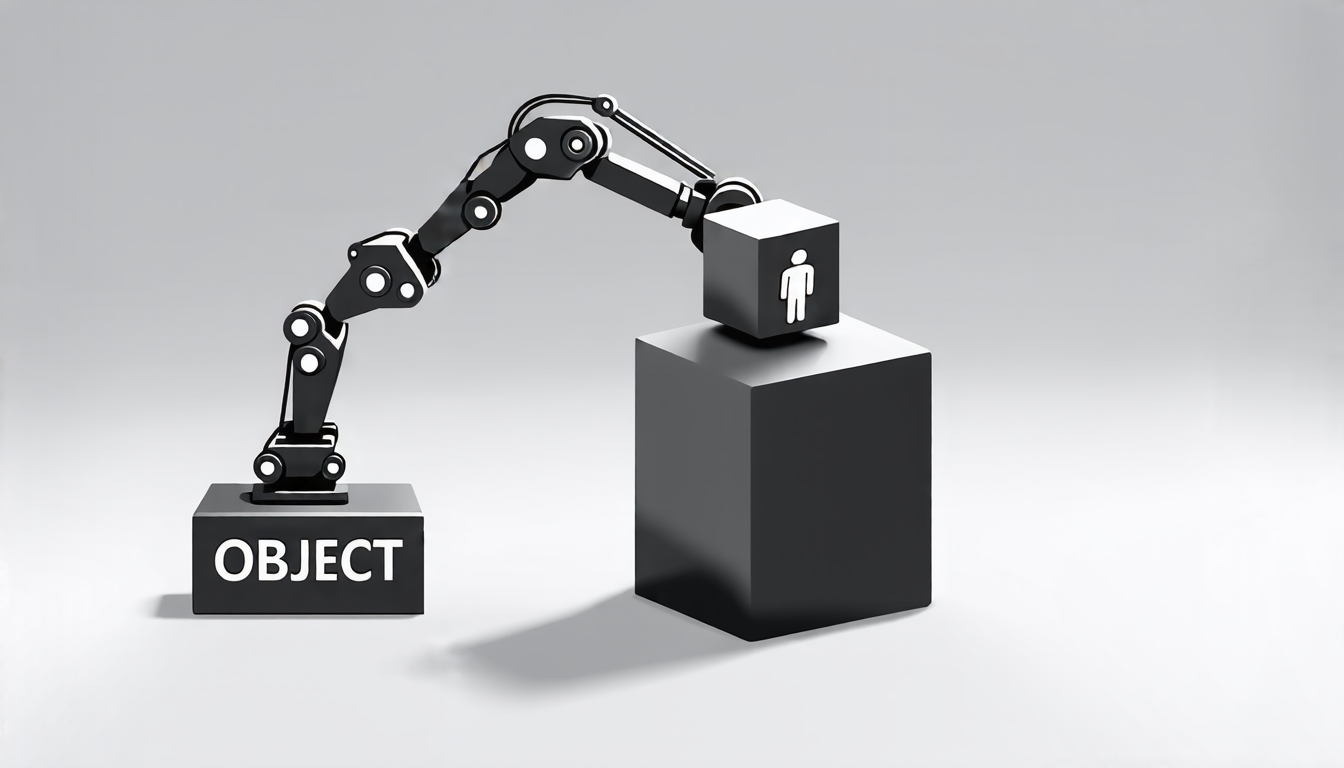
Researchers have long sought to bridge the gap between vision-language-action models and cognitive architectures, two approaches that excel in different areas but struggle to integrate seamlessly. Vision-language-action models can translate visual and linguistic inputs into robot actions, but they often lack reliability due to their opaque nature and sensitivity to environmental changes. Cognitive architectures, on the other hand, excel at symbolic reasoning and state monitoring, but are constrained by rigid predefined execution.
A recent study has made significant progress in bridging this gap by probing OpenVLA, a vision-language-action model built on a Llama 2 language model backbone combined with a visual encoder, to uncover its internal representations of object properties, relations, and action states. The team aimed to integrate these symbolic representations with a cognitive architecture for enhanced interpretability and robustness.
To achieve this, the researchers collected data by querying OpenVLA’s hidden layers and extracting corresponding ground-truth symbolic states from a LIBERO environment, which simulates various robotic tasks. They then applied several preprocessing steps to ensure the resulting dataset reflected meaningful, fluctuating states rather than trivial or constant conditions.
The team implemented a linear probe that maps OpenVLA’s internal representations to binary predictions about specific symbolic states. By training and evaluating this probe on the preprocessed data, they aimed to assess the model’s ability to encode object relations, properties, action statuses, and subgoals.
The results show consistently high accuracies across most layers for both object and action states, indicating that OpenVLA indeed encodes some of these symbolic features. However, the first layer probes performed significantly worse, suggesting that it primarily encodes low-level semantic features rather than high-level visual-semantic features.
This study’s findings have significant implications for the development of more reliable and interpretable robotic systems. By integrating cognitive architectures with vision-language-action models, researchers can create systems that not only perform well in specific tasks but also provide a deeper understanding of their internal workings.
The authors acknowledge that their dataset may not be diverse enough to fully capture the complexities of object states and action states, which could impact the probe’s performance. Nevertheless, they demonstrate the potential for probing vision-language-action models to uncover symbolic information and integrate it with cognitive architectures.
As researchers continue to push the boundaries of artificial intelligence, this study highlights the importance of understanding how these complex systems process and represent knowledge.
Cite this article: “Uncovering Symbolic Representations in Vision-Language-Action Models for Enhanced Robotic Intelligence”, The Science Archive, 2025.
Vision-Language-Action Models, Cognitive Architectures, Robotic Systems, Symbolic Reasoning, State Monitoring, Object Properties, Relations, Action States, Linear Probe, Artificial Intelligence.





