

Friday 21 March 2025
The quest for efficient search operators in genetic programming has been a long-standing challenge. Genetic programming is a type of evolutionary algorithm that uses principles from natural selection and genetics to evolve solutions to complex problems. However, its application has been limited by the need for effective search operators that can efficiently guide the search process towards optimal solutions.
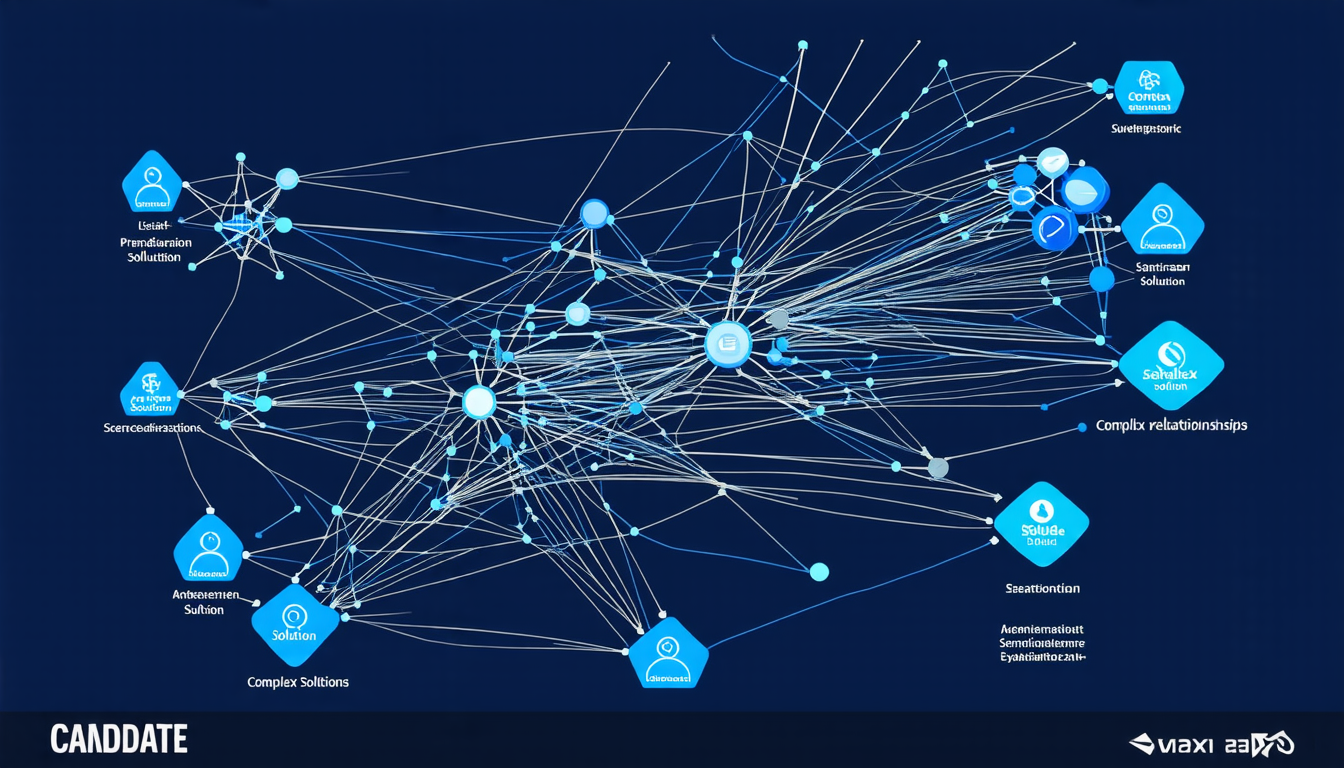
Recently, researchers have made significant progress in this area by developing novel search operators inspired by machine learning techniques. One such approach is the use of graph neural networks (GNNs) to guide genetic programming searches. GNNs are a type of deep learning model designed for processing and analyzing graph-structured data, such as molecular structures or social networks.
In this context, researchers have demonstrated that GNNs can be used to create informed search operators that steer the genetic programming process towards promising solution components. By leveraging the power of machine learning, these operators can learn to recognize patterns and relationships in the problem space that would be difficult for humans to identify.
The approach works by first generating a large number of candidate solutions using traditional genetic programming techniques. The GNN is then trained on this dataset to predict which solution components are likely to be useful in solving the problem at hand. This information is used to guide the search process, allowing the algorithm to focus on exploring promising areas of the solution space.
The results are impressive. In experiments with symbolic regression problems – a classic benchmark for genetic programming – the GNN-guided approach outperformed traditional methods by significant margins. Not only did it find more accurate solutions, but it also did so in fewer generations, making it a much more efficient process overall.
One of the key benefits of this approach is its ability to adapt to complex problem spaces. By learning from the data and identifying patterns that are relevant to the specific problem at hand, the GNN-guided search operator can effectively navigate even the most challenging solution spaces.
The implications of this work are significant. As genetic programming becomes increasingly important in fields such as artificial intelligence, robotics, and bioinformatics, the need for efficient and effective search operators will only continue to grow. By leveraging machine learning techniques like GNNs, researchers may be able to unlock new possibilities for solving complex problems and pushing the boundaries of what is possible with genetic programming.
In the future, it will be exciting to see how this approach is applied in different domains and problem spaces.
Cite this article: “Guiding Genetic Programming with Graph Neural Networks”, The Science Archive, 2025.
Genetic Programming, Machine Learning, Graph Neural Networks, Evolutionary Algorithms, Search Operators, Symbolic Regression, Problem Spaces, Artificial Intelligence, Robotics, Bioinformatics.





