

Friday 21 March 2025
Scientists have made a significant breakthrough in understanding and calculating the probability of rare events occurring in complex systems, such as chemical reactions or phase transitions. This achievement has far-reaching implications for fields like chemistry, biology, and materials science.
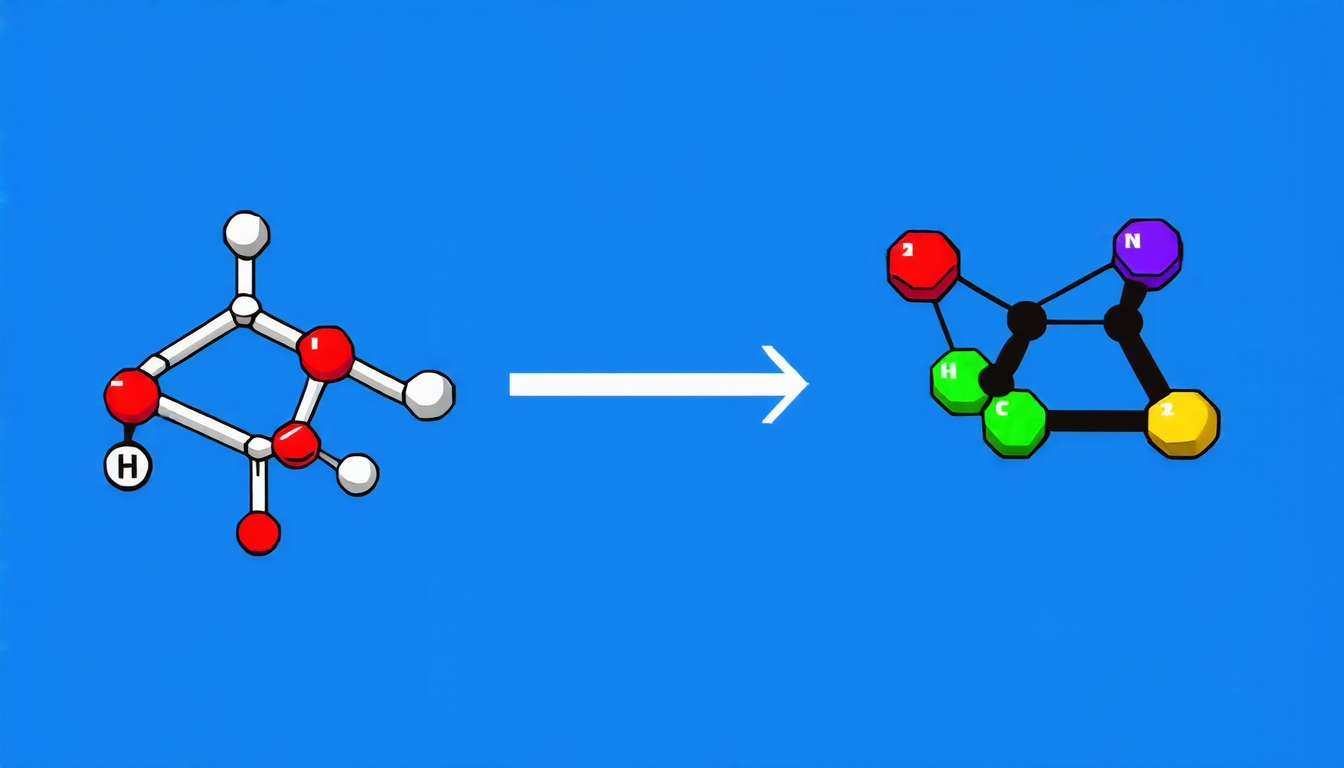
The researchers developed a new method to estimate the committor function, a mathematical concept that measures the likelihood of a system transitioning from one state to another. In essence, it’s like calculating the probability of a molecule switching from one chemical compound to another.
Traditionally, scientists used simulation methods to study rare events, but these approaches were often computationally expensive and limited by the amount of data they could collect. The new method, however, uses a clever combination of mathematical techniques and machine learning algorithms to accurately estimate the committor function with much less computational power.
The approach relies on representing the system’s behavior as a complex network of interconnected nodes, which are then analyzed using advanced mathematical tools. This allows scientists to identify patterns and relationships within the data that might have been missed by traditional methods.
One of the key advantages of this new method is its ability to handle high-dimensional systems, where the number of variables is extremely large. This makes it particularly useful for studying complex phenomena like protein folding or material properties.
The researchers demonstrated the effectiveness of their method by applying it to a range of examples, including chemical reactions and phase transitions in materials science. In each case, they were able to accurately estimate the committor function and gain valuable insights into the underlying mechanisms driving these processes.
This breakthrough has significant implications for various fields, from understanding biological systems to developing new materials with unique properties. By providing a more efficient and accurate way to study rare events, scientists can now explore complex phenomena that were previously inaccessible.
In the future, researchers plan to further develop this method and apply it to even more challenging problems. With its potential to revolutionize our understanding of complex systems, this achievement has exciting implications for the advancement of science.
Cite this article: “Unlocking Complex Systems: A Breakthrough in Estimating Rare Event Probabilities”, The Science Archive, 2025.
Complexity, Probability, Rare Events, Chemical Reactions, Phase Transitions, Materials Science, Machine Learning, Mathematical Techniques, High-Dimensional Systems, Committor Function
Reference: Gabriel Earle, Brian Van Koten, “Relative Entropy Methods for Calculating Committors” (2025).





