

Friday 21 March 2025
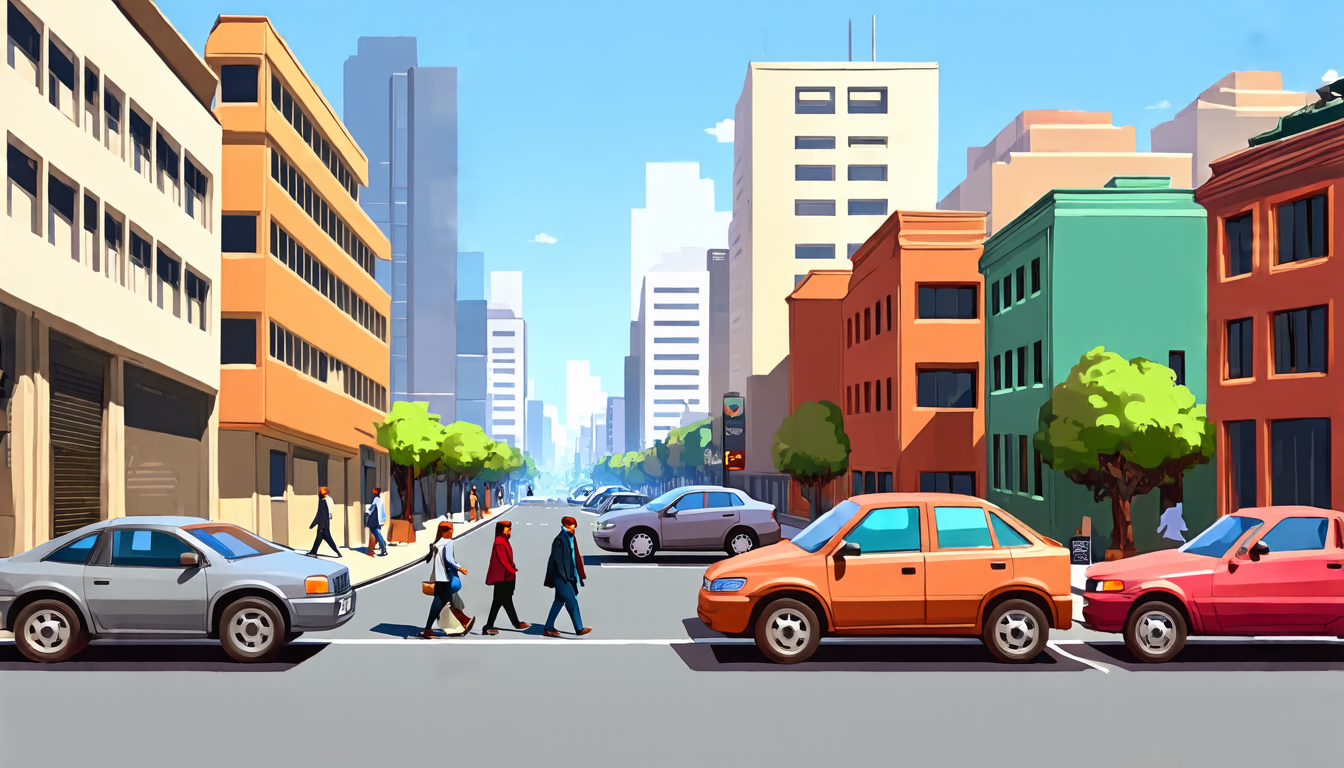
Street view images have become a valuable tool for understanding urban environments, but they also present a unique challenge: how to efficiently represent these complex scenes in a way that’s useful for various applications. Researchers have been working on developing self-supervised learning frameworks to tackle this problem.
One of the key findings is that by leveraging temporal and spatial attributes of street view images, models can learn to focus on specific regions of interest. This attention mechanism allows them to ignore irrelevant details and concentrate on features that are relevant for a given task.
The study also explored different contrastive learning strategies, including ImageNet- Self, GSV-Self, GSV-Temporal, and GSV-Spatial. Each strategy involves training the model on a specific set of images or tasks, and the results show that these approaches can be effective in capturing distinct aspects of urban scenes.
For example, when trained on ImageNet data, the model learns to focus on objects such as buildings, roads, and vehicles. This attention is useful for applications like object detection and tracking. On the other hand, when trained on GSV-Self images, the model develops a stronger sense of spatial awareness, highlighting regions that are relevant to urban planning and navigation.
The researchers also experimented with incorporating temporal information into their models. By training on sequences of street view images taken at different times, they found that the model can learn to recognize changes in the environment over time. This is particularly useful for applications like traffic monitoring and urban development analysis.
Another interesting finding is that the attention mechanisms developed by the researchers are transferable across different tasks and datasets. This means that a model trained on one specific task, such as visual place recognition, can also be effective for other related tasks, like estimating socioeconomic indicators.
The study’s results have implications for a wide range of fields, from urban planning and transportation to environmental monitoring and social sciences. By developing more sophisticated self-supervised learning frameworks, researchers can unlock the full potential of street view images and improve our understanding of complex urban environments.
One of the most significant benefits is that these models can be trained on large datasets without requiring labeled data, making them more efficient and cost-effective than traditional supervised learning approaches. This has major implications for applications where data collection and labeling are time-consuming and expensive.
The researchers’ work also highlights the importance of considering temporal and spatial attributes when developing self-supervised learning frameworks. By incorporating these factors into their models, they were able to develop more accurate and robust representations of urban scenes.
Cite this article: “Unlocking the Potential of Street View Images with Self-Supervised Learning”, The Science Archive, 2025.
Street View Images, Self-Supervised Learning, Attention Mechanism, Contrastive Learning, Imagenet, Gsv, Urban Planning, Transportation, Environmental Monitoring, Social Sciences, Object Detection, Tracking, Traffic Monitoring, Urban Development Analysis, Visual Place Recognition,





