

Friday 21 March 2025
The art of predicting and controlling complex systems has long been a challenge for scientists and engineers. From managing traffic flow to optimizing energy consumption, being able to accurately forecast and influence the behavior of interconnected components is crucial for making informed decisions.
Recently, researchers have made significant strides in developing new approaches to tackle this problem. One promising avenue involves using hierarchical model predictive control (MPC), which allows for the efficient management of large-scale systems by breaking them down into smaller, more manageable chunks.
The key idea behind hierarchical MPC is to divide a complex system into multiple layers, each responsible for making decisions at its own level of granularity. This approach enables the development of sophisticated control strategies that can adapt to changing conditions and optimize performance in real-time.
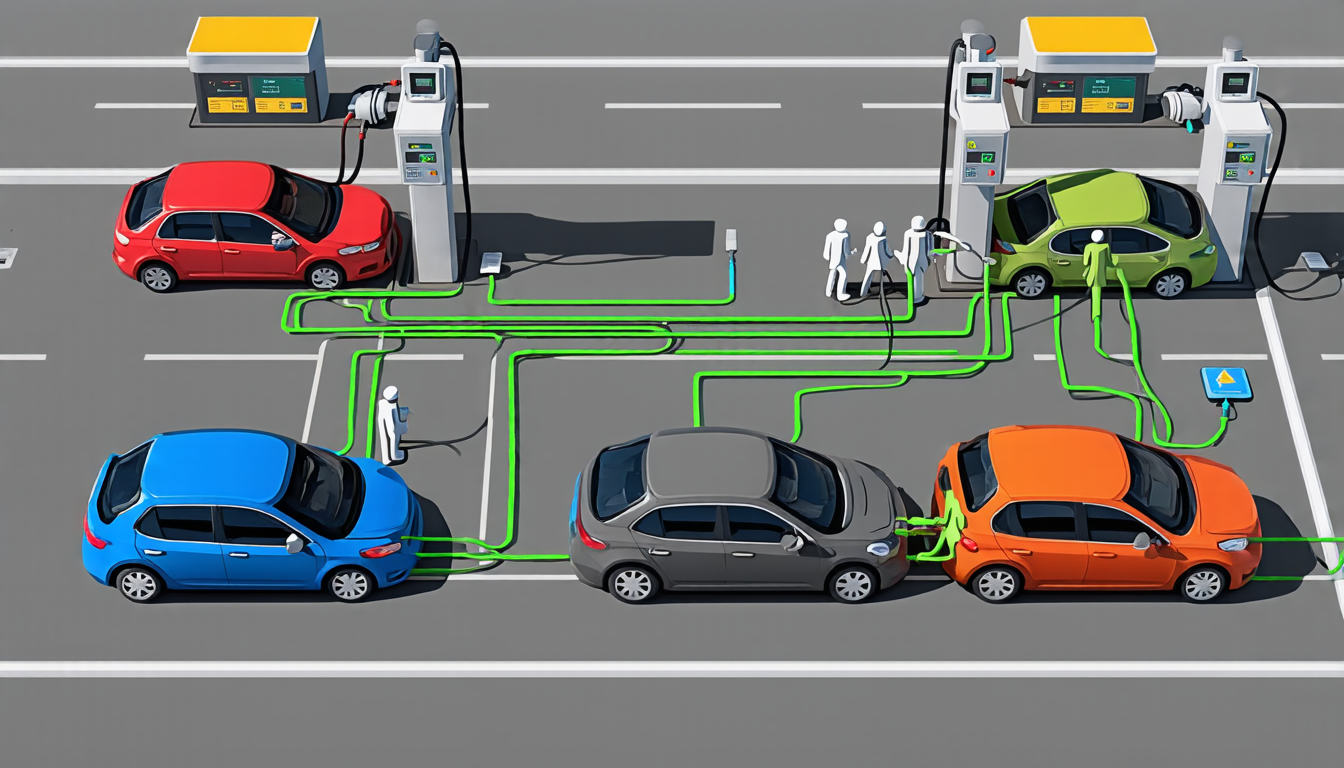
In a recent study, researchers demonstrated the effectiveness of this method by applying it to a dynamic pricing problem. The goal was to determine the optimal electricity prices for electric vehicle charging stations while minimizing social costs and ensuring that energy generation constraints were met.
To tackle this challenge, the team developed a bilevel optimization framework that incorporated both upper-level and lower-level control systems. The upper level focused on setting overall price targets, while the lower level optimized the charging schedules of individual vehicles to minimize their impact on the grid.
The results showed that the hierarchical MPC approach significantly improved upon traditional single-level control methods, allowing for more efficient and sustainable energy management. By breaking down the problem into smaller components, the researchers were able to develop a more nuanced understanding of the system’s behavior and make more informed decisions.
This breakthrough has far-reaching implications for industries such as transportation, energy, and manufacturing, where complex systems are increasingly prevalent. As our world becomes increasingly interconnected and dynamic, the need for sophisticated control strategies that can adapt to changing conditions will only continue to grow.
In this context, hierarchical MPC offers a powerful tool for tackling some of the most pressing challenges facing modern society. By leveraging its ability to break down complex problems into smaller, more manageable pieces, researchers may be able to unlock new levels of efficiency, sustainability, and innovation across a wide range of industries.
Cite this article: “Unlocking Complex Systems: The Power of Hierarchical Model Predictive Control”, The Science Archive, 2025.
Complex Systems, Predictive Control, Hierarchical Model Predictive Control, Optimization, Dynamic Pricing, Energy Management, Electric Vehicle Charging, Bilevel Optimization, Real-Time Optimization, Sustainability.





