

Friday 21 March 2025
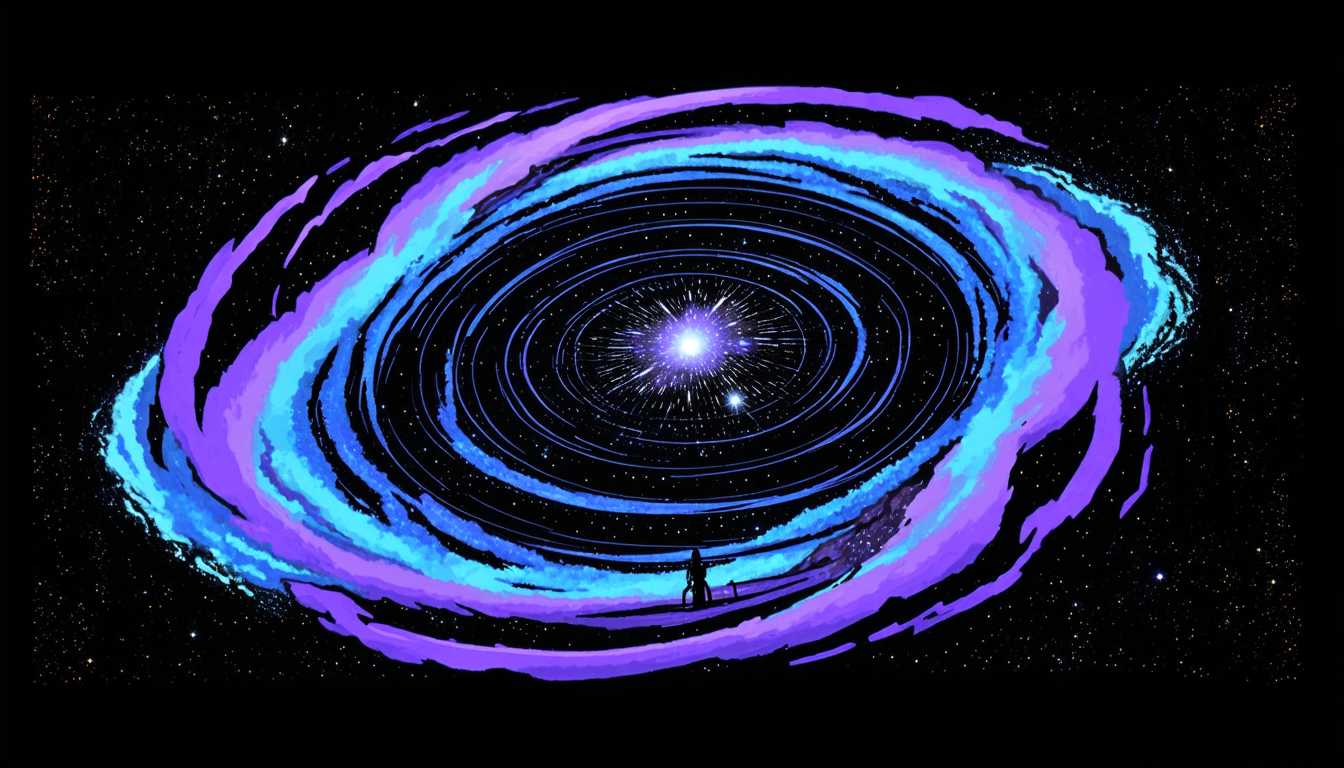
As stars reach the end of their lives, they often shed layers of gas and dust into space, forming a swirling disk around them. This phenomenon is known as a circumstellar disk, and it’s a crucial stage in the evolution of many stars. But what happens when these disks are part of a binary star system? A new study sheds light on this fascinating process.
In our galaxy, there are thousands of stars that have reached the end of their main-sequence lives and are now fusing helium into heavier elements in their cores. These stars are known as asymptotic giant branch (AGB) stars, and they’re about to embark on a thrilling journey. As they shed layers of gas and dust, they form circumstellar disks around themselves.
But what happens when these AGB stars have companions? Binary star systems are common, and it’s thought that many stars are part of them. When an AGB star is part of a binary system, its companion can influence the formation of the circumstellar disk in unexpected ways.
Recent research has shown that accreting gas from the disk onto the star can significantly alter its evolution. But how does this work? The team behind the new study used advanced computer simulations to model the behavior of AGB stars with companions.
Their results reveal that when an AGB star is part of a binary system, it’s likely to be surrounded by a dusty circumstellar disk. This disk can be tens of thousands of times larger than our solar system and contains a vast amount of gas and dust. As the star sheds layers of gas and dust into space, they’re swept up in this massive disk.
The companion star can then influence the formation of the disk by stripping away material from its surface. This process is known as binary interaction, and it’s thought to play a crucial role in shaping the evolution of many stars.
One of the most surprising findings from the study is that accreting gas from the disk onto the star can significantly alter its evolution. The team found that this process can extend the post-AGB phase by several thousand years, giving the star more time to cool and become visible as a planetary nebula.
Planetary nebulas are stunningly beautiful objects that form when stars shed their outer layers into space. They’re often surrounded by intricate patterns of gas and dust, which can be hundreds of times larger than our solar system.
Cite this article: “Binary Stars Shed New Light on Circumstellar Disks”, The Science Archive, 2025.
Stars, Binary Systems, Circumstellar Disks, Asymptotic Giant Branch Stars, Gas, Dust, Accretion, Planetary Nebulas, Stellar Evolution, Star Formation





