

Friday 21 March 2025
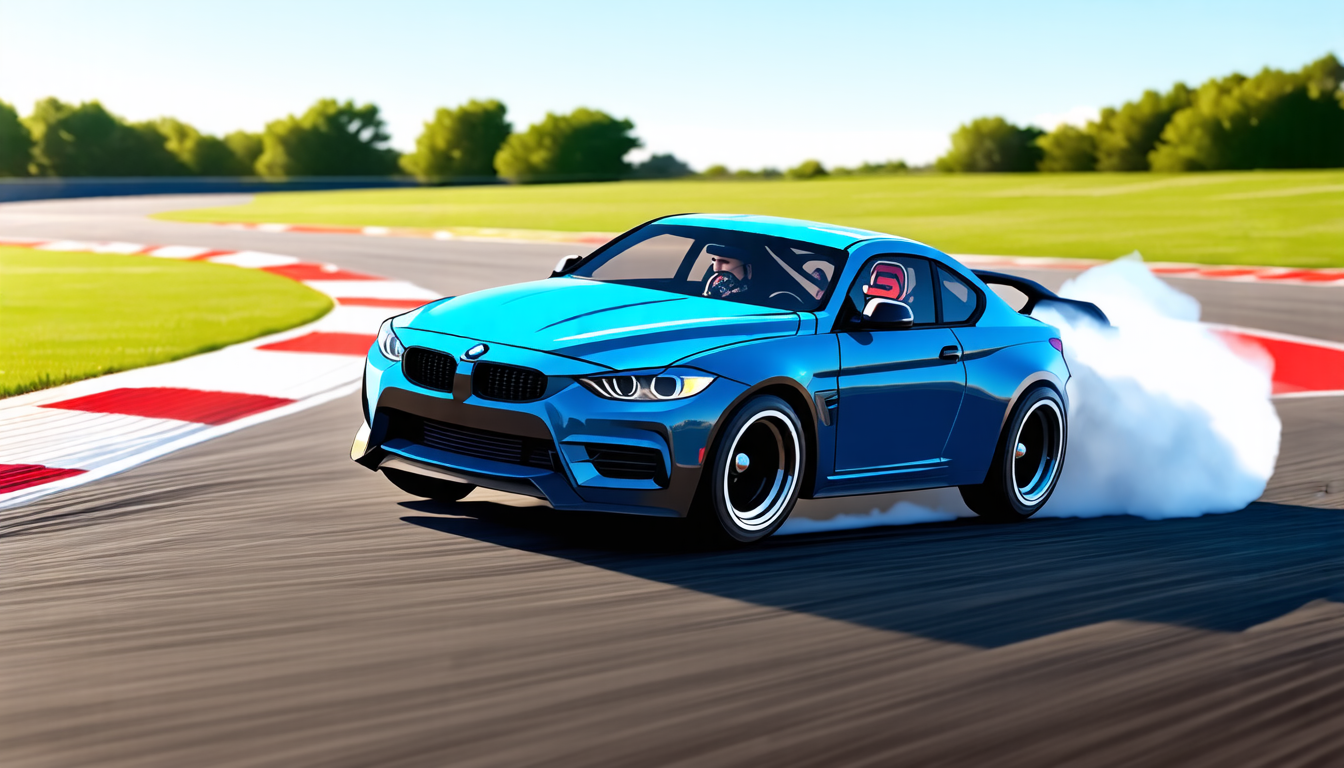
The pursuit of perfect drift has long been a holy grail for car enthusiasts and racing fans alike. The ability to seamlessly transition from one side of the track to the other, all while maintaining speed and control, is a feat that requires a delicate balance of skill, strategy, and technology.
In recent years, researchers have made significant strides in developing autonomous vehicles capable of performing impressive stunts like drifting. But until now, these systems have relied on pre-programmed trajectories and rigid control algorithms to achieve their goals. This means that while they can execute precise maneuvers, they lack the flexibility and adaptability needed to truly master the art of drift.
A team of researchers from Zhejiang University has taken a significant step towards changing this by developing an adaptive learning-based model predictive control (ALMPC) strategy for autonomous drifting. The system uses a combination of machine learning algorithms and advanced control theory to optimize vehicle behavior in real-time, allowing it to adjust its trajectory on the fly based on factors like road conditions, tire grip, and driver input.
The key innovation here is the use of Bayesian optimization to learn the optimal parameters for controlling the vehicle’s speed, steering angle, and braking force. This approach allows the system to adapt to changing conditions without requiring manual tuning or pre-programmed rules. Instead, it uses a combination of historical data and real-time sensor feedback to continuously refine its control strategy.
The researchers tested their ALMPC system on a high-performance RC car using a custom-built drift track with varying road surfaces and obstacles. The results were impressive: the vehicle was able to maintain stable drifts at speeds of over 60 km/h, even when faced with sudden changes in terrain or weather conditions.
But what’s truly remarkable about this technology is its potential for real-world applications. As autonomous vehicles become increasingly common on public roads, the ability to adapt to changing conditions and optimize performance in real-time will be essential for ensuring safety and efficiency.
The ALMPC system demonstrated by Zhejiang University researchers has far-reaching implications for the development of autonomous vehicles capable of performing complex maneuvers like drifting. By combining advanced control theory with machine learning algorithms and Bayesian optimization, they’ve created a system that’s not only capable of impressive feats but also adaptable to changing conditions in real-time.
In short, this technology represents a significant step forward in the pursuit of perfect drift – and one that could have major implications for the future of autonomous transportation.
Cite this article: “Adaptive Drifting: A Breakthrough in Autonomous Vehicle Technology”, The Science Archive, 2025.
Autonomous Vehicles, Drifting, Machine Learning, Adaptive Control, Almpc, Bayesian Optimization, Autonomous Transportation, Predictive Control, Real-Time Optimization, Precision Driving





