

Friday 21 March 2025
Researchers have developed a new approach to estimate the effect of a treatment or intervention on an outcome, using data that is commonly available in economics and social sciences research. This method, known as doubly robust meta-learning, can provide more accurate estimates than previous approaches by combining machine learning with statistical techniques.
The researchers used synthetic datasets to test their approach, which involves first estimating the probability of receiving a treatment or intervention, then using this estimate to adjust for potential biases in the data. They found that their method outperformed other approaches in terms of accuracy and robustness.
One of the key advantages of doubly robust meta-learning is its ability to handle complex relationships between variables, such as those involving non-linear interactions. This is particularly useful in fields like economics, where researchers often need to account for a wide range of factors that can affect outcomes.
The method also has implications for policy-making, as it allows policymakers to estimate the effectiveness of different interventions and make more informed decisions about how to allocate resources. For example, in healthcare, doubly robust meta-learning could be used to evaluate the effectiveness of different treatments for specific diseases or patient populations.
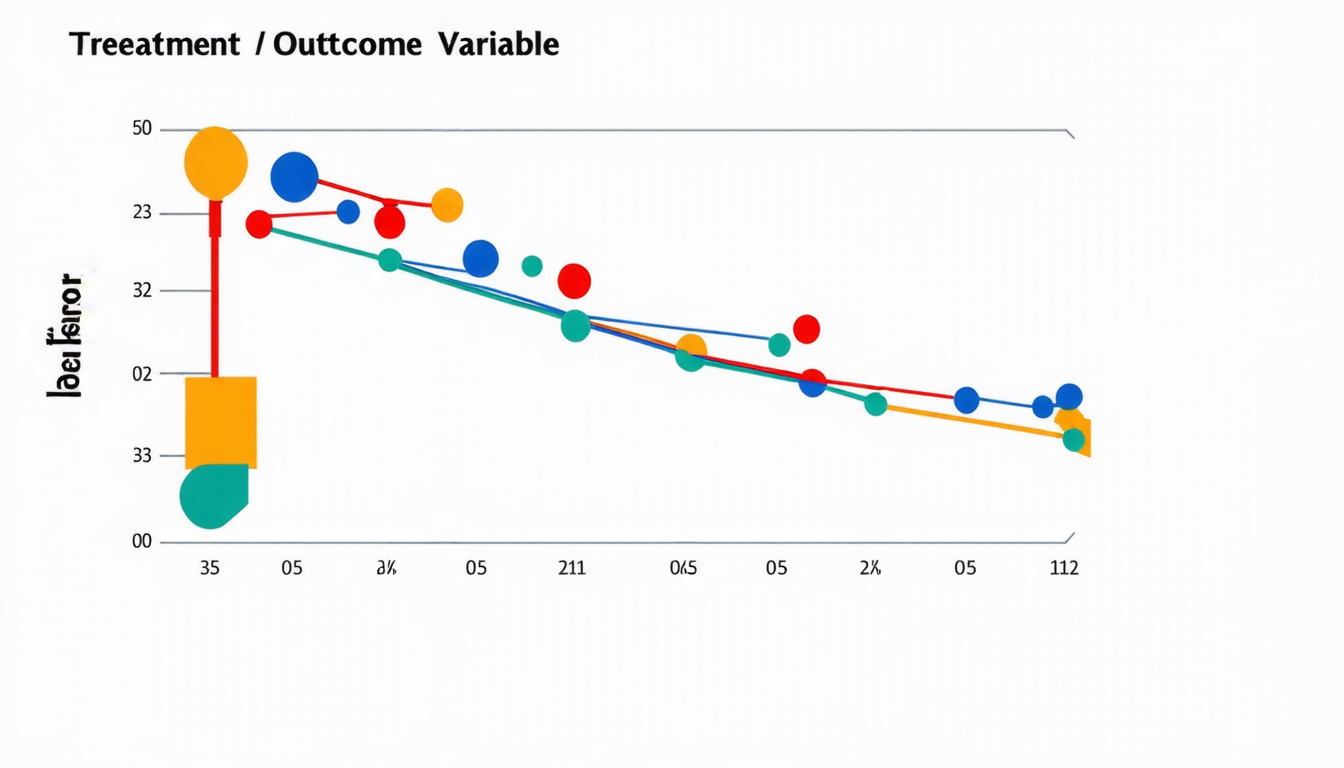
To illustrate the potential applications of this approach, researchers created a series of calibration plots that show how well their method estimates the relationship between the treatment and outcome variables. These plots suggest that doubly robust meta-learning can provide highly accurate estimates, even in cases where other approaches may struggle.
The development of doubly robust meta-learning is an important step forward in the field of causal inference, which aims to understand the relationships between variables and how interventions affect outcomes. By combining machine learning with statistical techniques, this approach has the potential to revolutionize the way researchers analyze complex data sets and make informed decisions about policy and resource allocation.
In addition to its applications in economics and social sciences research, doubly robust meta-learning could also be used in fields like medicine, education, and environmental science. By providing more accurate estimates of treatment effects, this approach has the potential to improve decision-making and ultimately lead to better outcomes for individuals and societies as a whole.
Overall, the development of doubly robust meta-learning is an exciting advance in the field of causal inference, with significant implications for researchers and policymakers alike.
Cite this article: “Accurate Estimation of Treatment Effects: A New Approach to Causal Inference”, The Science Archive, 2025.
Treatment Effects, Machine Learning, Causal Inference, Meta-Learning, Doubly Robust, Estimation, Probability, Non-Linear Interactions, Policy-Making, Resource Allocation





