
Friday 21 March 2025
The next generation of wireless networks is upon us, and researchers are racing to develop new technologies that can keep up with our insatiable demand for faster, more reliable connectivity. One promising approach is affine frequency division multiplexing (AFDM), a novel waveform that’s been gaining traction in the academic community.
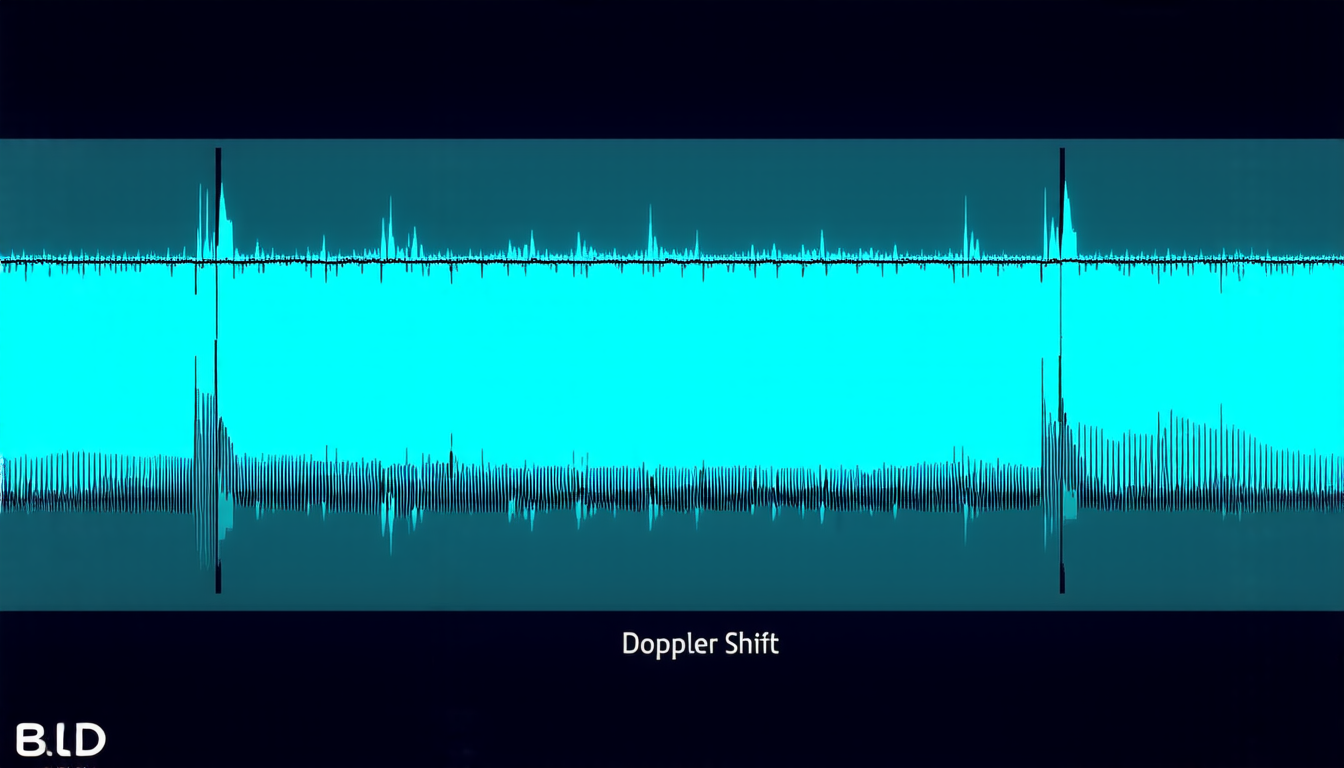
In traditional orthogonal frequency division multiplexing (OFDM) systems, signals are transmitted simultaneously on multiple subcarriers, each with its own unique frequency and phase. However, this approach has limitations when it comes to handling Doppler shifts – those pesky changes in signal frequency caused by the motion of devices or objects. AFDM, on the other hand, uses a chirp-based waveform that can adapt to these changes, making it better suited for high-mobility applications like vehicle-to-vehicle communication or satellite networking.
The core idea behind AFDM is to modulate the frequency and phase of each subcarrier in a way that takes into account the Doppler shift. By doing so, the system can effectively cancel out interference caused by these shifts, resulting in improved signal quality and increased reliability. This is particularly important for next-generation wireless networks, which will need to support a vast number of devices and applications with varying levels of mobility.
AFDM’s chirp-based waveform also offers some interesting benefits when it comes to channel estimation – the process of determining the characteristics of the transmission medium. Traditional OFDM systems require a separate pilot signal to estimate the channel, but AFDM can do this inherently through its unique frequency and phase modulation. This not only reduces overhead but also enables more accurate channel estimation.
One area where AFDM still needs work is in terms of detection and decoding. While the system’s adaptive waveform helps reduce interference, it also increases complexity at the receiver end. Researchers are working on developing low-complexity detection algorithms that can take advantage of AFDM’s unique properties without sacrificing performance.
AFDM has already shown promising results in simulations and laboratory tests, but it’s still early days for this technology. Further research is needed to fully understand its potential and limitations, particularly when it comes to real-world applications like 5G and beyond. Nevertheless, the prospect of a waveform that can adapt to the demands of next-generation wireless networks is an exciting one – and one that could have significant implications for our increasingly connected world.
AFDM’s flexibility and adaptability make it well-suited for a wide range of applications, from high-mobility communication systems to satellite networking.
Cite this article: “Adaptive Frequency Division Multiplexing: A Promising Approach for Next-Generation Wireless Networks”, The Science Archive, 2025.
Wireless Networks, Next-Generation, Afdm, Ofdm, Doppler Shift, Signal Quality, Channel Estimation, Receiver Complexity, Detection Algorithms, 5G