

Friday 21 March 2025
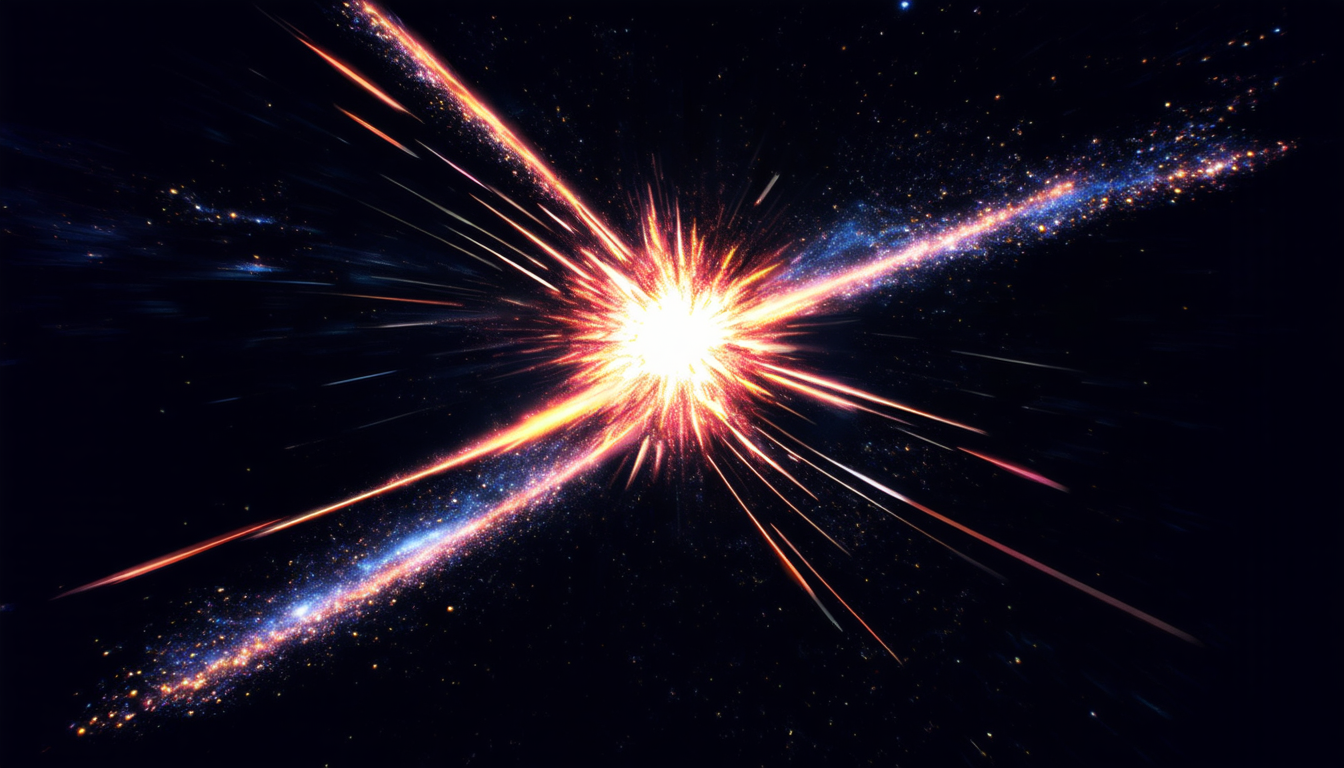
Scientists have made a significant breakthrough in their quest to detect fast-time features in the neutrino flux emitted by supernovae explosions. Neutrinos are mysterious particles that can travel long distances through matter and space without being affected, making them ideal for studying these explosive events.
Supernovae occur when a star runs out of fuel and collapses under its own gravity, triggering a massive explosion that can be seen from millions of light-years away. As the star implodes, it releases an enormous amount of energy in the form of neutrinos, which are detected by scientists using specialized instruments like IceCube.
Fast-time features refer to small changes in the neutrino flux that occur over very short periods of time, typically just milliseconds. These fluctuations can provide valuable insights into the internal dynamics of the supernova explosion and the role of neutrinos in shaping its outcome.
Previous studies have suggested that fast-time features could be used to detect neutrino bursts from nearby supernovae, potentially allowing scientists to study these events in real-time. However, detecting these features is extremely challenging due to the vast amounts of background noise present in the data.
The new research uses advanced statistical techniques and machine learning algorithms to identify fast-time features in simulated neutrino data. The team analyzed a range of different supernova models, each with its own unique characteristics and predicted neutrino flux patterns.
By comparing their results with those from previous studies, the scientists were able to refine their detection limits and improve the accuracy of their predictions. They found that future detectors like IceCube-Gen2, which is currently under construction, will be able to detect fast-time features in the neutrino flux emitted by nearby supernovae.
The implications of this research are significant, as it could enable scientists to study supernovae in unprecedented detail and gain new insights into the physics of these explosive events. By detecting fast-time features in real-time, researchers may also be able to use neutrinos as a tool for monitoring the health of stars near our own planet.
The next step will be to apply these techniques to actual data collected by IceCube and other neutrino detectors. If successful, this could open up new avenues for studying supernovae and the role of neutrinos in the universe.
Cite this article: “Unveiling Fast-Time Features in Neutrino Flux from Supernovae Explosions”, The Science Archive, 2025.
Neutrinos, Supernovae, Fast-Time Features, Icecube, Machine Learning, Statistical Techniques, Supernova Models, Neutrino Flux, Background Noise, Detector Limits.





