

Friday 21 March 2025
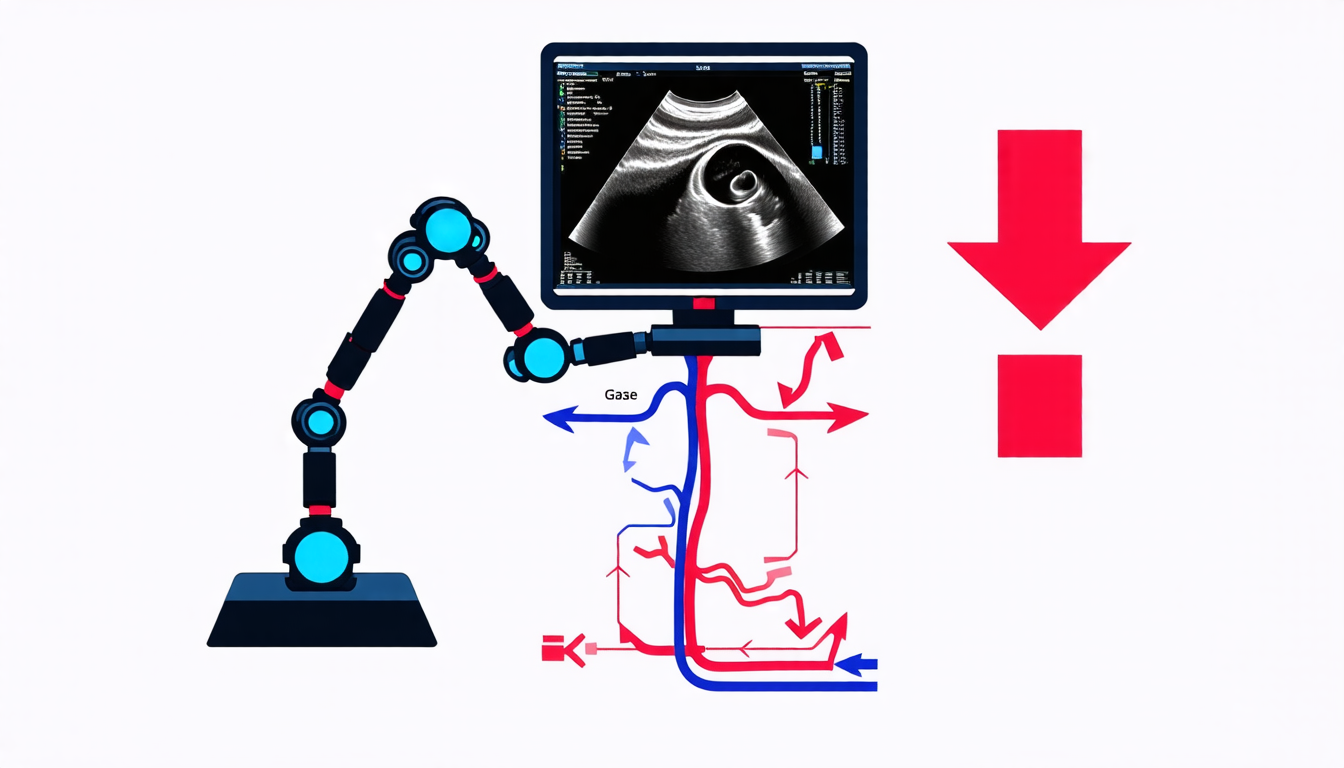
A team of researchers has developed a novel robotic ultrasound system that uses human gaze signals to guide the probe, allowing for more accurate and efficient scans of blood vessels.
The new system, which combines advanced robotics and machine learning algorithms, aims to revolutionize the way medical professionals perform vascular ultrasound exams. Currently, these exams are often performed manually by trained technicians, who must carefully position the probe to capture clear images of the blood vessels.
However, this manual approach can be time-consuming and prone to errors, particularly in areas where the vessels are complex or have multiple branches. The new system aims to address these limitations by leveraging human gaze signals to guide the probe’s movement.
In a proof-of-concept study, researchers used an eye-tracking device to monitor the gaze of a trained technician as they performed a vascular ultrasound exam on a phantom arm. The system then used this data to adjust the position and orientation of the probe in real-time, allowing for more accurate and efficient scans.
The results were impressive, with the robotic system able to capture high-quality images of the blood vessels and even detect subtle changes in vessel diameter and shape. These findings suggest that the new system could significantly improve the accuracy and efficiency of vascular ultrasound exams, potentially leading to better patient outcomes and reduced healthcare costs.
One of the key advantages of the system is its ability to adapt to changing conditions during an exam. For example, if a technician notices a branch in a blood vessel, they can simply gaze at that area, and the robotic system will automatically adjust the probe’s position to capture a clear image. This level of precision and flexibility could greatly reduce the time and effort required to complete an exam.
The researchers also envision using the system for more complex procedures, such as guiding the placement of stents or other medical devices in blood vessels. The ability to precisely control the probe’s movement could potentially lead to improved treatment outcomes and reduced complications.
While there are still many challenges to overcome before this technology can be widely adopted, the potential benefits are significant. As medical professionals continue to develop and refine the system, it could become an essential tool for diagnosing and treating a wide range of vascular diseases.
Cite this article: “Robotic Ultrasound System Uses Human Gaze Signals to Guide Blood Vessel Scans”, The Science Archive, 2025.
Robotic Ultrasound, Vascular Ultrasound, Medical Imaging, Machine Learning, Eye-Tracking, Robotic System, Blood Vessels, Healthcare Technology, Medical Diagnosis, Precision Medicine





