

Saturday 22 March 2025
For years, language models have been limited by their inability to access and combine information from multiple sources at once. This has made them poorly equipped to tackle complex tasks that require a deep understanding of context and relationships between different pieces of data.
Now, however, researchers have developed a new technique called Adaptive Parallel Encoding (APE) that could revolutionize the way language models process information. APE allows these models to access multiple sources simultaneously, enabling them to learn from vast amounts of data and generate responses that are more accurate and informative than ever before.
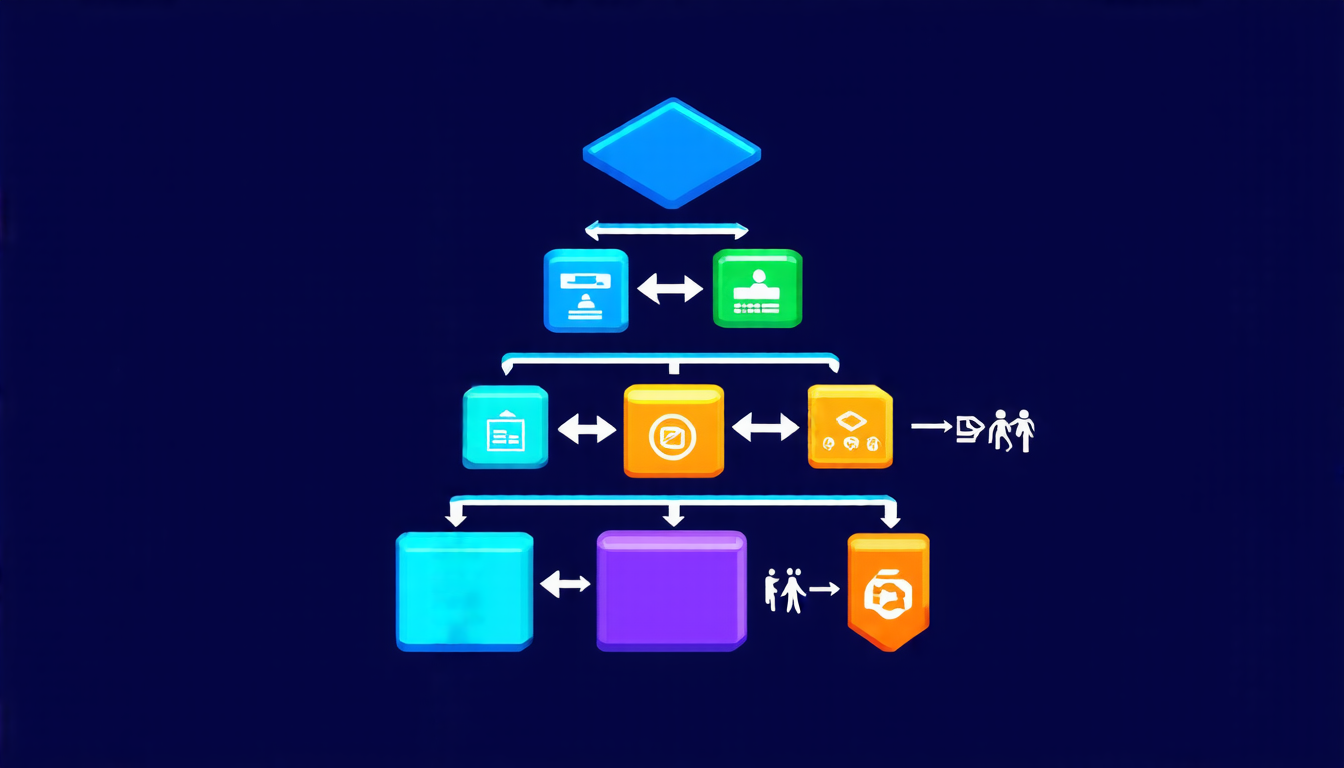
The key innovation behind APE is its ability to adapt to different types of input and context. Unlike traditional language models, which rely on a fixed set of rules and patterns to understand language, APE uses a hierarchical approach to process information. This means it can learn from multiple sources at once, combining their strengths and weaknesses to generate responses that are more accurate and nuanced.
One of the most significant benefits of APE is its ability to improve the performance of long- context language models. These models have become increasingly popular in recent years, as they enable language models to process longer sequences of text and learn from vast amounts of data. However, they have also been limited by their inability to access multiple sources at once, which has made them poorly equipped to tackle complex tasks that require a deep understanding of context and relationships.
APE addresses this limitation by allowing long-context language models to access multiple sources simultaneously. This enables them to learn from vast amounts of data and generate responses that are more accurate and informative than ever before. In tests, APE was able to improve the performance of long- context language models by a significant margin, enabling them to achieve accuracy rates that were previously thought to be out of reach.
Another key benefit of APE is its ability to reduce the computational overhead required to process large amounts of data. Traditional language models require vast amounts of processing power and memory to handle large datasets, which can make them difficult to deploy in real-world applications. APE, on the other hand, uses a hierarchical approach to process information that reduces the computational overhead required to achieve high levels of accuracy.
This means that APE could have significant implications for the development of language models in areas such as artificial intelligence, natural language processing, and machine learning. It could enable these models to be deployed in real-world applications more easily and efficiently, and could pave the way for new breakthroughs in fields such as robotics, autonomous vehicles, and healthcare.
Cite this article: “Revolutionizing Language Models with Adaptive Parallel Encoding”, The Science Archive, 2025.
Language Models, Adaptive Parallel Encoding, Ape, Language Processing, Machine Learning, Natural Language Processing, Artificial Intelligence, Hierarchical Approach, Long-Context Language Models, Computational Overhead.





