

Saturday 22 March 2025
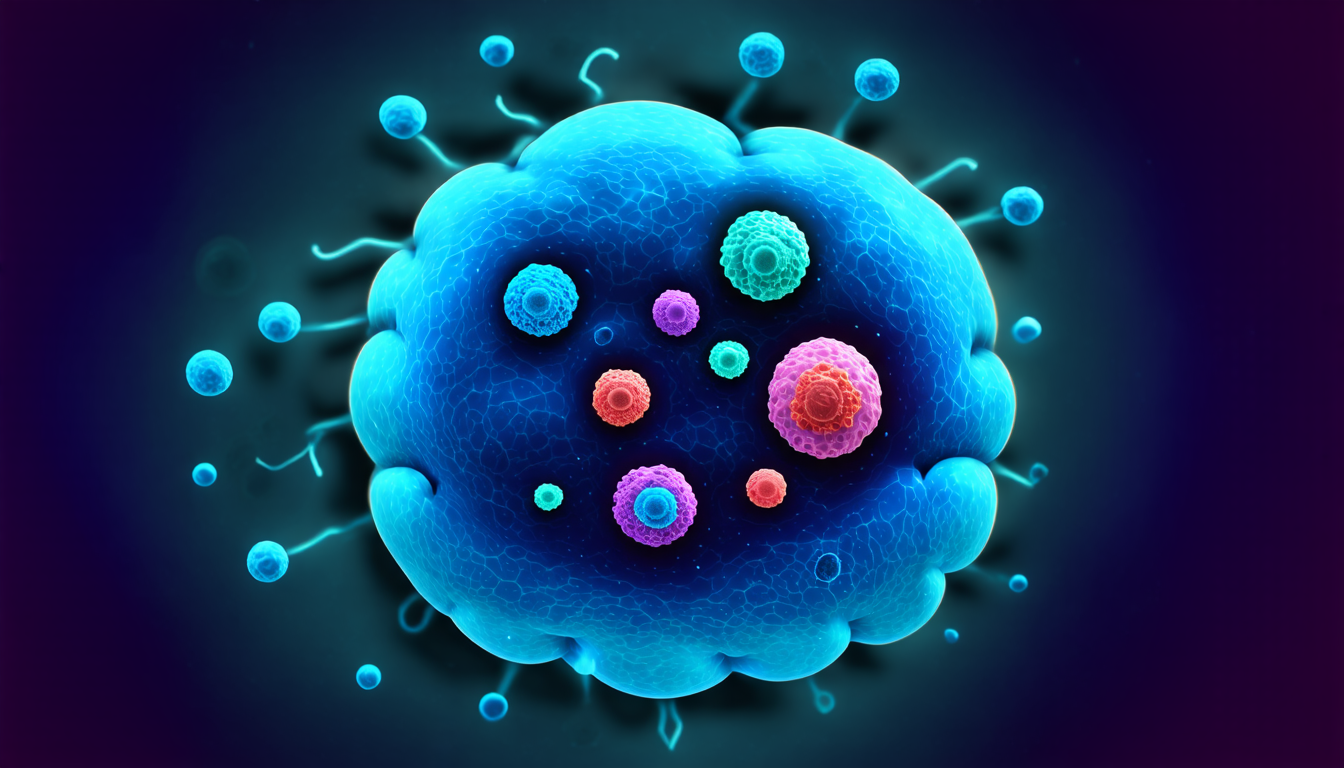
A team of researchers has developed a new approach to predicting tumor heterogeneity, a key factor in determining the effectiveness of cancer treatments. By using artificial data generated through mathematical modeling, they have been able to train machine learning algorithms to accurately identify tumors with high or low levels of heterogeneity.
Tumor heterogeneity refers to the varying levels of genetic and molecular differences within a single tumor. This can make it difficult for doctors to determine the best course of treatment, as some parts of the tumor may be more resistant to certain therapies than others. Current methods for assessing heterogeneity are often time-consuming and expensive, requiring the analysis of large amounts of data from different sources.
The researchers used a combination of mathematical modeling and machine learning techniques to develop their approach. They first created artificial datasets that mimicked real-world tumors, taking into account factors such as cell differentiation and genetic mutations. They then trained graph neural networks (GNNs) on these datasets, using the GNNs to learn patterns in the data that were indicative of high or low heterogeneity.
The results of the study are promising, with the machine learning algorithms achieving an accuracy rate of 89.67% in predicting tumor heterogeneity. This is a significant improvement over current methods, which often rely on manual analysis of histopathology slides and can have accuracy rates as low as 60%.
One of the key advantages of this approach is its ability to analyze large amounts of data quickly and accurately. By using artificial datasets, the researchers were able to train their machine learning algorithms on a massive scale, without the need for expensive and time-consuming experiments.
The potential applications of this technology are vast. In addition to improving cancer treatment outcomes, it could also be used to monitor the effectiveness of treatments over time, allowing doctors to make adjustments as needed. It could also be used in other areas of medicine, such as predicting disease progression or identifying biomarkers for certain conditions.
Overall, this study demonstrates the potential power of artificial intelligence and machine learning in improving our understanding of complex biological systems. By developing new approaches like this one, researchers may soon be able to unlock the secrets of tumor heterogeneity and develop more effective treatments for cancer patients.
Cite this article: “Predicting Tumor Heterogeneity with Artificial Intelligence”, The Science Archive, 2025.
Cancer, Tumor Heterogeneity, Machine Learning, Artificial Intelligence, Mathematical Modeling, Graph Neural Networks, Accuracy, Prediction, Treatment Outcomes, Biomarkers





