
Saturday 22 March 2025
The ability to read lips, or lipreading, has long been a topic of interest in the field of speech recognition. While humans are naturally skilled at deciphering spoken words by watching the movements of another person’s lips, computers and artificial intelligence systems have struggled to achieve similar levels of accuracy.
Recently, researchers have made significant strides in developing more effective lipreading algorithms. By combining audio and visual inputs, these models can better recognize spoken language and improve overall speech recognition capabilities.
One of the key challenges in lipreading is that the human mouth contains many subtle movements and features that are difficult for computers to interpret. For example, the shape and movement of the lips, as well as the position and movement of the tongue, can all impact the way a word or phrase is pronounced.
To address this challenge, researchers have developed novel algorithms that incorporate both audio and visual inputs into their models. These multimodal approaches allow the computer to more accurately recognize spoken language by combining the information from both sources.
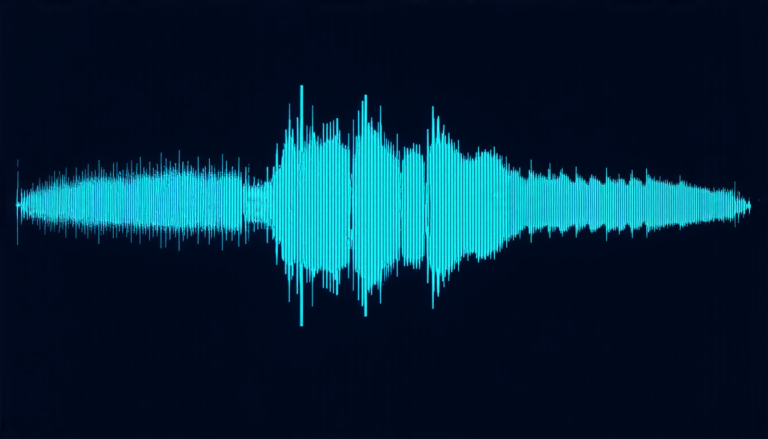
In one recent study, scientists developed a lipreading model that used a combination of convolutional neural networks (CNNs) and recurrent neural networks (RNNs) to analyze video footage of people speaking. The CNNs were trained on visual features such as lip shape and movement, while the RNNs analyzed audio signals like speech patterns.
The results of this study showed significant improvements in lipreading accuracy compared to traditional single-modal approaches. The multimodal model was able to recognize spoken language with an average error rate of just 7%, compared to rates of around 20% for traditional models.
Another advantage of these multimodal approaches is that they can be used in a variety of applications, from speech recognition systems to video conferencing software. By incorporating lipreading into these systems, users may be able to more accurately communicate with each other, even in noisy or distracting environments.
Furthermore, the development of more accurate lipreading algorithms has potential applications beyond speech recognition. For example, researchers are exploring the use of lipreading in healthcare settings, where it could potentially help diagnose conditions such as apraxia of speech or stuttering.
While there is still much work to be done in the field of lipreading, these recent advances offer promising signs for the future of human-computer interaction and communication. As researchers continue to refine their models and develop new applications for lipreading, it will be exciting to see how this technology evolves and improves over time.
Cite this article: “Advances in Lipreading Technology Boost Speech Recognition Capabilities”, The Science Archive, 2025.
Lipreading, Speech Recognition, Artificial Intelligence, Multimodal Approaches, Convolutional Neural Networks, Recurrent Neural Networks, Video Footage, Audio Signals, Communication, Healthcare Settings.