

Saturday 22 March 2025
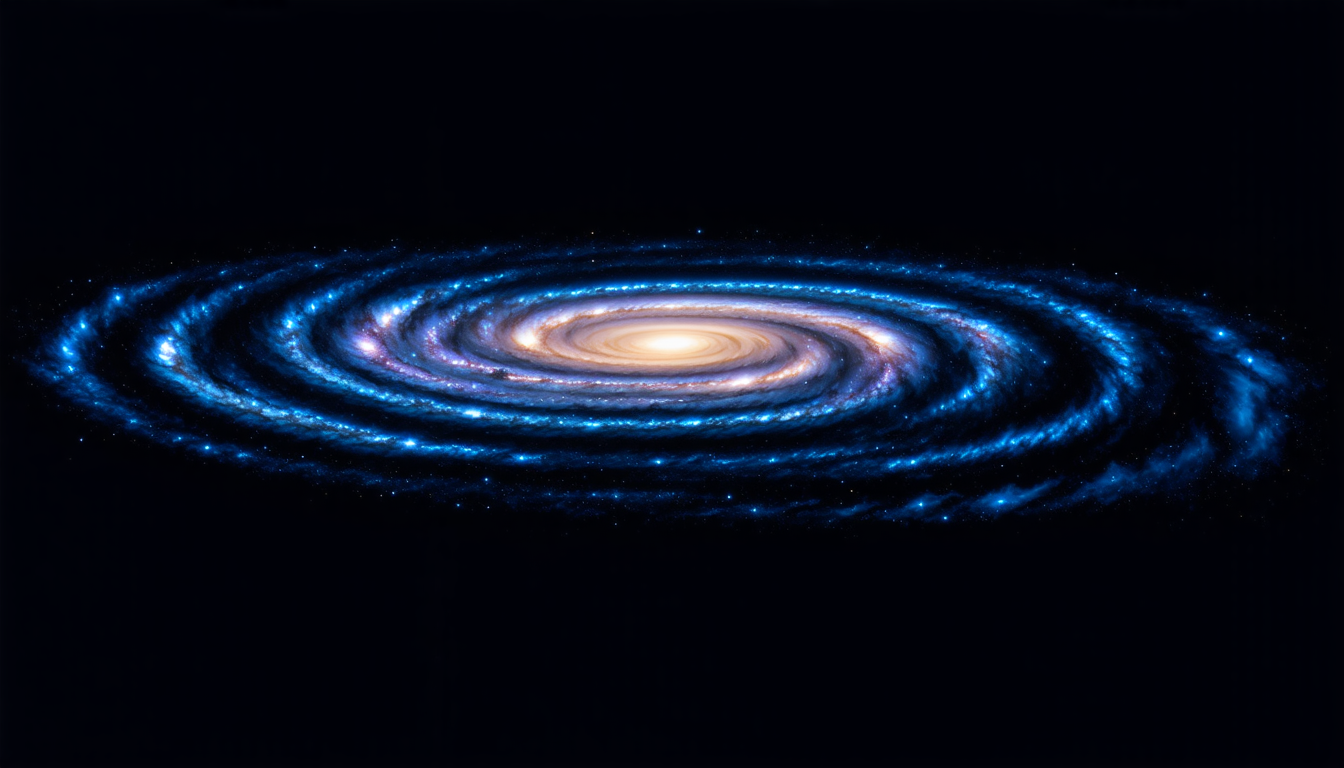
The Milky Way galaxy is a vast and complex system, comprising hundreds of billions of stars, gas, and dust. One of the most fascinating aspects of our galaxy is its disk- halo interface, where the thin disk of stars and gas meets the vast, diffuse halo of gas and dark matter. This region is crucial for understanding how galaxies like ours have evolved over billions of years.
A recent study has shed new light on this area by analyzing the properties of gas in the Perseus spiral arm, a major feature of our galaxy’s disk. By studying the absorption spectra of light passing through this region, scientists have gained insight into the composition and behavior of the gas.
One of the key findings is that the gas in the disk- halo interface below the Perseus arm is surprisingly complex. It contains high concentrations of sulfur ions (S II), silicon ions (Si IV), and carbon ions (C IV), which are typically found in hot, ionized gas. However, these ions are also present in cooler, denser gas, indicating a mixing of different phases.
The study also reveals that the S II and C IV ions are co-spatial, meaning they occupy the same region of space. This suggests that they are physically associated, possibly due to turbulent mixing layers at the interface between hot, ionized gas and cooler, denser gas.
In contrast, the thin disk above the Perseus arm exhibits very different properties. The S II and C IV ions are much less abundant, and their profiles suggest a more uniform distribution of gas. This supports the idea that the thin disk is a relatively quiescent region, with little turbulent mixing or ionization.
These findings have significant implications for our understanding of galaxy evolution. They suggest that the disk- halo interface plays a crucial role in regulating the flow of gas and energy within galaxies, influencing the formation of stars and planets. The study also highlights the importance of considering multiple phases of gas when studying galaxy evolution, rather than focusing on a single phase or component.
Overall, this research provides new insights into the complex interplay between gas and gravity within our galaxy, shedding light on the intricate processes that have shaped the Milky Way over billions of years.
Cite this article: “Unraveling the Complexity of the Disk-Halo Interface in the Milky Way Galaxy”, The Science Archive, 2025.
Galaxy Evolution, Disk-Halo Interface, Perseus Arm, Sulfur Ions, Silicon Ions, Carbon Ions, Ionized Gas, Denser Gas, Turbulent Mixing, Galaxy Formation





