

Saturday 22 March 2025
Researchers have made a significant breakthrough in developing faster and more efficient algorithms for clustering large datasets, a problem that has plagued computer scientists for decades.
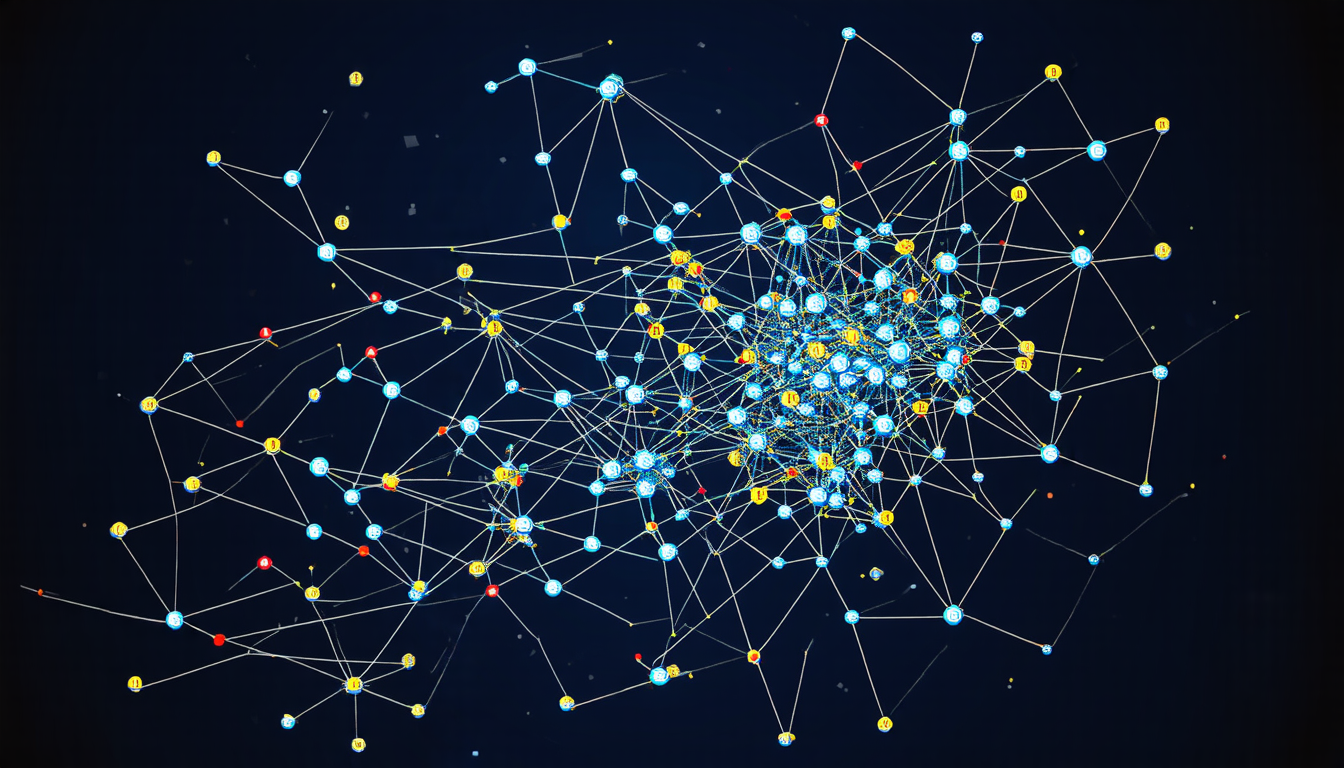
The k- Center problem is a fundamental challenge in data science, where the goal is to group a set of points in high-dimensional space into clusters while minimizing the maximum distance between each point and its assigned cluster center. This problem arises in many real-world applications, such as clustering customers based on their preferences or identifying similar genomic sequences.
The traditional approach to solving this problem involves finding an optimal solution, which can be computationally expensive and impractical for large datasets. However, researchers have been working on developing approximation algorithms that can provide a good solution in a reasonable amount of time.
A new study has made significant progress in this area by introducing a novel concept called alpha-coresets. These coresets are small subsets of the original dataset that capture the essential information needed to solve the clustering problem. By using these coresets, researchers can develop faster and more efficient algorithms for k-Center clustering.
The authors of the study used a combination of mathematical techniques and computational methods to develop their algorithm. They first showed that it is possible to construct an alpha-coreset in near-linear time, which is a significant improvement over previous methods. They then used this coreset to develop a new approximation algorithm for k-Center clustering.
The results are impressive: the new algorithm can provide a solution that is close to optimal in just a few seconds, even for datasets with millions of points. This is a significant speedup compared to traditional methods, which can take hours or even days to complete.
But what does this mean for real-world applications? The implications are huge. For example, in the field of genomics, researchers use clustering algorithms to identify similar genomic sequences and understand their evolutionary relationships. With faster and more efficient algorithms, they will be able to analyze larger datasets and make new discoveries more quickly.
Similarly, in the field of marketing, companies use clustering algorithms to group customers based on their preferences and behavior. Faster algorithms will allow them to develop more targeted marketing campaigns and improve customer satisfaction.
The study’s findings also highlight the potential for further research in this area. By developing even faster and more efficient algorithms, researchers could unlock new insights and applications that were previously impossible.
Overall, the development of alpha-coresets is a significant breakthrough that has the potential to revolutionize the field of data science and clustering.
Cite this article: “Revolutionizing Data Science: Breakthrough in Clustering Algorithm Development”, The Science Archive, 2025.
K-Center Problem, Data Science, Clustering, Algorithms, Alpha-Coresets, Coresets, Machine Learning, Genomics, Marketing, Optimization





