
Saturday 22 March 2025
The way companies set their prices has long been a subject of fascination and debate among economists. For decades, researchers have tried to crack the code behind pricing decisions, but few have made significant headway. That is until now.
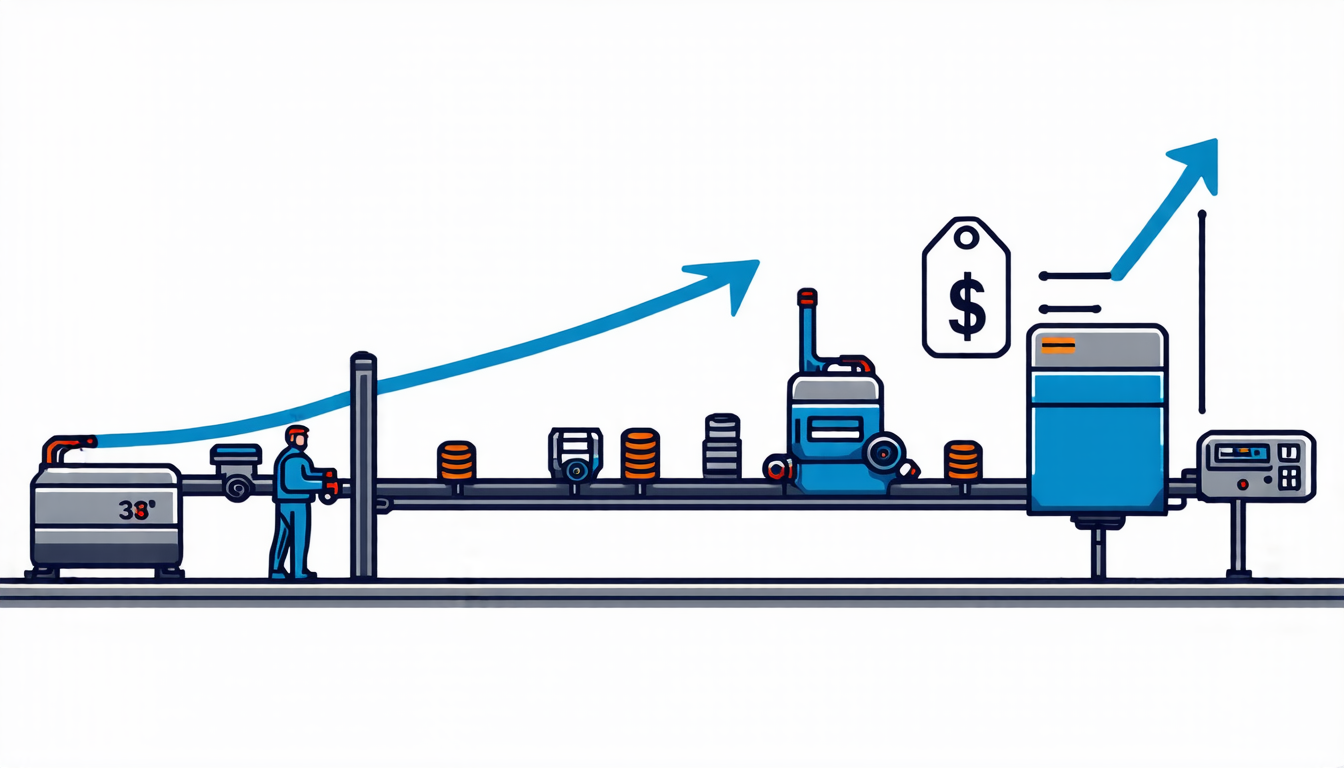
A recent study published in an economics journal has shed new light on how companies respond to changes in demand and costs. The research reveals that when production increases due to rising demand, companies with decreasing returns to scale – meaning it becomes more expensive to produce each additional unit – tend to raise prices. On the other hand, companies with increasing returns to scale – where production gets cheaper as output grows – are less likely to increase prices.
But why does this matter? Well, understanding how companies set their prices has significant implications for macroeconomic policy. For instance, if policymakers want to stimulate economic growth, they need to know whether companies will pass on cost savings from increased demand to consumers or keep the extra revenue for themselves.
The study’s findings are based on an analysis of production data from 10 industries in the UK over a period of 11 years. By examining the relationship between changes in sales and prices, researchers were able to identify patterns that held true across different sectors.
One of the key insights is that companies with decreasing returns to scale tend to have higher markups – the difference between their selling price and production cost – than those with increasing returns to scale. This means that when demand increases, these companies are more likely to raise prices to maintain their profit margins.
The study also found that companies with increasing returns to scale tend to have lower marginal costs – the cost of producing an additional unit – which allows them to absorb increased demand without raising prices. This is because they can take advantage of economies of scale and reduce their production costs as output grows.
So, what does this mean for policymakers? The research suggests that monetary policy should be tailored to the specific market structures in place. For instance, if a country has a high proportion of industries with decreasing returns to scale, then monetary policy may need to take into account the potential for price increases when demand rises.
The study’s findings also have implications for businesses themselves. Companies that operate in industries with decreasing returns to scale may want to consider strategies to reduce their production costs or find ways to increase efficiency, as rising prices can be a barrier to growth.
Overall, this research provides new insights into the complex world of pricing decisions and has significant implications for both policymakers and business leaders.
Cite this article: “Unlocking the Secrets of Pricing Decisions”, The Science Archive, 2025.
Pricing, Demand, Costs, Returns To Scale, Macroeconomic Policy, Production Data, Markups, Marginal Costs, Economies Of Scale, Monetary Policy
Reference: Joel Kariel, Anthony Savagar, “Rising Marginal Costs, Rising Prices?” (2025).