

Saturday 22 March 2025
Researchers have made a significant breakthrough in understanding how complex systems can withstand attacks and maintain their efficiency, even when faced with malicious behavior. The study, published recently, sheds light on the resilience of distributed optimization systems, which are crucial for many modern technologies.
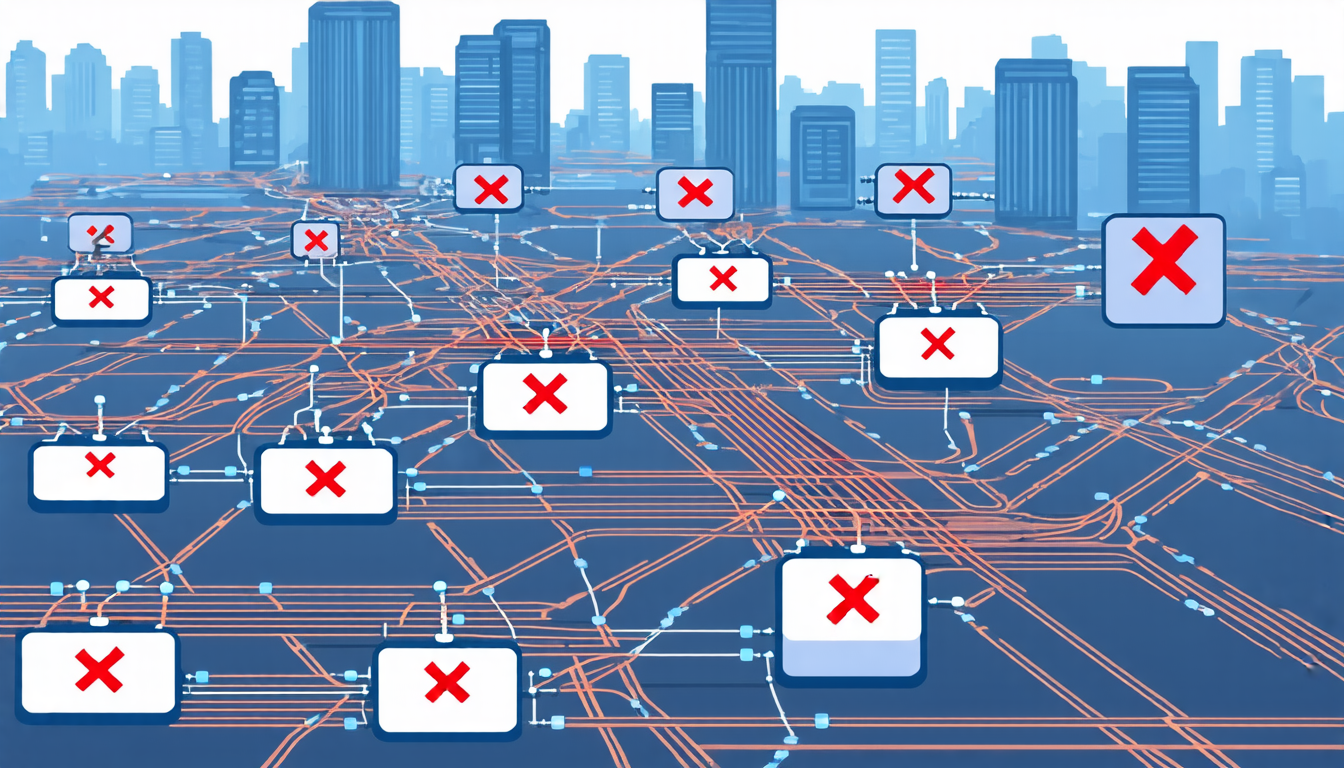
Distributed optimization is a technique used to solve complex problems by dividing them into smaller tasks that can be handled by multiple agents or nodes. This approach is commonly employed in smart grids, energy management systems, and other applications where efficiency and scalability are essential. However, as the number of agents increases, so does the risk of malicious behavior, which can compromise the entire system.
The researchers used a novel approach to analyze the resilience of distributed optimization systems under different attack scenarios. They developed a sophisticated model that simulated various types of attacks, including data manipulation and node failure. By examining the performance of the system under these conditions, they were able to identify key factors that influence its resilience.
One of the most important findings is that the system’s ability to withstand attacks depends heavily on its hierarchical structure. The researchers discovered that deeper layers in the hierarchy are more prone to inefficiency propagation and vulnerability to malicious behavior. This means that designers should focus on strengthening these critical layers to improve overall system resilience.
Another crucial factor is the scale of adversaries, which refers to the number of nodes involved in the attack. The study found that as the scale of adversaries increases, the system’s performance deteriorates more rapidly. However, the researchers also identified a threshold beyond which the system becomes more resilient due to the increased redundancy and diversity of the agents.
The results of this research have significant implications for the development of secure and efficient distributed optimization systems. By understanding how these systems respond to attacks, designers can develop targeted strategies to mitigate malicious behavior and improve overall resilience. This is particularly important in critical infrastructure such as energy management systems, where downtime or inefficiency can have severe consequences.
The study’s findings also highlight the importance of balancing efficiency and security in distributed optimization systems. While increasing the number of agents can lead to improved performance, it also increases the risk of attacks and vulnerabilities. By understanding these trade-offs, designers can develop more robust and resilient systems that balance competing demands.
In summary, this research has provided valuable insights into the resilience of distributed optimization systems under attack scenarios. The findings have significant implications for the development of secure and efficient systems, and highlight the importance of balancing efficiency and security in complex applications.
Cite this article: “Enhancing Resilience in Distributed Optimization Systems: A Study on Malicious Behavior and Efficiency”, The Science Archive, 2025.
Here Are The Keywords: Distributed Optimization, Resilience, Attacks, Malicious Behavior, Hierarchical Structure, Efficiency, Scalability, Node Failure, Data Manipulation, Security





