

Saturday 22 March 2025
The quest for a more efficient and environmentally friendly way to manage energy consumption has led researchers to develop innovative solutions, including the integration of IoT technology into smart home systems. A recent study published in a prominent scientific journal has made significant strides in this area by proposing a comprehensive energy management application method that leverages the power of IoT and real big data to optimize energy consumption.
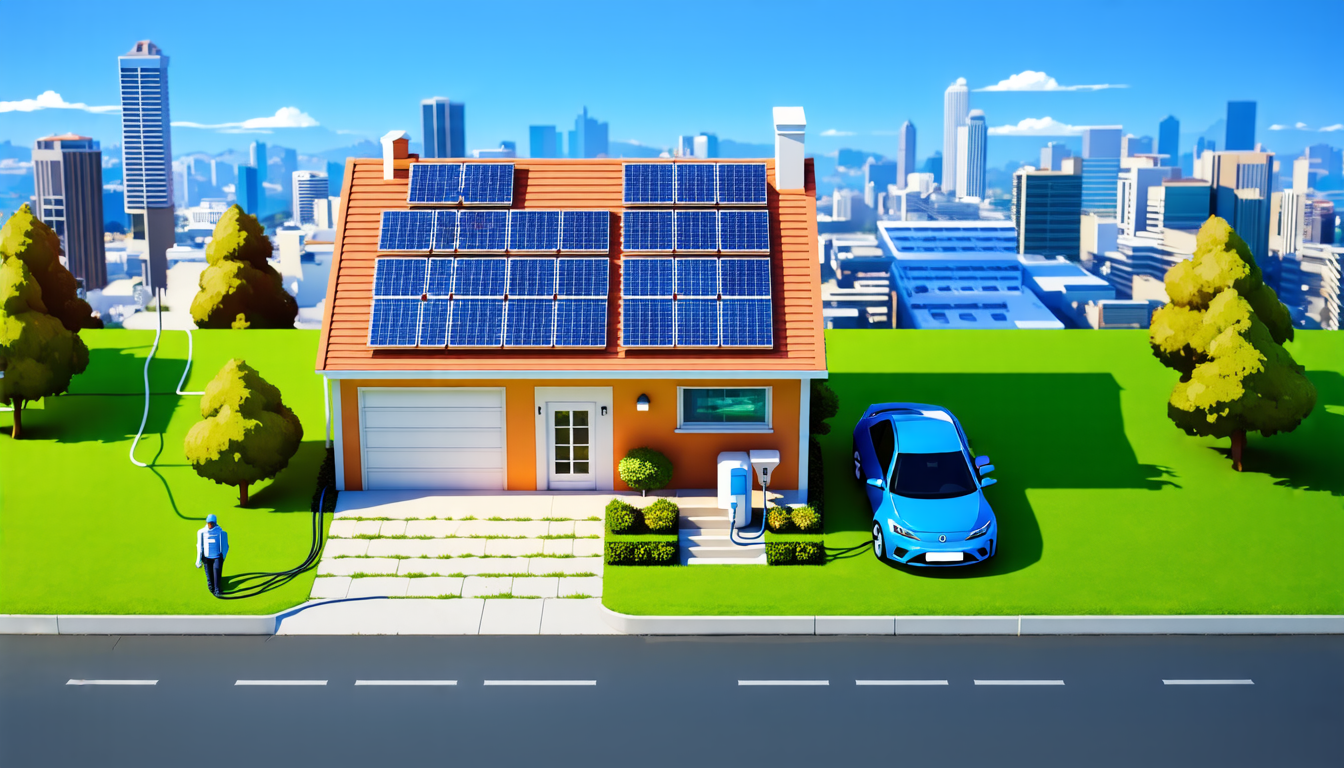
The system, which is designed for smart homes with photovoltaic generation (PV) and electric vehicles (EV), uses mixed integer linear programming (MILP) to provide load scheduling with the objective of minimizing total energy cost reduction. The researchers claim that their approach has achieved reliable performance, resulting in increased energy efficiency, reduced energy costs, and improved grid stability.
The study’s authors utilized 4 years’ worth of 1-minute interval real data from a smart home to test their method, which involves forecasting non-controllable loads using machine learning algorithms and optimizing load scheduling to minimize peak-to-average ratio (PAR) and standard deviation (SD). The results show that the proposed system has successfully reduced PAR by up to 44.19% and SD by up to 19.7%, while also decreasing daily net costs by as much as 62.05%.
One of the key features of this system is its ability to adapt to changing energy consumption patterns, which is achieved through the integration of IoT devices that collect real-time data on energy usage. This information is then used to optimize load scheduling and reduce energy waste.
The study’s findings have significant implications for the future of energy management in smart homes. As the world continues to shift towards renewable energy sources and electric vehicles, efficient energy consumption will become increasingly important. The proposed system’s ability to optimize energy consumption while reducing costs and improving grid stability makes it an attractive solution for homeowners and utilities alike.
The researchers’ approach also has broader implications for the development of smart grids, which rely on advanced technologies like IoT and machine learning to manage energy distribution. As cities continue to urbanize and energy demand increases, the need for efficient and sustainable energy management systems will only grow more pressing.
In addition to its technical innovations, this study highlights the importance of considering the impact of non-controllable loads on energy consumption patterns. The researchers’ findings suggest that ignoring these loads can lead to inefficient energy consumption and reduced grid stability.
The proposed system’s potential applications extend beyond smart homes, with possibilities for implementation in commercial buildings, industrial settings, and even entire cities.
Cite this article: “Optimizing Energy Consumption in Smart Homes through IoT-Enabled Load Scheduling”, The Science Archive, 2025.
Smart Homes, Iot Technology, Energy Management, Renewable Energy Sources, Electric Vehicles, Load Scheduling, Mixed Integer Linear Programming, Machine Learning Algorithms, Grid Stability, Sustainable Energy Management.





