

Saturday 22 March 2025
Researchers have developed an improved object detection model that can automatically identify key components on power transmission lines, a crucial step towards reducing maintenance costs and improving safety.
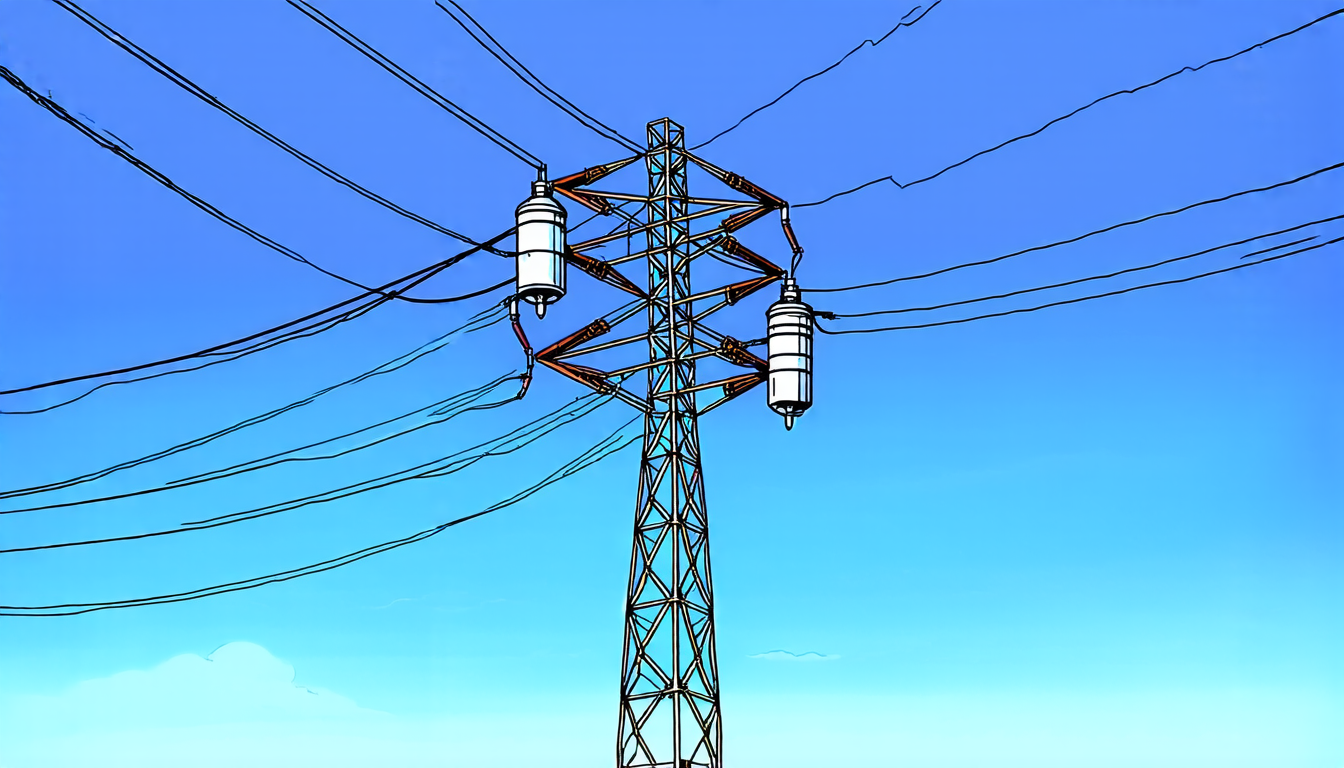
Power transmission lines are a critical part of our energy infrastructure, but inspecting them is a labor-intensive and costly process. Traditional methods involve sending human inspectors to physically examine the lines, which can be time-consuming and may not detect defects or anomalies. To address this challenge, scientists have been working on developing artificial intelligence (AI) models that can quickly and accurately identify key components like transmission towers, insulators, and poles.
The new model, based on the YOLOv5s algorithm, uses a combination of techniques to improve object detection accuracy. First, it modifies the distance measurement in K-means clustering to better adapt to the shapes and sizes of the objects being detected. This ensures that the model is more accurate when identifying objects with complex or irregular shapes.
Second, the model incorporates a convolutional block attention mechanism (CBAM) to enhance its focus on essential features. CBAM helps the model learn which parts of an image are most important for object detection, allowing it to better distinguish between similar-looking components.
Finally, the model employs a focal loss function to reduce the impact of class imbalance. This is particularly useful when detecting objects like insulators or screws, which may be rare in the dataset but crucial for maintaining the integrity of the transmission line.
The researchers tested their improved model on a dataset of 1152 × 864 pixel images taken from power transmission lines. The results showed that the new model achieved an impressive mAP (mean average precision) of 98.1%, outperforming traditional methods like YOLOv3 and Faster R-CNN. The model also demonstrated high recall rates, detecting most of the key components in the images.
The potential applications of this technology are vast. By automating the inspection process, power companies can reduce maintenance costs, improve safety, and increase efficiency. The model could also be adapted for use in other industries where object detection is critical, such as aerospace or manufacturing.
While the research is promising, there are still challenges to overcome before the model can be widely deployed. For example, the dataset used to train the model was limited to a specific type of image and may not generalize well to other scenarios. Further testing and refinement will be needed to ensure the model’s effectiveness in real-world applications.
Cite this article: “Improved Object Detection Model Enhances Power Transmission Line Inspection”, The Science Archive, 2025.
Object Detection, Power Transmission Lines, Artificial Intelligence, Yolov5S, K-Means Clustering, Convolutional Block Attention Mechanism, Focal Loss Function, Map, Object Recognition, Image Processing





