

Saturday 22 March 2025
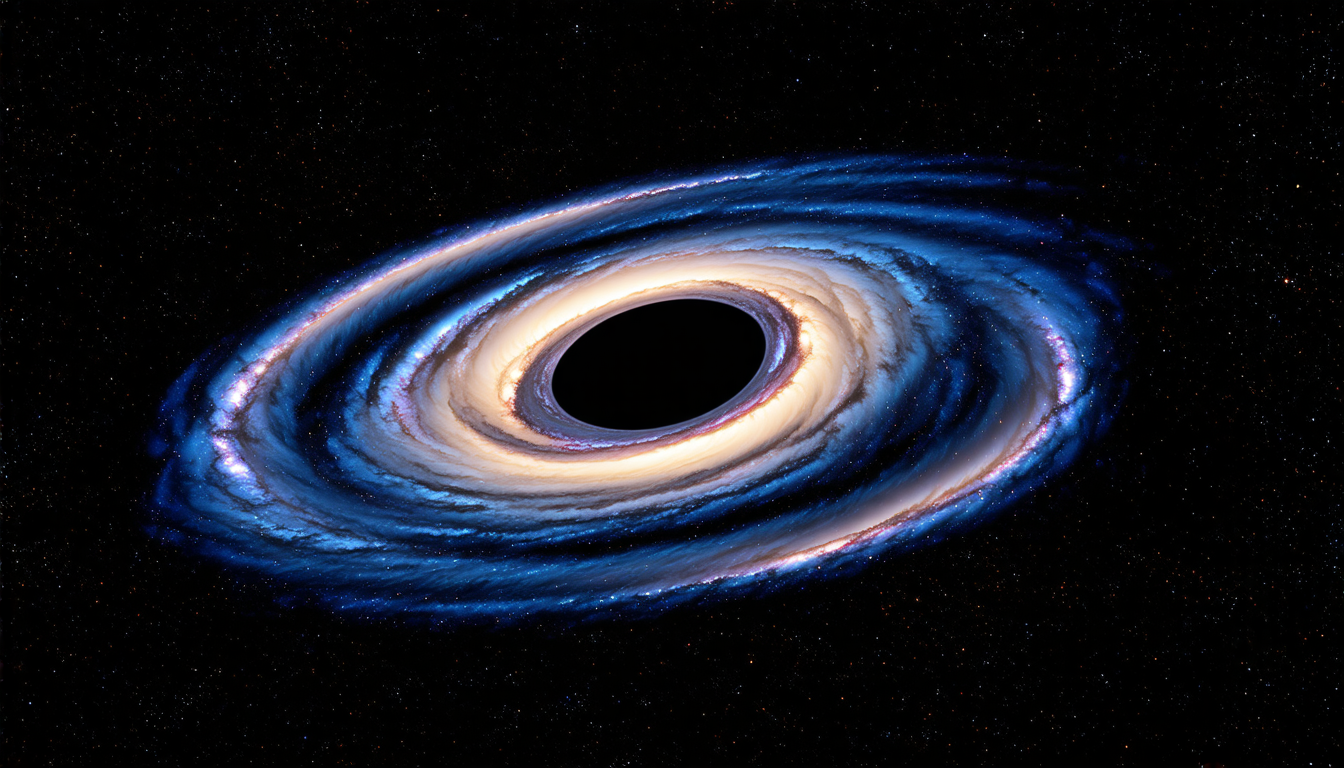
Scientists have long been fascinated by the relationship between supermassive black holes and their host galaxies. It’s a connection that has puzzled astronomers for decades, as it seems to defy explanation. Recently, researchers have made significant progress in understanding this phenomenon, shedding new light on the intricate dance between these cosmic behemoths.
In a newly published study, scientists have analyzed data from four separate simulations of galaxy evolution, each with its own unique set of parameters and assumptions. The goal was to identify the key factors that contribute to the scatter in the relationship between black hole mass and stellar mass in galaxies.
The results are nothing short of remarkable. By examining the output from these simulations, researchers have been able to isolate three primary sources of scatter: numerical noise, hierarchical merging, and variations in black hole accretion rates. Numerical noise refers to the subtle differences that arise when simulating complex physical processes on computers. Hierarchical merging, on the other hand, is the process by which smaller galaxies collide and merge with larger ones over time.
The third factor, variations in black hole accretion rates, is perhaps the most intriguing. It suggests that the rate at which a black hole grows through the consumption of surrounding gas and dust can have a profound impact on its ultimate mass. This finding has significant implications for our understanding of galaxy evolution, as it implies that black holes may play a more active role in shaping their host galaxies than previously thought.
One of the most striking aspects of this study is the way in which the simulations were able to reproduce many of the observed features of real galaxies. The scatter in the relationship between black hole mass and stellar mass, for example, is remarkably similar to that seen in observations of real galaxies. This suggests that the underlying physics driving these phenomena are well-captured by the simulations.
The results of this study also have significant implications for our understanding of galaxy evolution as a whole. By shedding new light on the relationship between black holes and their host galaxies, researchers may be able to gain a deeper understanding of the processes that shape the universe over billions of years.
In addition to providing valuable insights into the physics of galaxy evolution, this study also highlights the importance of computational simulations in modern astrophysics. By using these simulations to test hypotheses and make predictions, scientists are able to refine their understanding of complex phenomena like black hole growth and galaxy mergers.
Cite this article: “Unlocking the Secrets of Supermassive Black Holes and Their Host Galaxies”, The Science Archive, 2025.
Supermassive Black Holes, Host Galaxies, Galaxy Evolution, Numerical Noise, Hierarchical Merging, Accretion Rates, Black Hole Growth, Galaxy Mergers, Computational Simulations, Astrophysics





