

Saturday 22 March 2025
Scientists have made a significant breakthrough in the field of artificial intelligence, developing an innovative algorithm that can efficiently train large-scale machine learning models while promoting fairness across tasks. The new approach, called PiKE (Positive gradient interaction-based K-task weights Estimator), has been designed to address the long-standing challenge of multitask learning, where multiple tasks are learned simultaneously from a shared dataset.
Traditionally, training large-scale machine learning models requires significant computational resources and time. However, with the increasing demand for more accurate and efficient AI systems, researchers have been working tirelessly to develop novel methods that can accelerate the training process while maintaining performance.
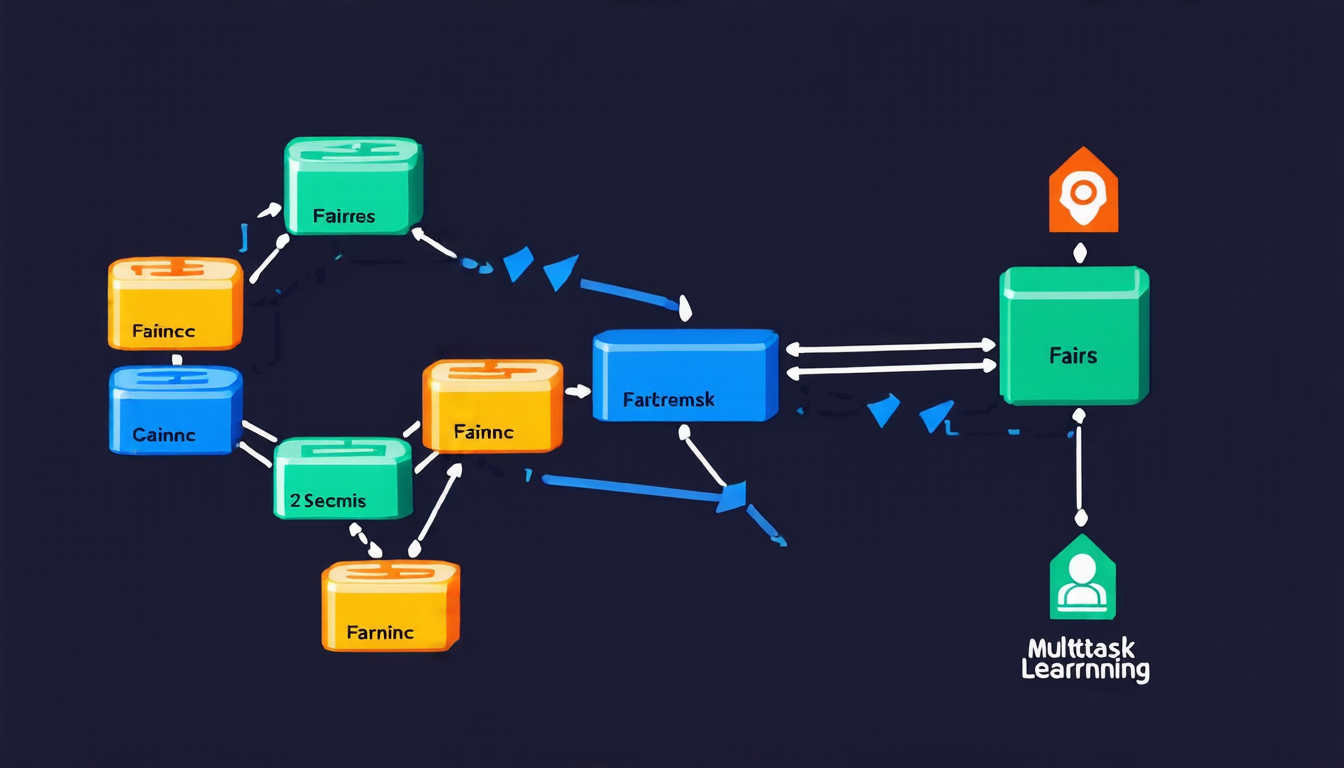
PiKE is a pioneering algorithm that tackles the problem of multitask learning by introducing a new framework that optimizes task sampling and mixing strategies. By dynamically adjusting the contribution of each task during training, PiKE enables the model to learn from diverse data sources and tasks in an efficient manner.
The algorithm’s key innovation lies in its ability to balance the trade-off between exploration-exploitation and fairness across tasks. Exploration-exploitation refers to the delicate balance between exploring new data distributions and exploiting the knowledge gained from existing ones. Fairness, on the other hand, ensures that all tasks receive equal attention during training.
PiKE’s unique approach involves estimating the gradient of each task’s loss function with respect to its own parameters and then mixing these gradients based on their relative importance. This process allows the algorithm to adapt to changing task distributions and optimize the learning rate for each individual task.
Theoretical analysis has shown that PiKE can converge faster than traditional methods, while also promoting fairness across tasks. In fact, experiments have demonstrated that PiKE outperforms existing algorithms in terms of both accuracy and efficiency on a range of benchmark datasets.
One of the most significant benefits of PiKE is its ability to handle large-scale machine learning models with ease. By reducing the need for computational resources and training time, the algorithm can be applied to real-world scenarios where data is vast and complex.
The implications of PiKE are far-reaching, with potential applications in areas such as natural language processing, computer vision, and recommendation systems. As AI continues to transform industries and daily life, this innovative algorithm is poised to play a crucial role in unlocking the full potential of machine learning models.
By providing a more efficient and fair approach to multitask learning, PiKE has opened up new avenues for researchers and developers to explore.
Cite this article: “PiKE: A Breakthrough Algorithm for Efficient and Fair Multitask Learning”, The Science Archive, 2025.
Artificial Intelligence, Machine Learning, Multitask Learning, Algorithm, Fairness, Efficiency, Exploration-Exploitation, Gradient Estimation, Large-Scale Models, Neural Networks.





