
Saturday 22 March 2025
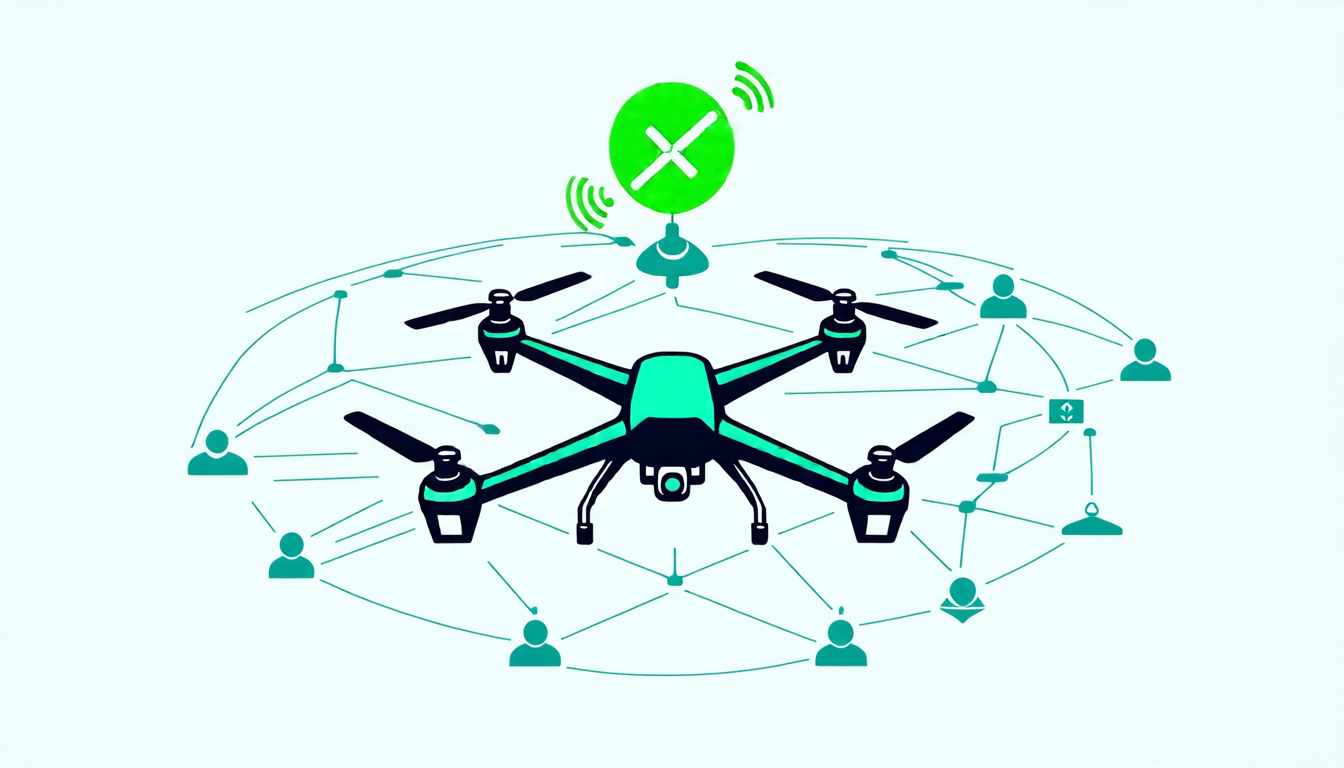
Researchers have made significant progress in developing a system that allows unmanned aerial vehicles (UAVs) to act as relays, enhancing communication networks in disaster-stricken areas. This innovative approach involves equipping UAVs with simultaneous wireless information and power transfer (SWIPT) technology, enabling them to collect data from users while also harvesting energy.
The concept of SWIPT is simple yet powerful: by transmitting both information and energy simultaneously, the UAV can recharge its own batteries while collecting data from users. This technology has the potential to revolutionize disaster response efforts by providing a reliable means of communication in areas where traditional infrastructure may be damaged or destroyed.
In this system, the UAV acts as a relay station, receiving data transmissions from users and retransmitting them to a central hub or other networks. At the same time, the UAV is able to collect energy from the environment through SWIPT technology, which allows it to recharge its batteries and extend its operational lifespan.
One of the key advantages of this system is its ability to adapt to changing environmental conditions. For example, if the UAV detects a strong signal from a user, it can adjust its transmission power accordingly, ensuring that the data is transmitted efficiently and reliably. This flexibility is particularly important in disaster response scenarios, where communication networks may be heavily congested or damaged.
The researchers have also developed an algorithm to optimize the performance of the SWIPT system. This algorithm takes into account various factors, including the UAV’s energy level, the distance between the UAV and users, and the quality of the transmission signal. By optimizing these parameters, the algorithm ensures that the UAV is able to collect data efficiently while also conserving its own energy.
The potential applications of this technology are vast. For example, in the event of a natural disaster, a swarm of UAVs equipped with SWIPT technology could be deployed to establish communication networks and provide critical information to emergency responders. This would enable more effective response efforts, saving lives and reducing damage to property.
In addition to its potential applications in disaster response, this technology has broader implications for the development of future wireless communication systems. As 5G and 6G networks continue to evolve, SWIPT technology could play a critical role in enabling efficient energy harvesting and data transmission.
Overall, the development of SWIPT technology has significant implications for the field of wireless communication.
Cite this article: “UAV-Based Wireless Communication System with Simultaneous Information and Power Transfer”, The Science Archive, 2025.
Uavs, Swipt, Wireless Communication, Disaster Response, Energy Harvesting, Data Transmission, Relay Station, Algorithm Optimization, 5G, 6G