
Saturday 22 March 2025
Researchers have made a significant breakthrough in developing a new system that combines two cutting-edge technologies: Federated Learning (FL) and Simultaneous Wireless Information and Power Transfer (SWIPT). This innovative approach has the potential to revolutionize the way devices communicate and learn from each other, particularly in resource-constrained environments such as the Internet of Things (IoT).
The IoT is a rapidly growing network of interconnected devices that can collect and share data with each other. However, these devices often have limited energy resources, which can hinder their ability to perform complex tasks such as machine learning. FL is a distributed learning approach that allows devices to learn from each other’s data without having to transmit the data itself. This not only saves energy but also preserves privacy.
SWIPT, on the other hand, is a wireless communication technology that enables devices to receive both information and energy simultaneously. This means that devices can recharge their batteries while transmitting or receiving data, making it an attractive solution for IoT applications where energy efficiency is crucial.
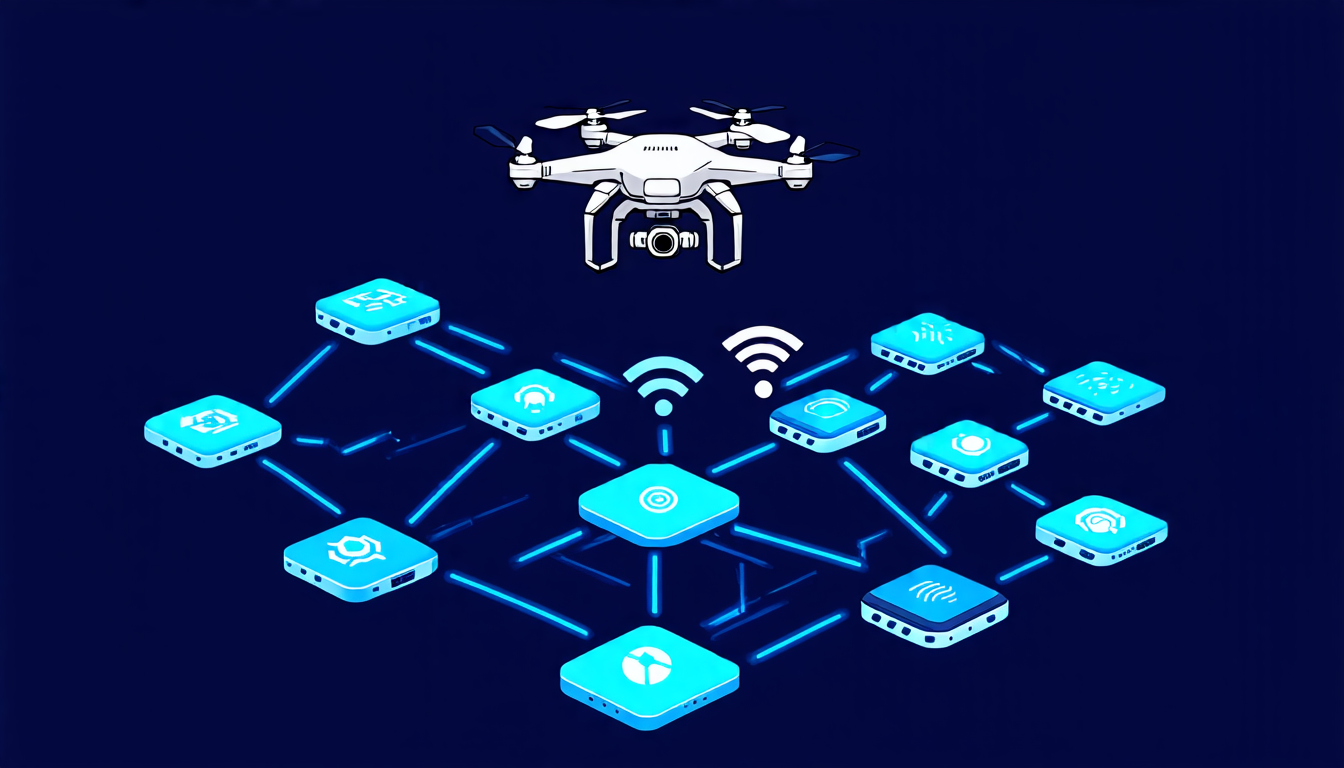
The new system combines FL with SWIPT to create a more efficient and sustainable IoT network. In this approach, the UAV (unmanned aerial vehicle) acts as a base station, aggregating model updates from IoT devices and broadcasting them back to the devices while also providing energy harvesting capabilities. This allows devices to learn from each other’s data without having to transmit large amounts of information, saving both energy and bandwidth.
The researchers tested their system in a simulated environment and found that it significantly outperformed traditional FL systems in terms of communication efficiency and energy consumption. The results showed that the new system was able to reduce energy consumption by up to 80% compared to traditional FL approaches.
One of the key benefits of this technology is its potential to enable IoT devices to operate for longer periods of time without needing to be recharged or replaced. This could have significant implications for applications such as smart cities, where sensors and other devices need to continuously collect and transmit data to provide real-time monitoring and analysis.
The system also has the potential to improve communication efficiency in IoT networks by reducing the amount of data that needs to be transmitted. This can help alleviate network congestion and improve overall performance.
While this technology is still in its early stages, it has significant implications for the future of IoT development.
Cite this article: “Federated Learning and Simultaneous Wireless Information and Power Transfer: A Revolutionary Approach to Efficient IoT Communication”, The Science Archive, 2025.
Federated Learning, Simultaneous Wireless Information And Power Transfer, Internet Of Things, Unmanned Aerial Vehicle, Machine Learning, Energy Harvesting, Communication Efficiency, Iot Network, Smart Cities, Distributed Learning