

Saturday 22 March 2025
The quest for quantum supremacy has long been a driving force in the field of physics, with researchers racing to develop machines that can perform complex calculations beyond the capabilities of classical computers. But what does it mean to achieve this elusive goal? In recent years, scientists have made significant progress in developing algorithms and protocols to verify the correctness of noisy intermediate-scale quantum (NISQ) devices.
These devices are imperfect, prone to errors caused by the fragile nature of quantum states. To overcome this limitation, researchers have developed methods to correct for these errors and demonstrate the performance of NISQ devices. One such approach involves using analogue quantum simulators, which mimic the behavior of complex systems without actually solving them.
The latest breakthrough in this field comes from a team of scientists who have devised a new protocol for verifying the correctness of NISQ devices. By leveraging the properties of hypergraphs and chromatic numbers, they have developed an algorithm that can accurately identify errors in quantum simulations.
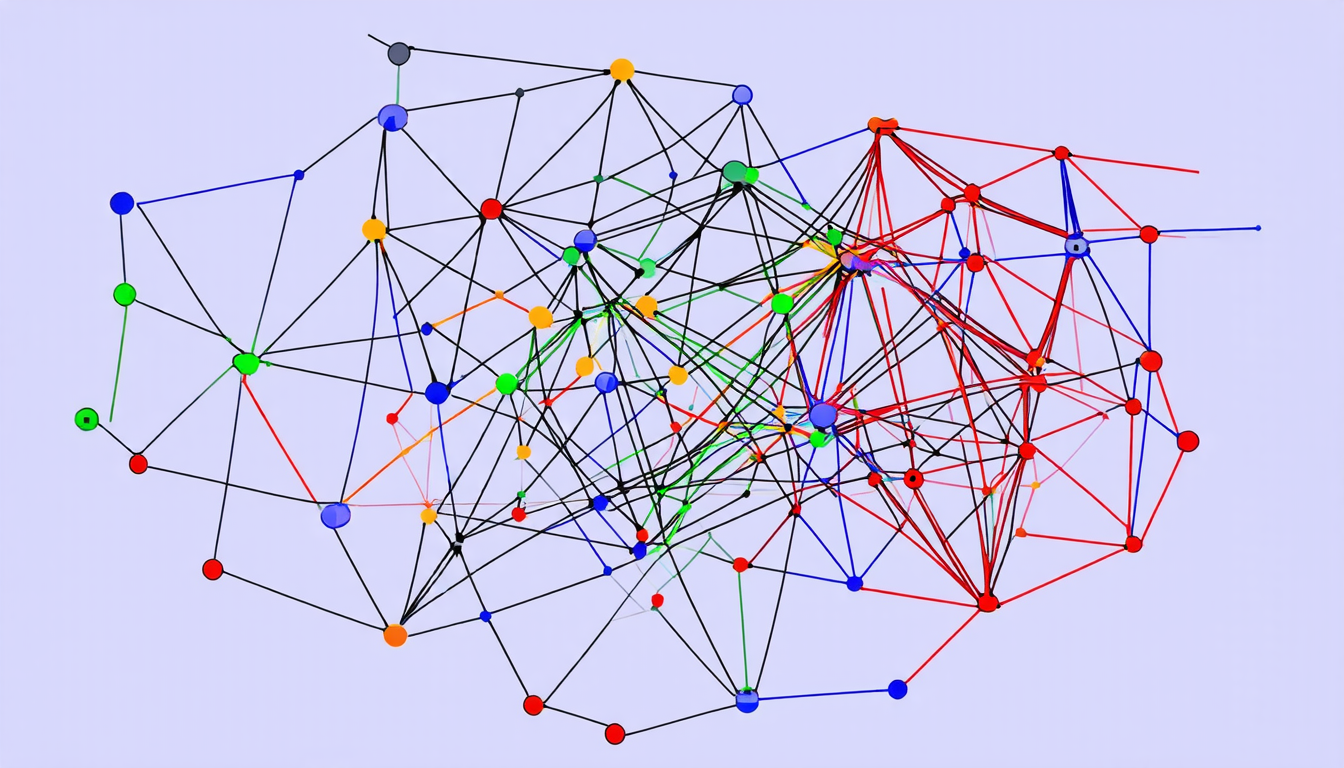
The process begins with the construction of a hypergraph, which represents the interactions between the spins in the system being simulated. The team then applies a colouring technique to this graph, assigning each vertex a unique colour. This allows them to partition the vertices into chromatic sets, each containing vertices that interact with one another.
Using this coloured hypergraph, the algorithm can identify errors in the simulation by comparing the expected behaviour of the system with the actual outcome. The team’s protocol is capable of detecting even small deviations from the correct solution, making it an invaluable tool for verifying the accuracy of NISQ devices.
But what does this mean for the future of quantum computing? With the ability to accurately verify the performance of NISQ devices, researchers can now focus on developing more complex algorithms and protocols. This could potentially lead to the development of larger-scale quantum computers that can tackle previously unsolvable problems.
The implications are far-reaching, with potential applications in fields such as chemistry, materials science, and cryptography. In the short term, this breakthrough will enable scientists to develop more accurate models of complex systems, leading to breakthroughs in our understanding of the world around us.
In the long term, it could pave the way for the development of quantum computers that can solve problems that are currently unsolvable. The potential is vast, and with the ability to accurately verify the performance of NISQ devices, researchers are one step closer to unlocking the secrets of the quantum realm.
Cite this article: “Verifying Quantum Accuracy: A Breakthrough in NISQ Device Validation”, The Science Archive, 2025.
Quantum Supremacy, Nisq Devices, Quantum Computing, Error Correction, Hypergraphs, Chromatic Numbers, Colouring Technique, Algorithm, Verification Protocol, Quantum Simulations





