

Sunday 23 March 2025
The quest for efficient sampling of complex distributions has long been a challenge in statistics and machine learning. Recent advances have led to the development of neural samplers, which can learn to generate samples from target distributions by training on small datasets. However, these methods often rely on simulation-based training procedures that are computationally expensive.
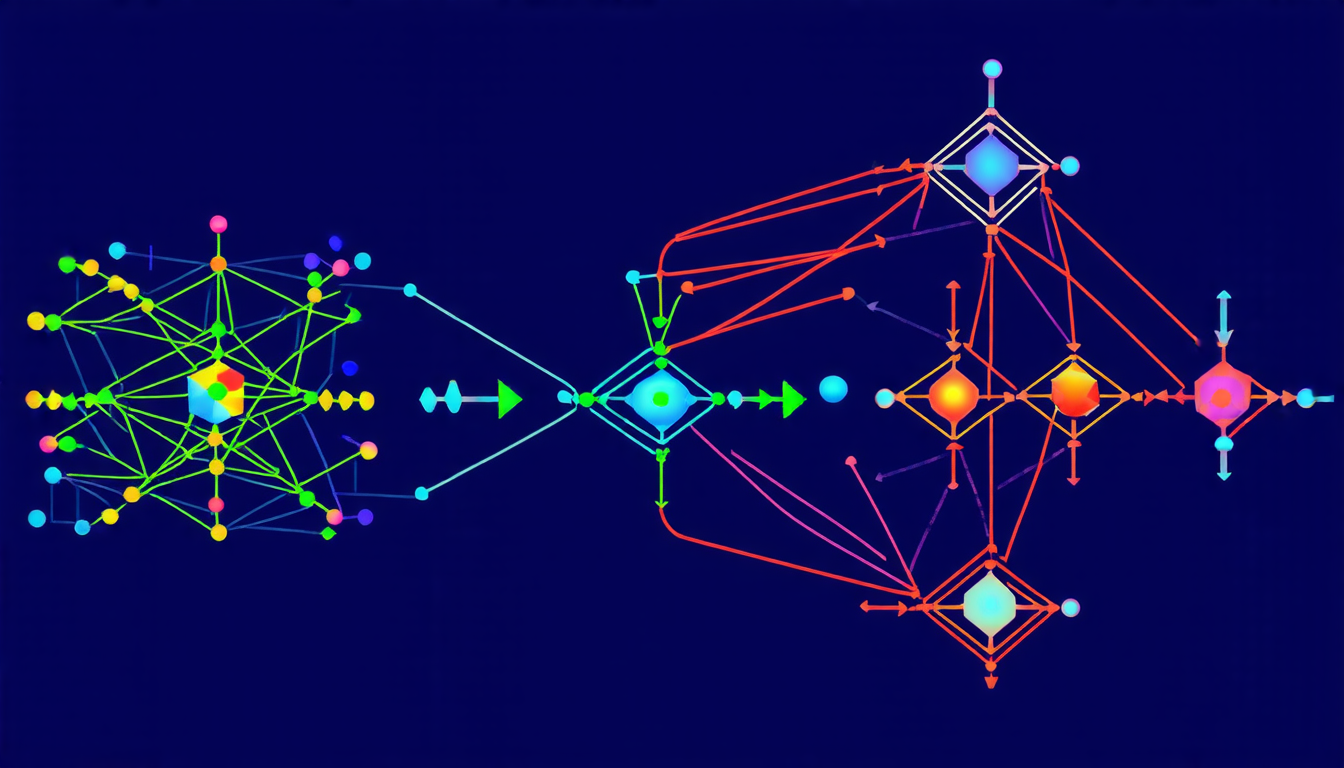
Researchers have now proposed an elegant modification to previous methods, allowing for simulation-free training with the aid of a time-dependent normalizing flow. This approach has been shown to be effective in covering even simple target distributions without the need for Langevin preconditioning – a crucial component of many neural sampler designs.
The concept of neural samplers is rooted in the idea that complex distributions can be learned by training a neural network to approximate the underlying distribution. By doing so, these models can generate samples that are similar to those drawn from the target distribution. The key challenge lies in developing efficient methods for training these networks, as traditional simulation-based approaches can be computationally expensive.
To address this issue, researchers have turned to normalizing flows – a type of neural network that transforms a simple distribution into a more complex one. By combining these flows with time-dependent drift functions, they have been able to develop a novel sampling algorithm that is both efficient and effective.
The new approach has been demonstrated on several benchmark datasets, including Gaussian mixture models and Bayesian linear regression problems. In each case, the results show that the proposed method is capable of generating high-quality samples from the target distribution with minimal computational overhead.
One of the key advantages of this technique is its ability to learn complex distributions without requiring explicit knowledge of the underlying density function. This makes it particularly useful for applications where the target distribution is difficult to model or sample from directly.
Furthermore, the proposed method has been shown to be robust to hyperparameter tuning and can be used in conjunction with other sampling algorithms to improve their performance. These findings have significant implications for a wide range of fields, including machine learning, statistics, and computational biology.
Overall, this new approach represents a major step forward in the development of efficient neural samplers. By enabling simulation-free training and robust performance on complex distributions, it has the potential to transform our ability to generate high-quality samples from difficult-to-model target distributions.
Cite this article: “Efficient Neural Samplers for Complex Distributions”, The Science Archive, 2025.
Neural Samplers, Simulation-Free Training, Normalizing Flows, Time-Dependent Drift Functions, Efficient Sampling, Complex Distributions, Machine Learning, Statistics, Computational Biology, Bayesian Linear Regression.





