

Sunday 23 March 2025
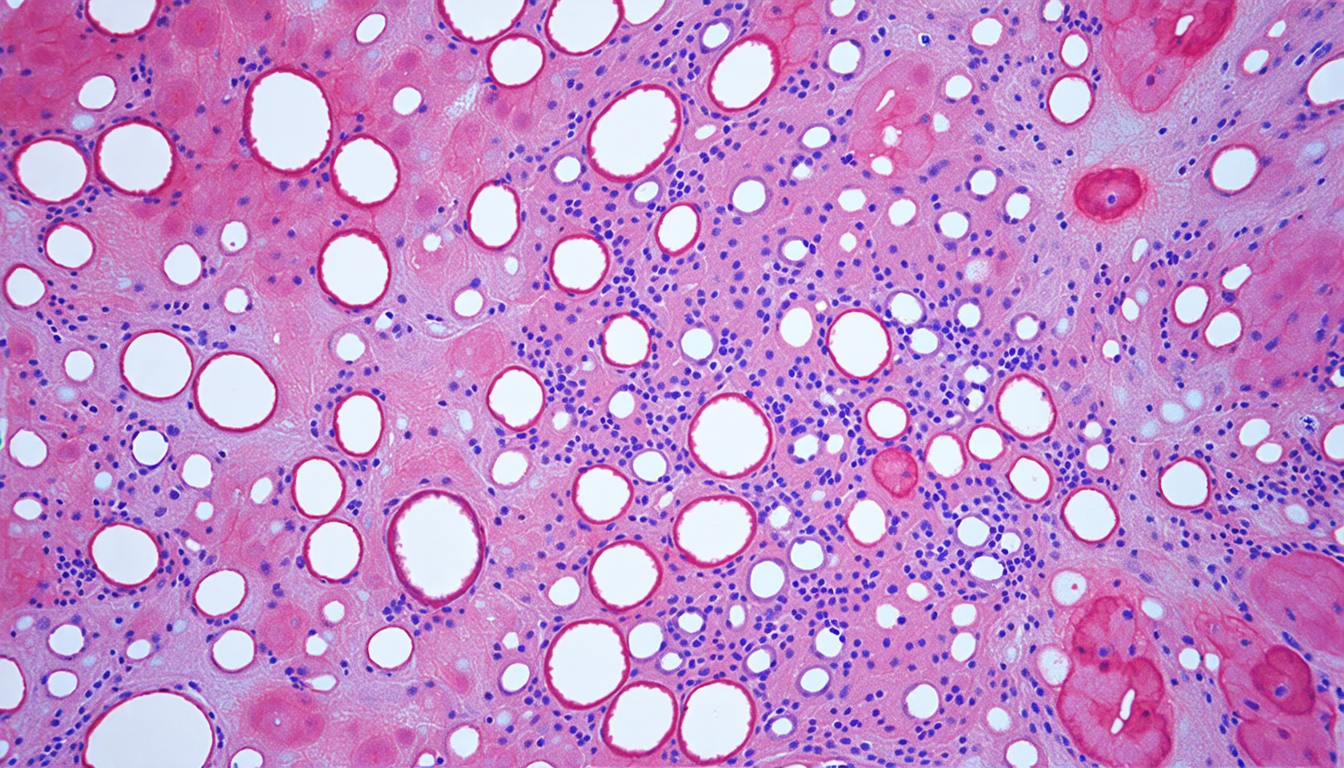
The rapid expansion of available histology data has led to a surge in artificial intelligence (AI) applications in pathology, transforming the way doctors diagnose and treat diseases. The sheer scale of this data poses significant challenges for researchers, who must now develop more efficient methods for processing and analyzing whole-slide images.
To address these issues, a team of scientists has created two software packages: Trident, a Python package for processing whole-slide images using pre-trained foundation models, and Patho-Bench, a library for benchmarking these models. Foundation models are pre-trained AI algorithms that can be fine-tuned for specific tasks, such as predicting histologic subtypes or molecular biomarkers.
Trident offers several key features that make it an attractive tool for researchers. It supports multiple whole-slide image formats across different stains, including hematoxylin and eosin (H&E), immunohistochemistry, and special stains. The package also includes a robust tissue-versus-background segmentation pipeline, which can be used to remove unnecessary background regions from the image.
One of the most significant advantages of Trident is its ability to scale to large repositories of data. The package includes model factories for easily loading pre-trained patch and slide encoders, allowing researchers to quickly extract features from their own datasets. Trident also supports a wide range of popular foundation models, including UNI, CONCH, Virchow, and CHIEF.
Patho-Bench is designed to facilitate large-scale model evaluation by providing a standardized set of tasks with clean labels and pre-defined train-test splits. The package includes 42 publicly available whole-slide level and patient-level tasks, which are categorized into six families: morphological subtyping, tumor grading, molecular subtyping, mutation prediction, treatment response and assessment, and survival prediction.
Patho-Bench also allows researchers to evaluate their models using three different parametric evaluation strategies: linear probing, Cox proportional-hazards regression, and supervised fine-tuning. These evaluation frameworks use frozen patch-level features extracted by Trident, making it easy for researchers to compare the performance of different models.
The creation of Trident and Patho-Bench is a significant step towards better transparency and reproducibility in computational pathology. By providing standardized software packages and benchmarking tools, these resources will enable researchers to more easily share and compare their results, accelerating scientific progress in the field.
In recent years, there has been a surge in AI applications in pathology, driven by the rapid expansion of available histology data.
Cite this article: “AI Applications in Pathology: Trident and Patho-Bench”, The Science Archive, 2025.
Artificial Intelligence, Pathology, Histology, Whole-Slide Images, Data Analysis, Machine Learning, Foundation Models, Pre-Trained Algorithms, Tissue Segmentation, Benchmarking Tools





