

Sunday 23 March 2025
The quest for a better understanding of DNA’s role in the human body has been ongoing for decades. Scientists have long sought to uncover the secrets behind DNA’s ability to store and transmit genetic information, as well as its involvement in various biological processes. Recently, a team of researchers made significant strides in this area by developing a new computational tool that allows them to simulate the behavior of DNA at the molecular level.
The tool, called QuantumDNA, uses advanced algorithms and machine learning techniques to model the interactions between DNA molecules and their environment. By doing so, it provides a more accurate and detailed understanding of how DNA functions, which could have significant implications for fields such as medicine, biotechnology, and synthetic biology.
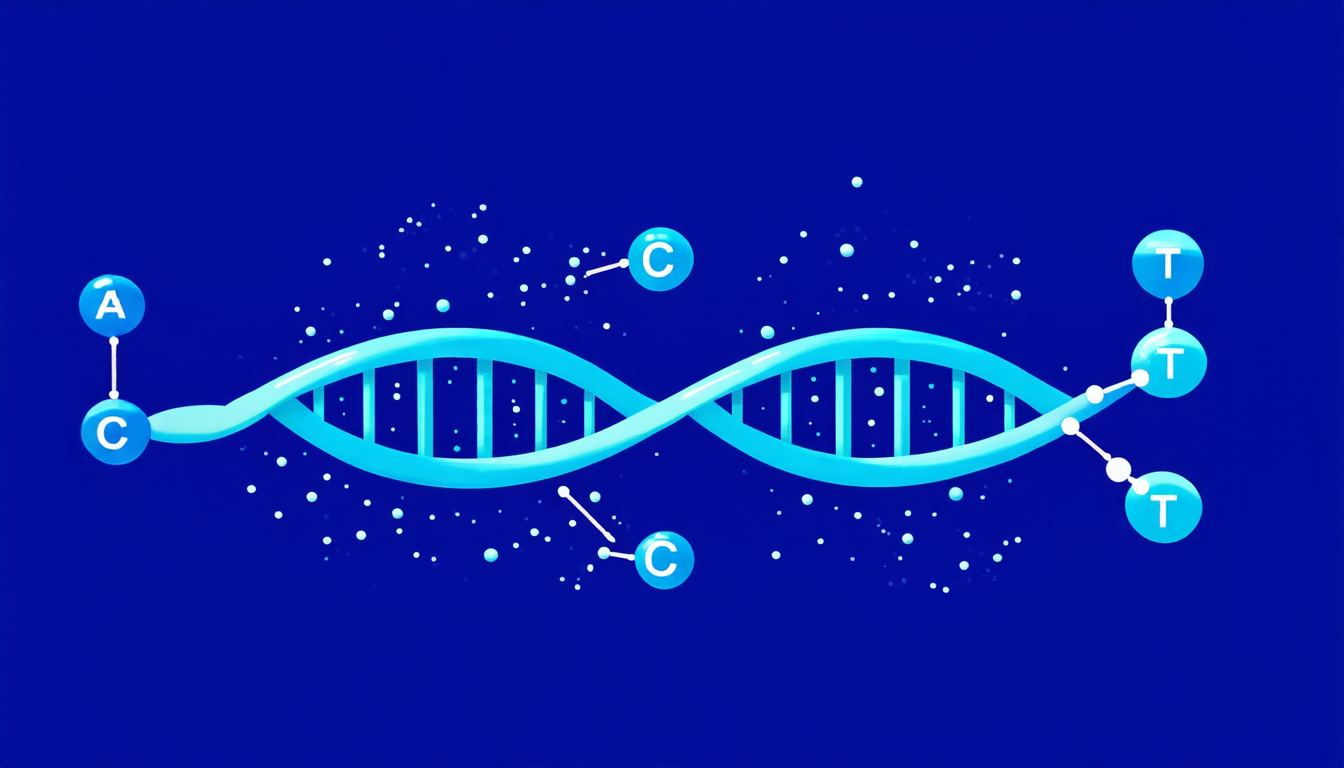
One of the key challenges in studying DNA is its complex structure and behavior at the molecular level. DNA is made up of four nucleotide bases – adenine (A), guanine (G), cytosine (C), and thymine (T) – which are arranged in a specific sequence to form genes. However, these sequences can be influenced by various factors such as temperature, pH, and the presence of other molecules.
QuantumDNA addresses this challenge by using a novel approach that combines quantum mechanics with classical molecular dynamics simulations. This allows it to accurately model the behavior of DNA molecules at the atomic level, taking into account the complex interactions between the nucleotide bases and their environment.
The tool is designed to be highly flexible and customizable, allowing researchers to simulate different scenarios and experiments in order to gain a deeper understanding of DNA’s behavior. For example, they can use QuantumDNA to study how DNA responds to changes in temperature or pH, or how it interacts with other molecules such as proteins or small molecules.
The potential applications of QuantumDNA are vast and varied. In medicine, for instance, it could be used to develop new treatments for genetic disorders by identifying specific sequences of DNA that contribute to the disease. In biotechnology, it could be used to design more effective gene therapies by optimizing the delivery of therapeutic genes to target cells.
In synthetic biology, QuantumDNA could be used to design and engineer novel biological pathways and circuits that can perform specific functions, such as producing biofuels or detecting environmental pollutants. By providing a more accurate understanding of DNA’s behavior at the molecular level, QuantumDNA has the potential to revolutionize our ability to manipulate and control biological systems.
Cite this article: “Unlocking the Secrets of DNA with QuantumDNA”, The Science Archive, 2025.
Here Are The Keywords: Dna, Molecular Dynamics, Quantum Mechanics, Machine Learning, Computational Tool, Genetic Information, Biological Processes, Medicine, Biotechnology, Synthetic Biology





